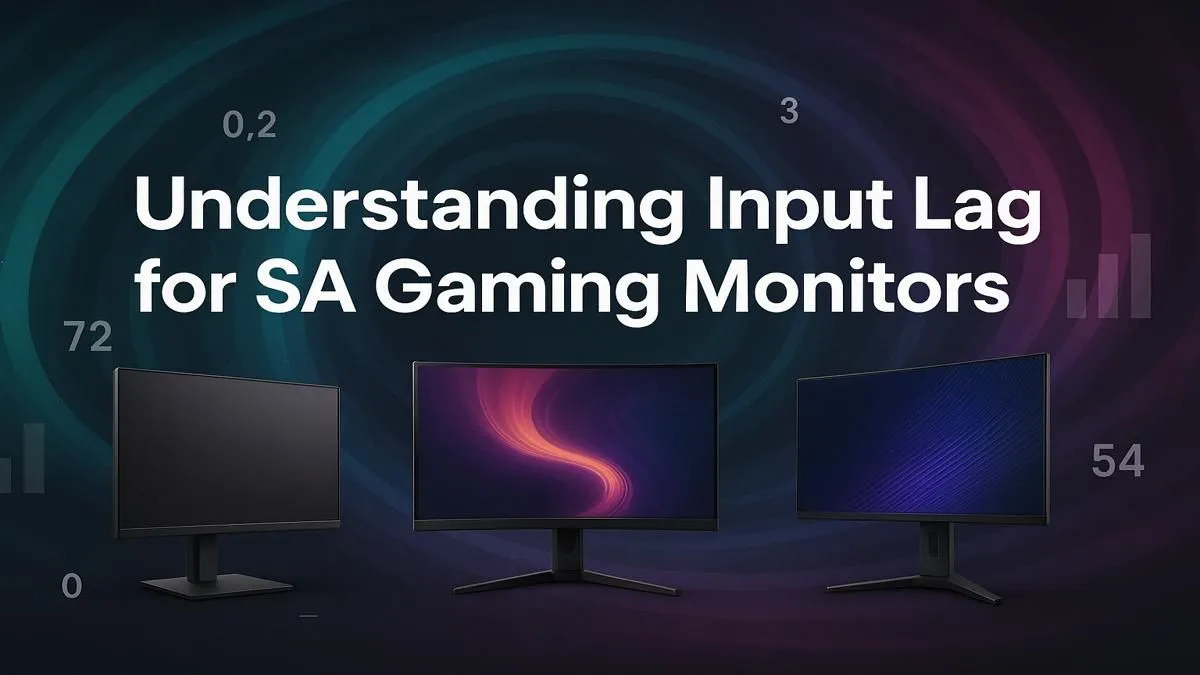
You’ve been there. Lined up the perfect headshot in Valorant, your crosshair is flawless… but you’re the one who ends up spectating. Or maybe you’ve felt that slight, frustrating delay in Apex Legends that makes your movements feel like you’re wading through mud. Before you blame your internet connection, consider the invisible enemy: the input lag from your gaming monitor. It’s the ghost in the machine costing you precious milliseconds, and in South Africa’s competitive scene, that’s everything.
What Exactly is Input Lag on a Gaming Monitor?
Let's clear this up, because it’s often confused with other specs. Input lag is purely the time it takes for your monitor to display the image sent from your graphics card. It’s the delay between you clicking your mouse and seeing the muzzle flash on-screen. ⚡
It’s not the same as:
- Response Time: This is how quickly a pixel can change colour (e.g., from grey to grey). A slow response time causes ghosting or motion blur.
- Refresh Rate (Hz): This is how many times your screen updates per second. Higher is smoother, but it doesn't directly measure the processing delay.
A good input lag gaming monitor minimises this processing delay, ensuring what you see is happening almost at the exact moment you command it. For competitive gaming, you want this number to be as low as possible, ideally under 16ms.
Why a Low Input Lag Monitor is Your Secret Weapon
For casual, single-player games like Baldur's Gate 3, a bit of input lag isn't a train smash. But for fast-paced titles, it’s the difference between clutching a round and tilting. In games where reaction time is king, high input lag means you’re always playing from behind. Your opponent literally sees you fractions of a second before you can properly react to them.
This delay creates a disconnect between your actions and the on-screen results, making your aim feel "floaty" or unresponsive. Investing in a monitor with low input lag provides a tangible competitive edge, making your gameplay feel crisp and immediate. You can browse all our gaming monitors to see the specs for yourself.
Key Factors That Affect Monitor Input Lag 🔧
The total delay you experience isn't just down to one thing. Several components in the chain contribute, but the monitor itself is the biggest player.
The Display Technology
This is the number one cause. Some panels, especially older TVs or office-grade screens, have extensive image processing (like motion smoothing or dynamic contrast) that adds significant delay. A purpose-built gaming screen is designed to bypass most of this. Whether you're looking at immersive curved monitors or crisp, high-resolution 4K monitors, the gaming-focused models will prioritise low latency.
Monitor Settings
Features that make movies look great can be terrible for gaming. Turning on your monitor’s “Game Mode” is crucial. This setting typically disables non-essential processing to slash input lag. It's often the single most effective change you can make. Even some premium portable monitors now include a low-latency game mode for on-the-go sessions.
Pro Tip: Activate Game Mode! 🚀
Almost every modern gaming monitor has a 'Game Mode' or similar setting in its on-screen display (OSD) menu. Find it and turn it on. This is the fastest way to reduce the input lag on a monitor as it strips out unnecessary image processing, prioritising raw speed over cinematic enhancements. It can cut your monitor's delay in half instantly!
How to Minimise Lag and Maximise Your Performance
While buying the right input lag gaming monitor is the biggest step, you can still optimise your existing setup. If you're looking for an upgrade, checking out the best PC monitor deals is a great place to start.
Here are a few quick wins:
- Use DisplayPort: Whenever possible, use a DisplayPort connection from your GPU to your monitor. It often has a slight edge in latency over HDMI.
- Disable V-Sync: In your game's settings, turn off V-Sync. While it prevents screen tearing, it can introduce significant input lag by forcing your GPU to wait for the monitor. Consider using FreeSync or G-Sync instead if your hardware supports it.
- Check Your Drivers: Always keep your graphics card drivers updated. Optimisations in new releases can sometimes improve system latency.
- Choose the Right Gear: Ultimately, your screen is the final piece of the puzzle. The entire range of modern PC monitors is built with these performance metrics in mind, giving you a massive advantage over someone using a standard office display.
By understanding and tackling input lag, you're not just buying better hardware… you're buying yourself more time to react, aim, and win. ✨
Ready to Eliminate Lag for Good?
A responsive, low-latency monitor is the ultimate upgrade for any serious South African gamer. Stop fighting your gear and start fighting the competition. Explore our range of ultra-responsive gaming monitors and find the perfect display to conquer your game.