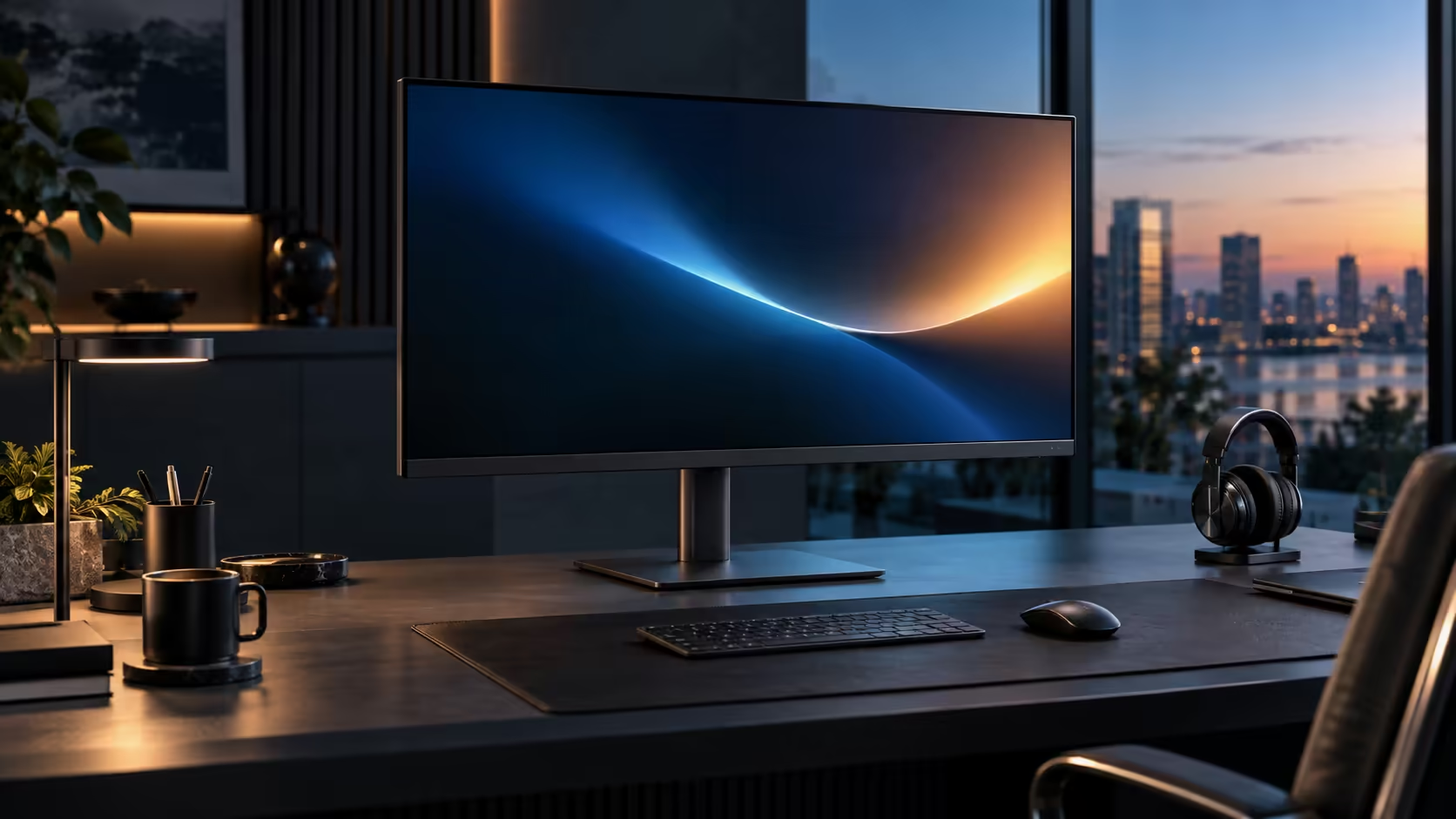
A large monitor makes panel technology matter more than it does on a small one, simply because there is more glass for viewing-angle problems to show up on, and a wide desk is more likely to be viewed by more than one person at once. The IPS panel fitted to the R8,799 Pro 32 Plus P3225DE answers exactly that reality.
Quick Answer
IPS keeps colour steady off-centre, while VA delivers deeper blacks and shifts more at an angle. On a wide desk screen that two people read from, the angle behaviour usually settles the argument. The Dell Pro 32 Plus P3225DE runs 100Hz IPS at R8,799.
📐 The geometry problem a wide screen makes worse
Think of it as basic geometry before anything else: a wider screen puts more distance between where your eyes sit and where the far corners of the panel sit.
On a 31.5-inch panel, moving even 30 to 40 degrees off centre, that geometry gap is real enough to matter. A colleague standing beside your chair, or even you shifting slightly in your seat, changes the angle to the edges of the screen far more than it would on a compact monitor, simply because those edges are physically further away to begin with. VA panels are the ones that struggle with this specific geometry: their liquid crystal structure lets colour and contrast drift as the viewing angle changes, an effect that shows up as a soft haze or a colour cast creeping in from wherever the angle is steepest.
🎛️ IPS solves it by re-orienting the crystal layer itself
The fix lives inside the panel construction, not in a software setting or a coating on the glass.
An IPS panel arranges its liquid crystals so they sit parallel to the glass rather than perpendicular to it, which is the structural reason light passes through more evenly no matter which direction you are viewing from. Practically, that means the R8,799 Dell Pro 32 Plus P3225DE shows the same colour and brightness whether you are dead centre or leaning over from beside someone else's desk, a claim VA simply cannot make at this screen width.
🌑 The one scenario where VA still wins outright
Fairness matters here, because VA is not a worse panel technology overall, only a worse fit for this particular width and use case.
Sitting dead centre, in a dim room, watching dark video content, a good VA panel produces genuinely deeper blacks than IPS manages, since its crystal layer blocks stray backlight more completely when there is no angle involved at all. That is a real, measurable win for a single dedicated home-cinema style seat. It describes almost none of the desks a 31.5-inch productivity monitor actually ends up on.
🔦 A one-minute torch-free test before you buy
Confirming this for yourself needs nothing more than a blank document and a working chair.
Fill the screen with a plain white or pale grey page, sit centred, then lean sideways toward one edge while watching the far corner out of the corner of your eye. A VA panel visibly dims or discolours that corner within a small lean; an IPS panel like this one barely moves. It is a more honest comparison than any viewing-angle degree figure printed on a box, since those figures are measured differently from one brand to the next.
🇿🇦 Matching panel type to how a South African desk actually gets used
The final decision comes down to how many people realistically view this specific screen, and from where.
A shared home office desk, a client-facing workstation, or a wide screen used for the occasional collaborative review all benefit from IPS's consistency more than they would from VA's deeper blacks. Compare the wider monitor range, check curved monitors if an immersive field of view also appeals, and browse the office monitor range for other IPS panels available right now at this exact same screen size and this exact price point.
Frequently Asked Questions
Is IPS always the better choice on a large monitor?
For any desk viewed from more than one angle or by more than one person, yes. VA remains a reasonable choice for a single centred viewer prioritising dark-scene contrast.
Does panel size make viewing angle problems worse on VA specifically?
Yes. A wider panel puts the corners at a greater physical angle from your eyes, which makes VA's characteristic edge shift more noticeable than on a smaller screen.
Can I test viewing angle behaviour without special equipment?
Yes, a plain white background viewed from a few different angles reveals the difference clearly within about a minute.
Does IPS ever produce deeper blacks than VA?
Rarely at a comparable price point. VA's native contrast advantage is a genuine, consistent characteristic of the technology, not something IPS typically matches without additional local dimming hardware.
Is IPS glow a real concern on a large panel like this?
IPS glow, a faint brightening visible near the corners in very dark rooms at certain viewing angles, is a known characteristic of the technology, though it is generally subtle during normal office lighting and everyday use rather than a practical problem for typical work.
🖨️ How panel type interacts with a large screen's colour work
Beyond viewing angle, panel technology affects any work involving judging colour on screen, which matters more as screen size grows.
A wider IPS panel holds consistent colour from edge to edge, which matters for anyone comparing colours across a large canvas, spreadsheet with colour-coded cells, or a wide design layout, since a VA panel's edge-to-edge inconsistency becomes more visually apparent the further apart two colours being compared sit on a large screen. This is a secondary but genuine reason IPS suits a 31.5-inch panel used for any kind of visual comparison work, beyond the more commonly cited viewing-angle argument for shared desks, and it is a factor spec sheets rarely mention explicitly even though it is a direct consequence of the same underlying panel technology. Reading independent review measurements of colour consistency across the panel, where available, is a more reliable guide to this than the manufacturer's own marketing copy, which rarely addresses edge-to-edge uniformity directly, and it is worth the extra five minutes of searching before a large panel purchase specifically.
Ready to choose the right panel type for a wide, shared screen?
Test the viewing-angle difference yourself before deciding between IPS and VA.