Quick Answer
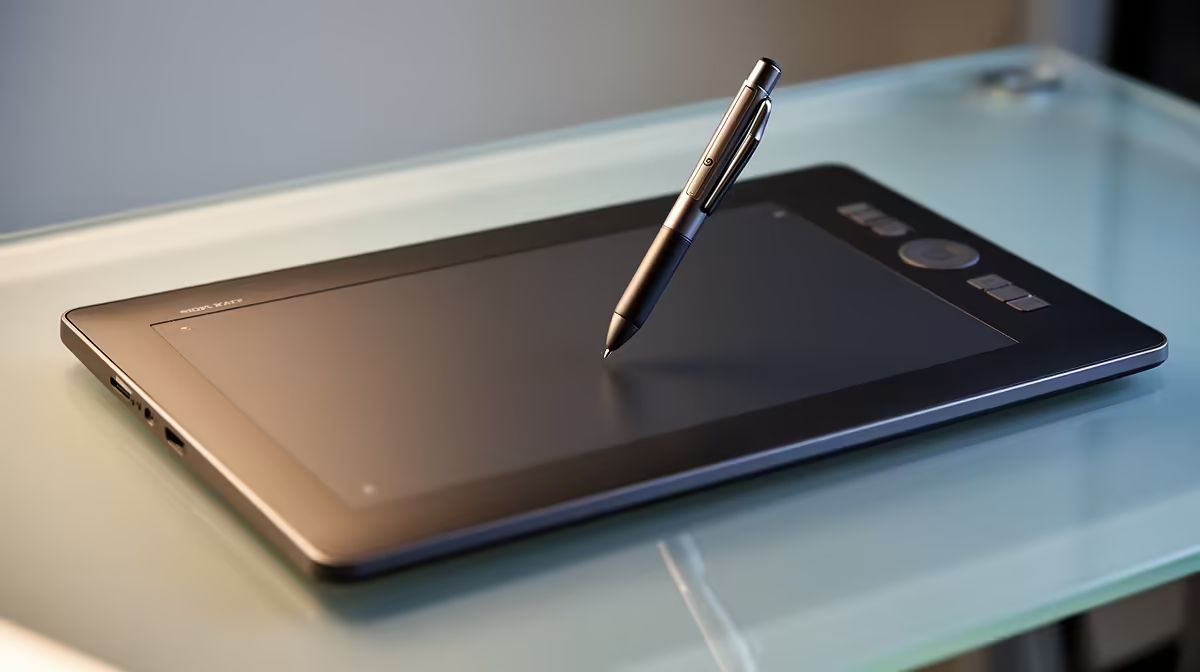
Yes, 4,096 pressure sensitivity is worth it for students doing digital art coursework, creators producing illustrations or photo edits, and designers who use brush-based tools. The jump from 1,024 to 4,096 levels produces measurably smoother gradients and more expressive linework. For note-taking without artistic intent, 2,048 levels is sufficient.
Why the Level Count Matters in Practice 🎨
Pressure sensitivity levels describe how finely the stylus can detect differences in how hard you press. At 1,024 levels (10-bit), there are visible steps in gradient brushwork and the transition from thin to thick lines can appear slightly mechanical. At 4,096 levels (12-bit), those transitions are smooth and organic. The difference is most apparent in overlapping transparent brush strokes, soft airbrushing, and shading from light to dark. For fine art students at SA universities doing digital illustration coursework, this extra resolution prevents the frustration of re-doing gradients that look banded on screen. Designers doing packaging or logo work in Affinity Designer or Illustrator benefit from the cleaner line control when using pressure-mapped brushes.
Matching Pressure Sensitivity to Your Use Case 🖌️
Students doing general assignments, PDF annotation, and typed work: 4,096 pressure levels is irrelevant; any active stylus with basic pressure support is fine. Students in graphic design, fine art, animation, or multimedia programs: 4,096 levels is the standard you should match because your software (Clip Studio, Procreate, Krita, Photoshop) fully uses it. Content creators drawing thumbnails, digital illustrations, or UI mockups: 4,096 levels improves the precision of every pen tool interaction. Designers doing UX wireframing or layout work without brush tools: pressure sensitivity in general matters less; accuracy and latency are more important.
Cost vs Benefit in the SA Market 💰
Drawing tablets with 4,096 pressure sensitivity start from around R800 to R1,200 in South Africa for small-format (A6-size active area) models. Upgrading to a medium-format tablet (A5 active area) with the same pressure spec costs R1,500 to R2,500. The price premium for 4,096 over 2,048 levels is typically R200 to R400 at entry price points. Given that a quality tablet lasts three to five years, this is a small per-year cost for a capability you will use in every single drawing session. NSFAS students should note the R5,200 allowance covers neither a laptop nor peripherals at current SA prices; consider a dedicated tablet purchase separately after the laptop.
Soft vs Hard Pressure Curve ⚡
Students new to digital drawing often set their pressure curve too hard, requiring a firm press to get a thick line. Start with a soft curve in your driver settings so light hand pressure registers mid-weight strokes. You can always tighten the curve as your hand control improves, but starting soft prevents hand fatigue during long study sessions.
FAQ
Will I notice the difference between 4,096 and 8,192 pressure levels?
For most students and creators, no. The jump from 4,096 to 8,192 levels is imperceptible in everyday illustration and design work. Focus budget on active area size and build quality before chasing higher pressure level counts.
Do all drawing apps support 4,096 pressure levels?
The major professional apps do: Clip Studio Paint, Krita, Photoshop, Procreate, Affinity Designer, and Corel Painter. Free apps like Autodesk Sketchbook also support it. Very basic drawing apps may cap at lower levels, but this is increasingly rare.
Can I use a 4,096-level tablet with a Chromebook or iPad?
Some tablets support Android apps on Chromebook and iPadOS. Check your model's compatibility list before purchasing. Not all USB tablets work with ChromeOS, and iPads only support Apple Pencil for full pressure.
Ready to upgrade your drawing setup with full 4,096-level pressure support?
Evetech stocks drawing tablets across every format and budget, built for SA students, creators, and designers who need professional-grade pressure control.