Quick Answer
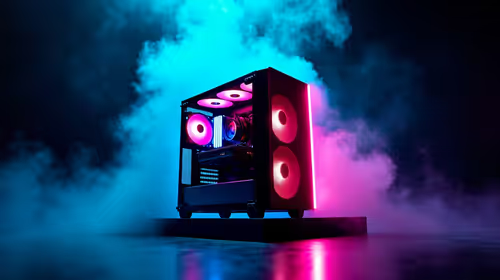
Yes, an ATX panorama gaming case is worth it for a showcase PC build if the display aesthetic is a deliberate design goal. Three-sided or four-sided tempered glass exposes the GPU, AIO, and ARGB fans simultaneously, creating a visual that standard single-glass cases cannot replicate. The trade-off is reduced airflow compared to mesh-front designs, which raises temps by 4 to 8 degrees Celsius on RTX 5080 and 5090 builds, so you need to compensate with a 360mm AIO and strong fan configuration.
What a Panorama Case Delivers Visually ✨
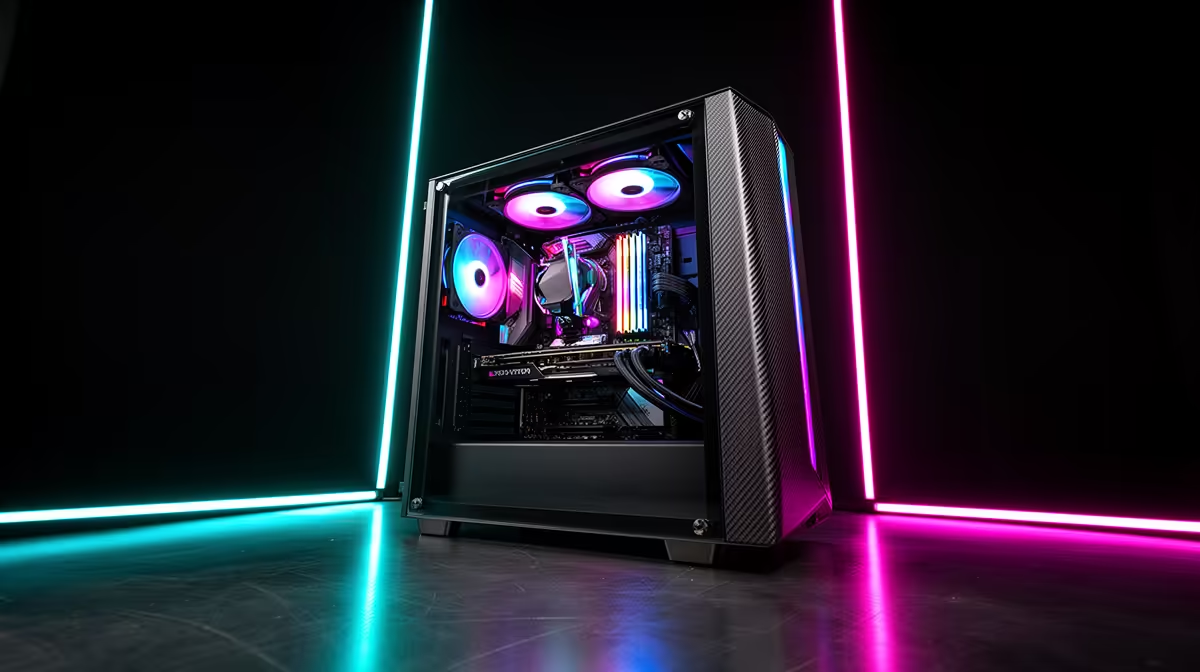
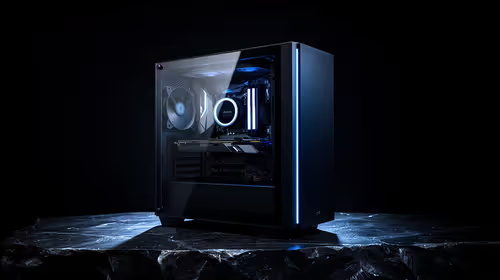
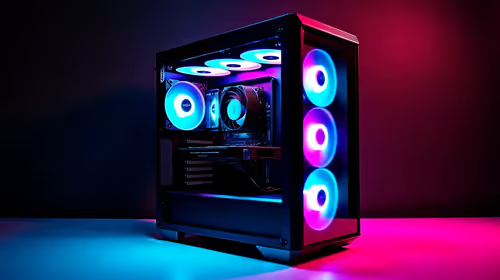
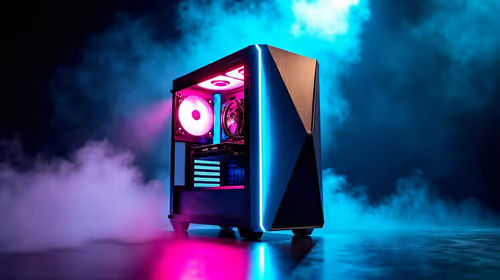
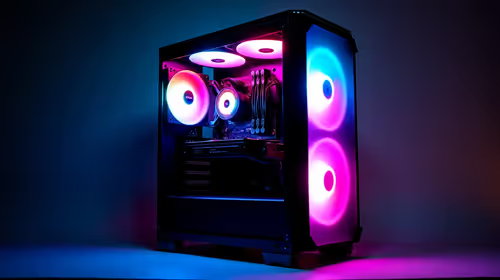
A panorama ATX case wraps tempered glass around at least three sides: the full side panel, the front, and often the top. Some premium designs add a partial glass roof section. The effect is that from almost any viewing angle, the interior hardware is visible with no visual interruption from solid steel panels. Combined with ARGB fans, a mirrored display stage at the base, and RGB RAM and GPU backplates, the system becomes a display object rather than just a computing tool. For a SA builder investing R50,000 or more in components, a panorama case in the R4,500 to R7,000 range is a proportionally small premium to make those components visually worthy of the investment.
The Thermal Cost of Panorama Glass 🌡️
Glass does not breathe, and three or four sides of it mean limited intake paths for fresh air. Premium panorama designs compensate with mesh sections below the front glass, vented side slots, or base intake vents under the PSU shroud. Even with these accommodations, a sealed panorama case typically scores 4 to 8 degrees Celsius hotter on GPU temps compared to a fully meshed alternative when running an RTX 5090 at full load. This is manageable: a 360mm AIO as a top exhaust removes CPU heat efficiently, and three strong 140mm intake fans on any available mesh sections provide enough fresh air to keep an RTX 5090 below 85 degrees Celsius GPU temp during gaming sessions in a room at 25 degrees Celsius.
Making the Decision: Display vs Function vs Hybrid 💡
The choice comes down to how the PC lives in your space. If it sits on a desk in a gaming room where you see it daily, the panorama experience adds real value every time you sit down. If it lives under a desk, panorama glass offers nothing. A hybrid approach is viable too: some builders choose panorama cases with mesh-insert fronts, which gives 80 percent of the visual impact while recovering most of the airflow advantage. These hybrid panorama-mesh designs in the R3,500 to R5,500 price range represent the best balance for SA builders who want visual impact without fully sacrificing thermal performance.
Light Tinted Glass Shows RGB Better ⚡
If you are choosing between clear and lightly tinted panorama glass, go tinted. Tinted glass makes RGB colours appear more saturated and reduces the washed-out appearance of LEDs in brightly lit rooms. Most premium panorama cases in the R4,500 range use lightly smoked tempered glass that enhances interior lighting without significantly reducing visibility.
FAQ
Does a panorama case affect GPU benchmark performance?
Not significantly in short benchmark runs, but in sustained 30-minute to 60-minute gaming loads at high ambient temperatures, the restricted airflow of a sealed panorama case can cause a GPU like the RTX 5090 to throttle clocks by 50 to 100 MHz as junction temps push above 90 degrees Celsius. A properly cooled panorama build avoids this.
Is a panorama case harder to clean than a standard case?
Slightly. Multiple glass panels attract fingerprints and require regular wiping with a microfibre cloth.
What is the lowest ZAR budget for a genuine panorama ATX case?
Expect to pay at least R3,200 to R4,000 for a case where the panorama glass is genuinely structural and covers three sides cleanly. Below R3,000, glass designs are typically single-panel with a decorative front element rather than a true panorama layout.
Building a showcase system that turns heads?
Browse Evetech's panorama ATX gaming cases to find the glass, lighting, and clearance specs your build deserves.