Let’s be honest, your laptop is going to take a few knocks. Whether it’s from a bumpy ride on the Gautrain, a close call during an unexpected outage shuffle, or just the daily grind of student life, its survival often comes down to its construction. This brings us to a critical choice every buyer faces: plastic vs metal. Understanding the nuances of laptop build durability isn't just for enthusiasts; it's a practical decision for your investment.
The Surprising Strength of Modern Plastic
When you hear "plastic laptop," you might picture a cheap, creaky machine from a decade ago. But things have changed. High-quality polycarbonates and ABS plastics used today are engineered for resilience. They offer a unique kind of toughness that often gets overlooked. 🛡️
The biggest advantage? Shock absorption. While a metal frame might dent from a drop, a well-designed plastic chassis can often flex and absorb the impact, protecting the delicate components inside. This makes them surprisingly durable for everyday bumps and tumbles. Plus, they are lighter and generally more affordable, meaning more of your budget can go towards a faster CPU or a beefier graphics card. You can find many robust and budget-friendly options among our great value laptop specials.
The Premium Appeal of a Metal Chassis
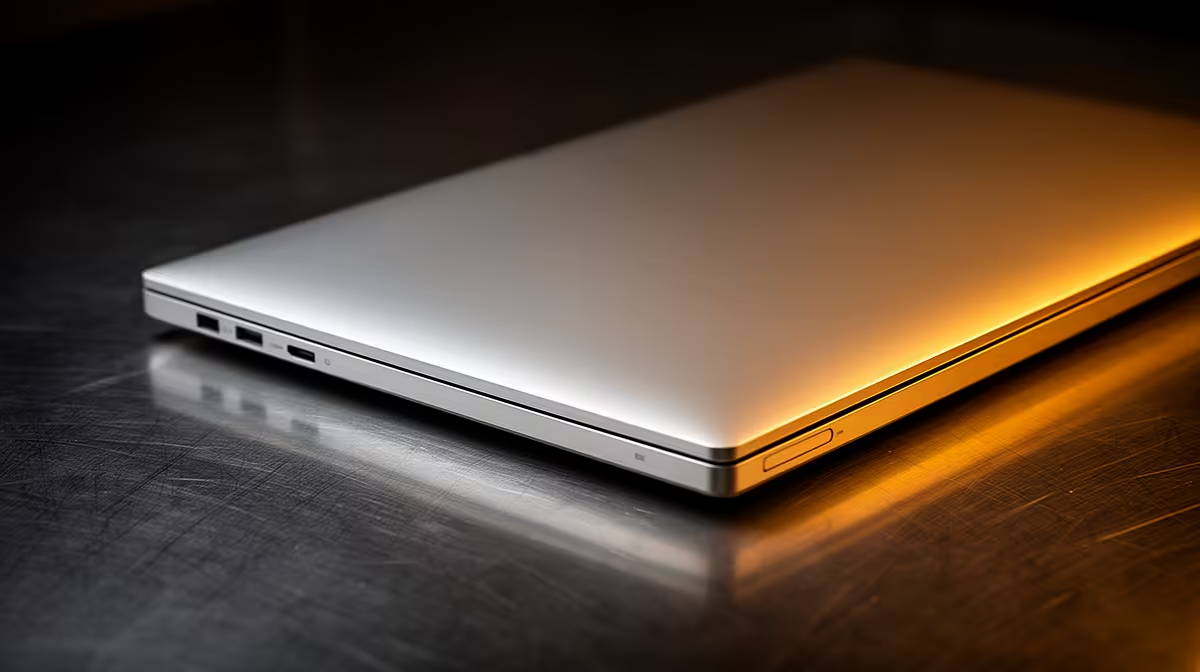
There's no denying the immediate sense of quality you get from an aluminium or magnesium-alloy laptop. It feels cool to the touch, solid, and looks incredibly sleek. But the benefits of metal go far beyond aesthetics.
A key factor in laptop build durability is rigidity. Metal frames resist bending and flexing, which protects the screen from pressure damage and reduces keyboard flex for a more satisfying typing experience. Crucially for gamers, metal is an excellent conductor of heat. The entire chassis can act as a giant passive heatsink, helping to dissipate warmth from the CPU and GPU during intense gaming sessions. This superior thermal performance is a hallmark of the machines you'll find in our top-tier gaming laptop deals. ✨
Check for the MIL-SPEC Rating
Many laptops, both plastic and metal, are tested against military-grade MIL-STD-810G standards. This rating is your best indicator of real-world toughness, covering drops, shocks, and temperature extremes, so keep an eye out for it in the specs!
Plastic vs Metal: What Really Matters for SA Life?
So, how does the plastic vs metal debate play out in a uniquely South African context? It depends entirely on your lifestyle.
If you’re a student at UCT or Wits, constantly moving between lectures, a lighter plastic laptop might be a lifesaver for your back without sacrificing performance. However, if you're battling a hot Durban summer while rendering a video or climbing the ranks in Apex Legends, the superior heat dissipation of a metal chassis could prevent thermal throttling and keep your performance consistent. The choice isn't just about the case material; it's also about the engine inside. You can find excellent build quality in both powerful AMD laptops and equally impressive Intel-powered machines.
Ultimately, the best material is the one that fits your needs and budget.
The Verdict: Which Laptop Build is for You?
There’s no single winner in the laptop build durability showdown. The best choice is personal.
Choose Plastic if:
- Budget is your priority. You can get more processing power for your ZAR.
- Portability is key. Lighter weight makes for an easier daily carry.
- You're worried about minor drops. The flex can be more forgiving than a dent-prone metal frame.
Choose Metal if:
- A premium feel is important. You want that solid, high-end experience.
- You push your hardware hard. Better heat management can lead to more sustained performance. 🚀
- You need maximum rigidity. Less flex means more protection for internal components in a packed bag.
The quality of the specific alloy or polymer used matters more than the material category itself. A high-end polycarbonate build can easily outlast a cheap, thin metal one. Focus on the overall construction, hinge quality, and user reviews.