Staring at your DAW's timeline for hours, squinting at tiny plugin knobs? We've all been there. In South Africa, where your studio might be your bedroom one day and a coffee shop during an unexpected outage the next, your laptop is everything. But while we obsess over CPU and RAM, we often forget a crucial component: the screen. The right laptop screen for music production isn't a luxury... it's a workflow essential that can make or break your next track.
Why Your Laptop Screen Matters for Music Production
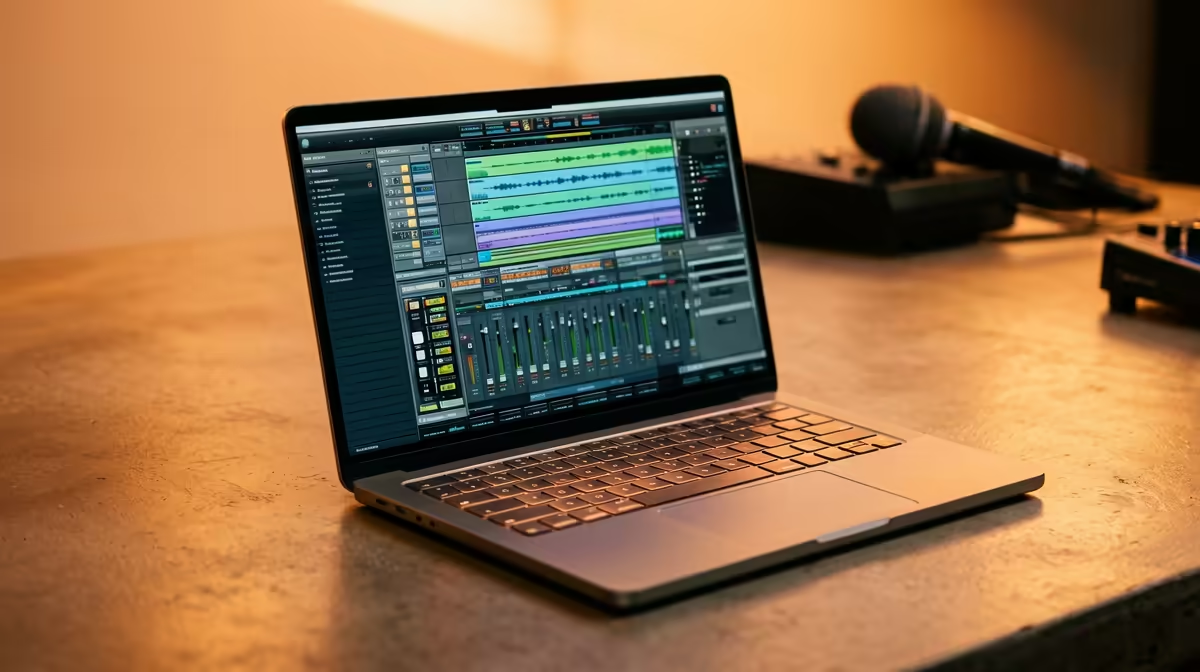
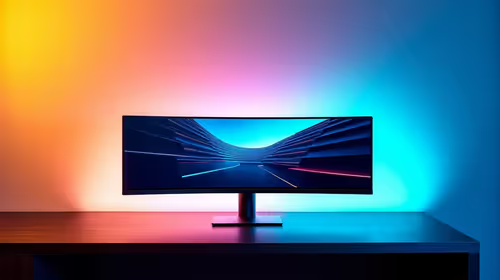
You might think a fancy screen is only for graphic designers or gamers, but that's a myth. For a music producer, your screen is your entire workspace. It’s your mixing desk, your effects rack, and your arrangement view all rolled into one. A cramped, dim, or low-resolution display forces you to constantly scroll, zoom, and minimise windows. This kills your creative flow and leads to serious eye strain after long sessions. 😩
A great laptop screen for music production allows you to see more of your project at once. This means less time navigating and more time creating. You can have your piano roll, mixer, and a few key plugins open side-by-side, optimising your workflow and helping you make better decisions, faster.
Key Screen Specs for SA Producers
When you're browsing for a new machine, the spec sheet can be overwhelming. Let's cut through the noise and focus on what truly matters for making music.
Resolution: More Pixels, More Power
Resolution is simply the number of pixels on your screen. More pixels mean a sharper image and, crucially, more space for your software.
- Full HD (1920x1080): This is the absolute minimum you should consider. It’s perfectly usable for beginners, but you might feel a bit cramped with complex projects.
- QHD (2560x1440): This is the sweet spot for many producers. It offers a significant jump in screen real estate over FHD without demanding too much from the GPU (which isn't a priority for music). You'll be able to see more tracks and plugins without needing to squint.
Screen Size & Brightness: Your Studio's Window
Screen size is a trade-off between portability and workspace. A 15.6-inch screen is a great all-rounder, while a 17-inch display feels incredibly immersive but is less portable. For brightness, look for a rating of 300 nits or higher. This ensures your screen is visible and vibrant even if you're working near a bright window or under harsh studio lights.
A good screen is a core part of a powerful production machine. Whether you're leaning towards the raw multi-core power of AMD laptops on special or the renowned single-core performance found in many top-tier Intel laptops, pairing it with a great display is key to an efficient setup.
Workflow Pro Tip ⚡
On Windows, use PowerToys' FancyZones utility to create custom snap layouts. This is a lifesaver for music production on a high-resolution screen. You can create a dedicated zone for your DAW's timeline, another for your mixer, and a third for your plugins, keeping your workspace perfectly organised with a simple drag-and-drop.
Do Refresh Rate and Panel Type Matter?
You'll see "120Hz" or "144Hz" advertised everywhere, especially on gaming laptops. While a high refresh rate makes motion look smoother, it offers no direct benefit for music production. However, it's a fantastic bonus. The reality is that many of the best gaming laptop deals happen to have the powerful processors and excellent screens that producers need, so don't be afraid to get one. 🚀
As for panel type, an IPS (In-Plane Switching) panel is your best bet. It provides excellent colour accuracy and wide viewing angles, so your plugin interfaces look correct even when you're not sitting perfectly centred.
Ultimately, the best laptop screen for music production is one that fits your workflow and budget. It pays to invest in a display that lets you work comfortably for hours, turning your creative ideas into polished tracks without friction. You'll find plenty of powerful options in our current laptop specials for sale in South Africa that tick all the right boxes.
Ready to Find Your Perfect Match?
The Mac vs Windows debate is complex, but for maximum power, choice, and value in South Africa, Windows is hard to beat. Explore our massive range of laptop specials and find the perfect machine to conquer your world.