Quick Answer
For couch co-op gaming, an mATX build is the better choice over full ATX — it fits a TV cabinet, takes a full-size GPU and air cooler, and costs less, while ATX's extra slots go unused in a living-room rig. A B650M board (around R2,600) plus a Ryzen 5 7600 makes a tidy, capable co-op box. Pick ATX only if you need many expansion slots.
Why mATX suits the living room
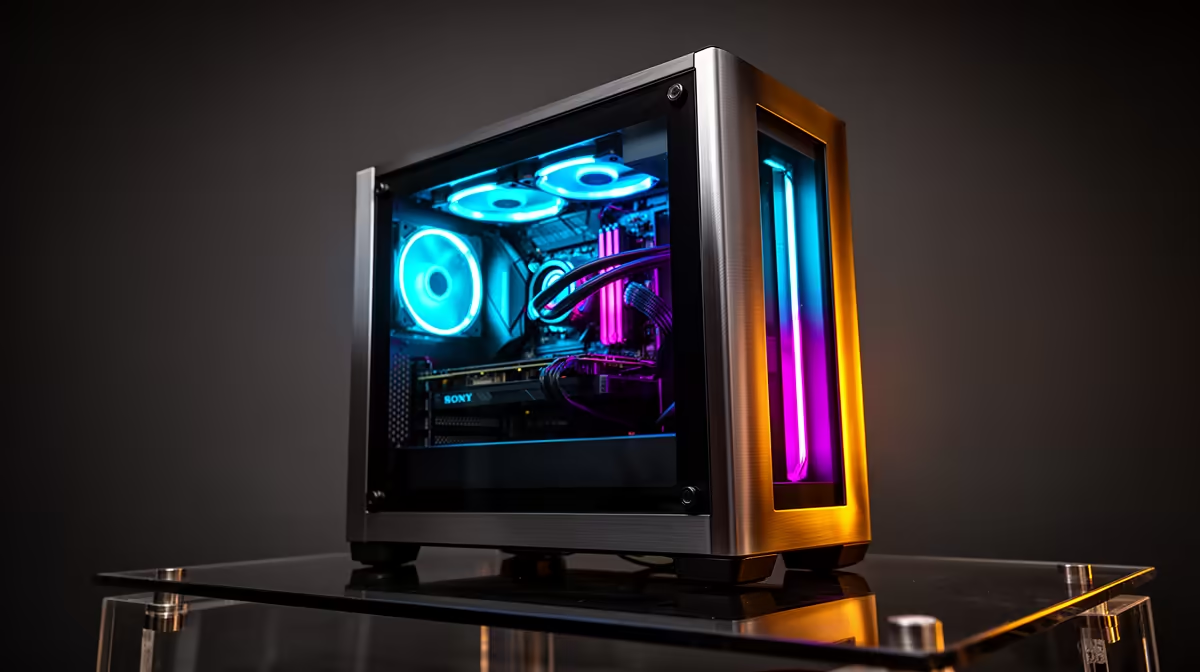
A micro-ATX board carries everything a couch co-op PC needs — a full PCIe x16 slot for the GPU, one or two M.2 slots, Wi-Fi, and four DIMM slots on many models. It fits a compact case that hides under a TV, unlike a tall ATX tower. You lose only extra PCIe and DIMM slots most gamers never fill, so mATX is the practical, cheaper pick for a shared screen setup.
When ATX earns its size
Full ATX makes sense if you run multiple add-in cards — a capture card plus a sound card, say — or want maximum cooling and airflow in a big tower. For pure couch co-op, those extras are wasted, and the larger case is harder to place near a TV. The money saved going mATX is better spent on a stronger GPU for a smoother shared image.
Build checklist
Confirm GPU length and cooler height fit your mATX case, use a 650W PSU, and run 16-32GB DDR5-6000. All boards, cases and parts are stocked locally so you can match dimensions before checkout.
FAQ
Is mATX or ATX better for couch co-op?
mATX. It fits a TV cabinet, takes a full GPU and air cooler, and costs less. ATX's extra slots are wasted in a living-room rig.
What do I lose going mATX instead of ATX?
Mainly extra PCIe and DIMM slots most gamers never use. Core features — full GPU slot, M.2, Wi-Fi, four DIMMs — stay on most mATX boards.
When is full ATX worth it?
When you run multiple add-in cards or want maximum airflow in a big tower. For couch co-op, that size is unnecessary.
Before you buy
For a living-room co-op PC, mATX fits the cabinet and saves cash for a better GPU — full ATX is overkill here.