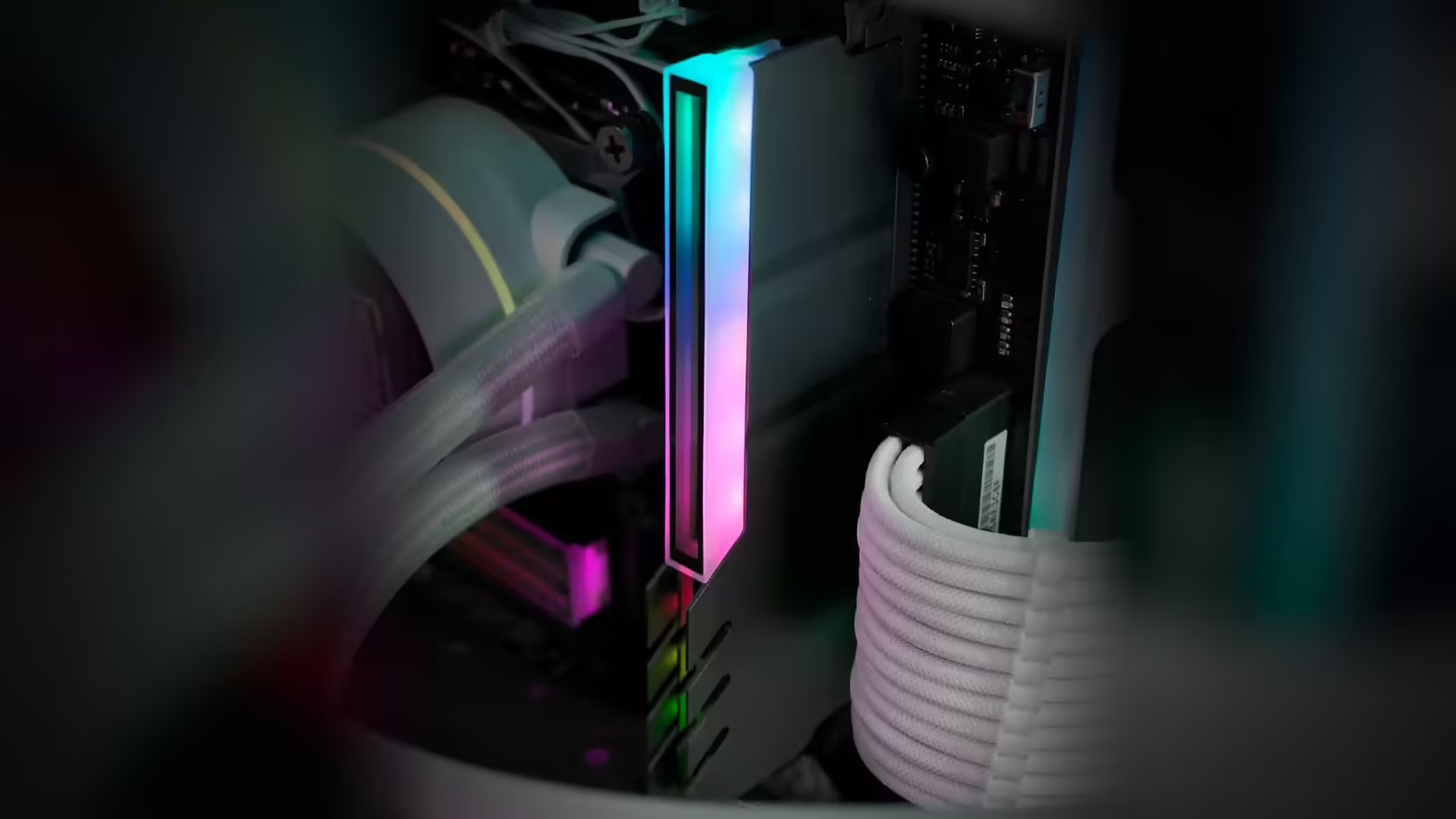
Two identical builds, same memory, same cover, same lighting, can look entirely different depending on one thing neither the memory nor the cover has any control over: what sits between the modules and the glass. A RAM cover is only as visible as the path light has to travel to reach a viewer, and that path is decided by the case and the cooler, not the accessory itself.
Quick Answer
It depends on the build around it, not the cover itself. The R249 AsiaHorse RAM Cover ARGB Heatsink shows its lit infinity-mirror panel clearly where memory sits in open view through a side panel, while a large air cooler mounted beside the slots can shade most of it from view. Position and layout decide what the cover genuinely adds to a given build.
🪟 The unobstructed case
Where memory sits with a clear line of sight to a side panel, with no large cooler or shroud in the way, the lit panel does exactly what it is designed to do - a visible band along the top of the modules, seen clearly through the glass. This is the layout the effect is essentially designed around.
🌬️ Where a large air cooler changes things
A tall tower cooler mounted immediately beside the memory slots can physically block much of the sightline to the modules below it, particularly from a straight-on viewing angle. The lit panel is still there and still working, but a viewer looking through the panel may see very little of it, shaded by the cooler's own bulk.
Liquid cooling as the alternative
A liquid cooler's pump block sits on the processor rather than occupying the space beside the memory, which generally leaves the area far more open to view than a large air cooler does. Builds prioritising a clear look at lit memory tend to favour this layout for exactly that reason, independent of anything to do with actual cooling performance.
📐 Where the panel is designed to be seen from
Because the infinity-mirror panel crowns the top of the module rather than facing outward along its side, it is genuinely seen best from slightly above rather than straight on. That has real implications for where the machine physically sits.
Desk placement versus floor placement
A machine placed on a desk, viewed from a normal seated position looking slightly downward, shows a top-facing element considerably better than the same machine standing on the floor and viewed mostly from the side. This is worth factoring in before assuming any lit accessory will read the same way regardless of where the case ends up.
🤝 A reasonable compromise for partly hidden slots
Where only some memory slots are genuinely visible due to a cooler's position, dressing only those slots is a sensible middle ground, even though it means giving up on a fully unified finish across every module. A partially covered row that is fully visible often looks more deliberate than a fully covered row where half is hidden behind a cooler anyway.
✨ Reflected light still counts for something
Even where the panel is partly shaded from direct view, a lit panel throws some ambient light onto nearby surfaces inside the case - the underside of a shroud, the top of a graphics card, the case roof. A partly hidden cover is not entirely wasted even in a layout that blocks the direct sightline.
🕶️ Tinted and frosted panels change the sum again
A clear side panel and a tinted or frosted one show the same lit cover very differently - tinted glass mutes brightness and can shift colour slightly, while a frosted panel diffuses a sharp lit line into a softer glow that loses some definition. Neither is better outright, but a build with a heavily tinted panel may want brighter or more saturated lighting to compensate for what the panel itself takes away, which is worth factoring in before assuming a cover will look exactly as bright as it does in a product photo shot behind clear glass.
🌗 Ambient room lighting matters more than expected
A dim room makes any lit accessory look more prominent than the same accessory does in a bright, sunlit space, simply because there is less competing light for the eye to weigh it against. A cover that looks like a strong feature in evening photos taken in a dark room can read as far more subtle during the day near a window. Judging the effect only from photos taken in ideal lighting conditions, rather than the conditions the build will actually sit in most of the time, is an easy way to be disappointed by an otherwise correctly fitted cover.
🧊 Case fans and mesh panels add their own filter
A mesh front or side panel, common on cases built around airflow, does not block a sightline the way solid tinted glass does, but it does interrupt it with a repeating pattern that can make a lit element look busier or more fragmented than it would through plain glass. This is a minor effect rather than a major one, but it belongs on the same list as cooler position and glass tint when working out how a cover will actually present in a specific case.
👀 Check your own case before buying a set
The quickest way to know how much of the effect a particular build will actually show is simply looking at the memory area from your usual seated position before ordering anything. That single check, applicable whether the memory is DDR5 or DDR4, tells you more than any general rule about coolers and case layouts ever could.
Frequently Asked Questions
What tends to hide the memory?
A large tower cooler sitting beside the memory, which can shade the modules from a viewer looking through the side panel.
Does a liquid cooler help?
Usually, because a liquid loop only puts a small pump block over the processor, which keeps the space beside the memory far more open than a tall air tower would.
Where is the panel positioned?
Crowning the cover along the top of the module, so it is seen best from slightly above rather than straight on.
Does a desk position matter?
It does. A machine on the desk shows a top-facing element far better than one standing on the floor.
Would fewer covers make sense then?
If only some slots are visible, dressing those is a reasonable compromise, though it breaks the unified finish.
Is reflected light worth anything?
A lit panel throws some light onto nearby surfaces, so even a partly hidden cover contributes to the interior.
Should I check before buying a set?
Looking at the memory area from your usual seat is the quickest way to know how much of it will show.
Not sure how much of a top-lit memory cover your build will actually show?
Look at your own memory area first, then browse Evetech's DDR4 and DDR5 range with that view in mind.