Quick Answer
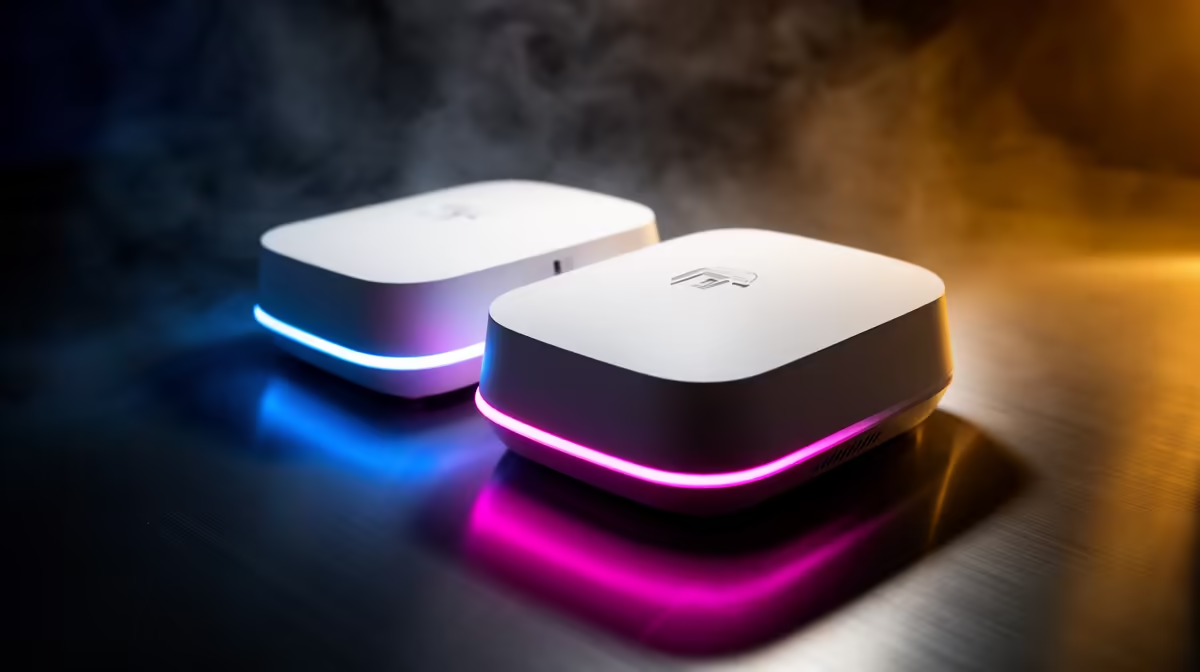
For cloud gaming at home, buy a mesh Wi-Fi kit in this order: first strong coverage to the gaming room, then low-latency wireless or wired backhaul, then extra features. A R2,500-R5,000 dual or tri-band mesh kit with Wi-Fi 6 keeps a steady 35-50 Mbps to your screen for GeForce NOW or Xbox Cloud, where latency consistency matters more than peak speed.
Must-Have: Coverage Where the Screen Sits
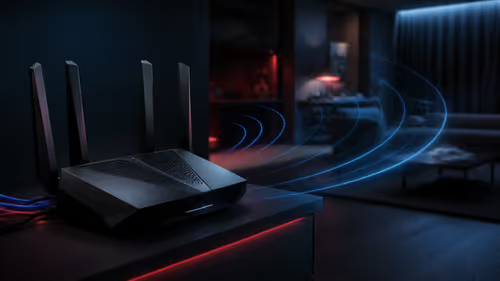
Cloud gaming streams from a server, so a steady signal at the gaming spot is everything. The first job of a mesh kit is to put a strong node near your TV or PC. Place nodes so each still has a solid link to the main unit, then extend toward the gaming room. A Wi-Fi 6 mesh kit (R2,500-R5,000) covers a typical SA home of 100-200sqm with two or three nodes.
Must-Have: Stable, Low-Latency Backhaul
Cloud gaming punishes jitter more than low bandwidth; you need only ~25-50 Mbps but it must be consistent. Wired backhaul over Ethernet between nodes is ideal where the home has cabling. If you rely on wireless backhaul, a tri-band kit dedicates a band to node-to-node traffic so your gaming stream is not fighting for airtime. That consistency keeps input lag steady on GeForce NOW or Xbox Cloud Gaming.
Nice-to-Have and Skip
Nice-to-haves are app-based management, guest networks and QoS to prioritise the gaming device. Skip a kit that cannot place a dependable signal where you actually play, no feature list rescues weak coverage. Match node count to your home: a 100sqm flat needs two nodes, a double-storey house often needs three. Wire the backhaul if you can; it is the single biggest latency win.
FAQ
How much speed does cloud gaming need?
Only about 25-50 Mbps, but it must be consistent. Cloud services like GeForce NOW punish jitter far more than they need raw bandwidth, so stability beats peak speed.
Wired or wireless mesh backhaul for cloud gaming?
Wired Ethernet backhaul is best where cabling exists. If you must go wireless, a tri-band kit dedicates a band to node traffic so your game stream keeps steady latency.
How many mesh nodes for a home cloud setup?
A 100sqm flat usually needs two nodes; a double-storey house often needs three. Place them so each keeps a solid link back to the main unit toward the gaming room.
Wire the mesh backhaul if your home has Ethernet, then place a node near the screen; for cloud gaming, steady low-latency coverage beats chasing peak Mbps numbers.