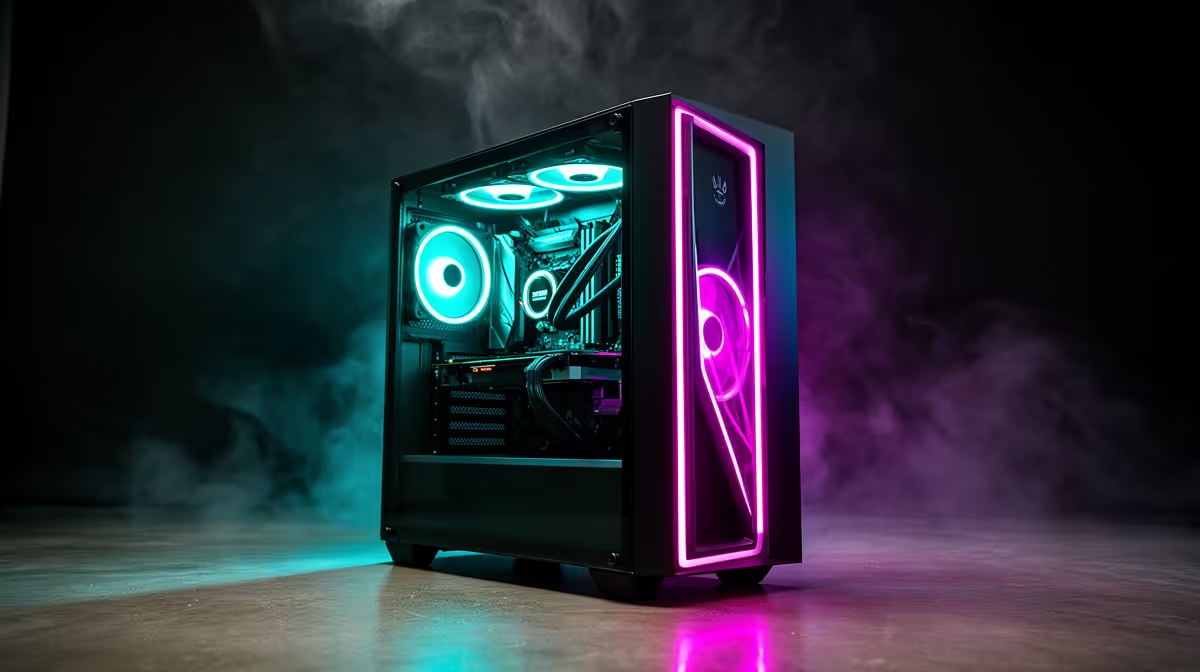
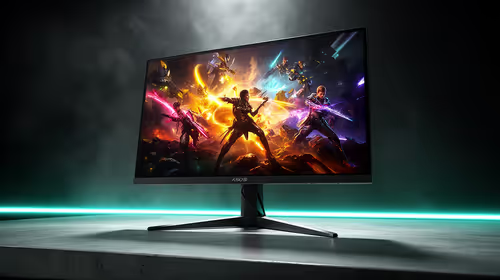
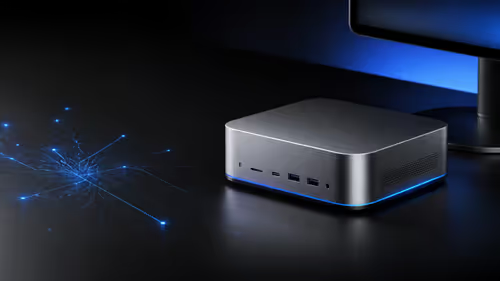
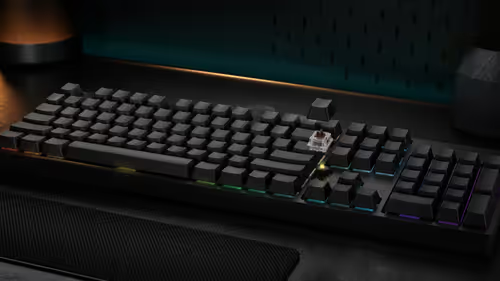
The ASUS RX 7600 8GB at R4,650 suits SA users who want a mid-range gaming pc that can keep creative work, browsing, and gaming responsive when household power is a bit unstable. Pairing that 8GB graphics card with sensible backup power is the practical move, because the PC itself can handle the workload, but the wall supply still needs smoothing.
What spec makes sense for a steady mid-range tower?
The Ryzen 5 5500 at R1,100 is the value anchor for a balanced build. It gives enough CPU headroom for office tabs, chat apps, homework, light editing, and mainstream gaming without forcing the budget into parts that do not change the power-dip problem.
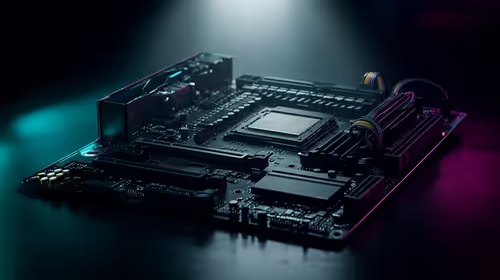
The MSI A520M-A Pro at R700 is the base-board choice that keeps the platform simple. With that board and the Ryzen 5 5500, the money saved can go into a proper UPS or inverter setup around the desk, which matters more than overspending on the motherboard for this specific use case.
SA home office desk during power dips
For a desk where work must continue through brief dips, the Palit RTX 5060 at R4,800 is worth considering if you want a newer graphics option while still staying in a mid-range lane. The listed R4,800 price keeps it close to the ASUS RX 7600 8GB, so the choice becomes about the graphics card you prefer rather than changing the whole build direction.
The Ryzen 7 7800X3D at R4,800 is a strong upgrade when the same tower is also a serious gaming room machine. Its X3D design is the standout spec here, but for pure continuity during dips, stabilising the desk power remains just as important as the processor.
Ready to choose the right gaming pc?
Use Ryzen 5 5500 at R1,100 as the gaming room benchmark, then check whether its listed spec matches the space, workload, and upgrade path.