Quick Answer
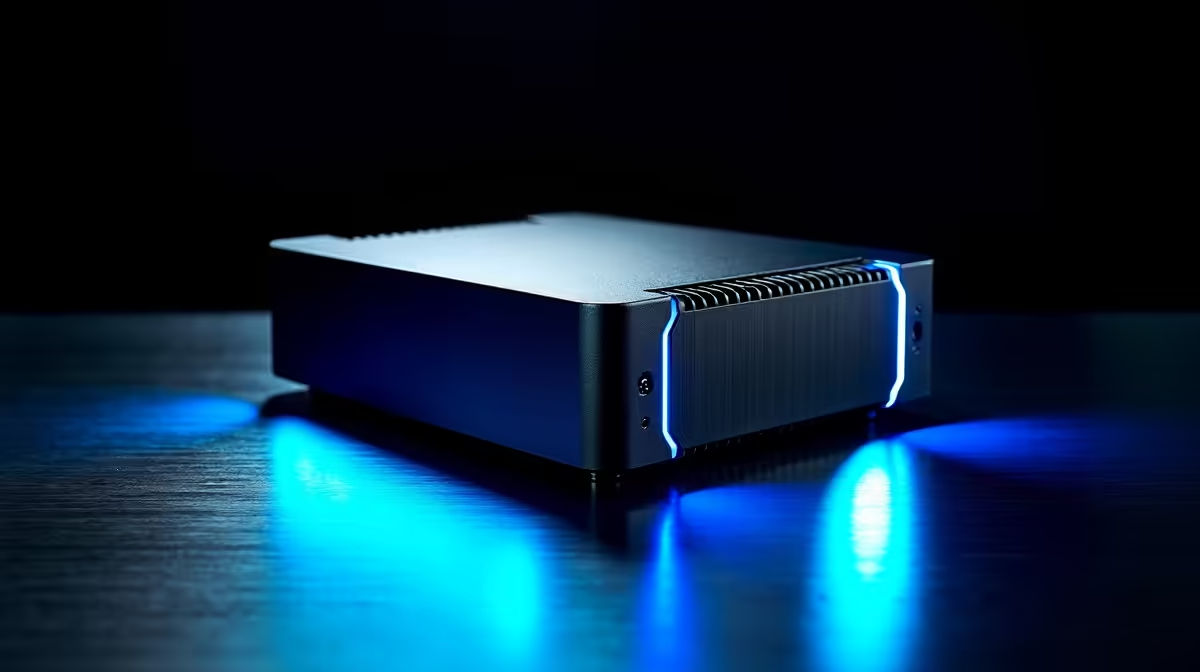
For cybersecurity labs, a mini PC works well if you size RAM and storage for virtualisation; start with 32GB RAM and a 1TB NVMe drive. A mini PC with a recent 6-core or 8-core chip, around R10,000 to R14,000, runs several lab VMs while staying quiet and desk-friendly.
Starter: A Capable Mini PC Base
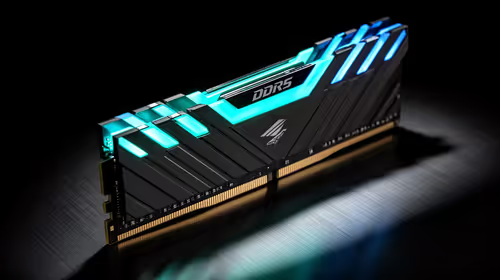
Cybersecurity practice leans on running multiple virtual machines, so memory is the first priority. 16GB is a tight floor; 32GB lets you run a victim VM, an attacker VM, and a network appliance together. A 1TB NVMe drive holds several VM images and snapshots without constant cleanup. A modern 6 to 8-core CPU handles the compute load of nested labs. A unit with a 2.5GbE port also lets you build realistic network experiments between VMs and external machines.
Serious: Where to Spend Next
As labs grow, upgrade RAM toward 64GB if the mini PC supports it, and add fast external NVMe storage for snapshot libraries. Confirm the unit has enough USB and a 2.5GbE port for network experiments. Choose a model with user-accessible RAM and storage so the upgrade path stays open.
Cooling and Quiet Operation
Sustained VM loads heat a small chassis, so favour a mini PC with a proven cooling design to avoid throttling during long lab sessions in a warm room.
FAQ
How much RAM do I need for a cybersecurity lab?
Start at 32GB so you can run several VMs at once. 16GB is a tight minimum, and 64GB is ideal as your labs grow more complex with more simultaneous machines.
Can a mini PC really handle virtualisation?
Yes, a modern 6 to 8-core mini PC with 32GB RAM runs multiple lab VMs comfortably. Just confirm the cooling and that RAM and storage are user-upgradeable.
Do I need a discrete GPU for security labs?
Usually not. Most cybersecurity coursework is CPU and RAM bound. Spend on memory, fast storage, and core count rather than graphics for typical lab work.
mini PC with user-accessible RAM and M.2 slots so you can grow to 64GB and add storage as your labs scale.