With R5,000 available, upgrade the monitor first when the current panel is 60Hz, smeary, dim or below the resolution your PC can drive. Refresh, response and image quality touch every game. Upgrade peripherals first when the display already matches the GPU and your mouse, keyboard or headset creates a clear control problem. Test both sides before spending.
Quick Answer
Check the monitor's native resolution, refresh, response behaviour and adaptive-sync range. Compare those with your actual frame rate. If the PC produces well above the screen's useful range, a monitor can transform motion. If the screen already shows the frames cleanly, put the R5,000 into a mouse shape, keyboard layout or headset fit that removes a repeated fault.
When the monitor is the obvious first move
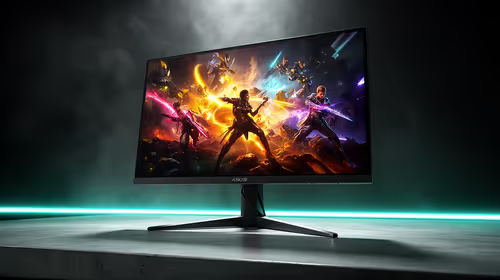
A 60Hz panel updates every 16.7 milliseconds. A 144Hz panel updates about every 6.9 milliseconds. That does not guarantee the same reduction in complete input latency, but it lets new frames appear more often and makes motion easier to follow.
The PC must produce frames to use the refresh. Run your main games and record average and one-percent-low frame rates. If a competitive game holds 140 fps on a 60Hz display, the monitor is hiding much of the output.
Pixel response also matters. A slow panel can smear transitions even at a high refresh. Check measured response and overshoot at the overdrive setting you will use. A 1ms label may describe one test method rather than broad behaviour.
Adaptive sync can smooth uneven rates inside the supported range. Confirm GPU, input port and monitor support. One HDMI or DisplayPort may expose different modes.
What R5,000 can change on the display side
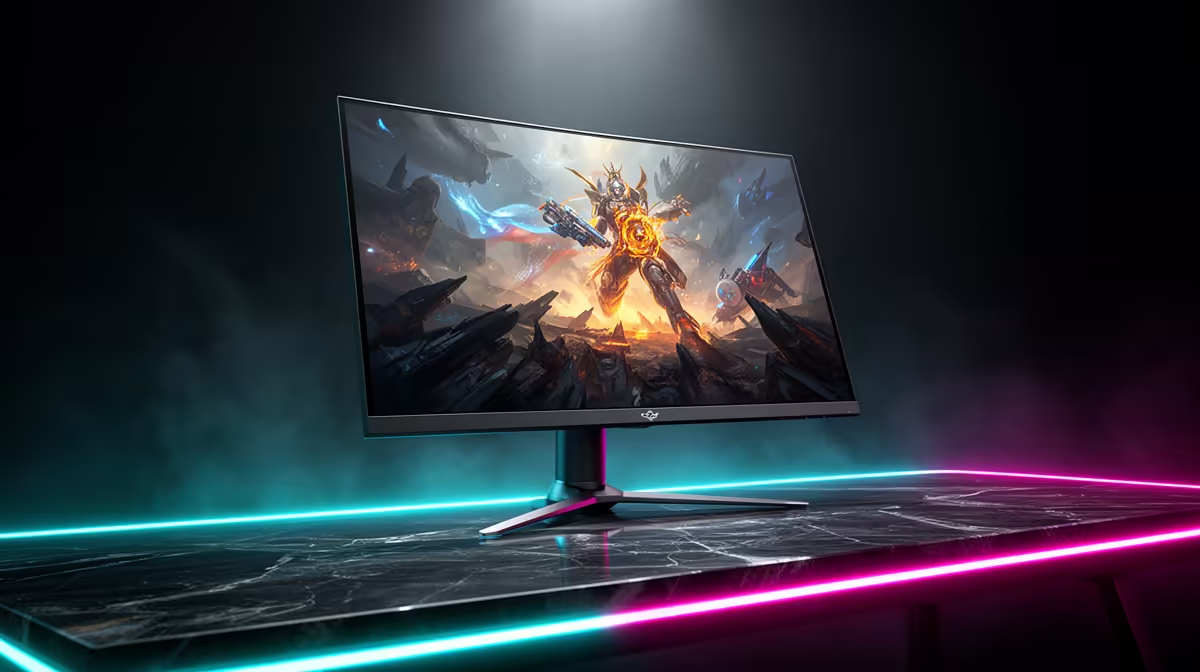
Treat the amount as a monitor basket ceiling, not a category minimum. A named example from the local price pack gives the right evidence: the ViewSonic VA220A-H 22-inch Full HD 120Hz monitor was R1,599 as of July 2026. It shows that a higher-refresh entry display can fit below R5,000, but it is not a recommendation for every desk.
Use the remaining budget only after screen size, panel type, response and ports are compared. A 24-inch or 27-inch display may suit viewing distance better. QHD demands more GPU performance than Full HD.
The queue does not provide a monitor URL for this post, so no monitor link is invented. Use the dated named example and current product information when you shop.
When the mouse has the stronger case
A poor mouse shape can cause constant correction. Sensor skips, cable drag or awkward side buttons affect every aim movement. A suitable replacement may cost less than R5,000 and leave the monitor budget untouched.
Test hand fit, weight and button reach. Stable polling and clean tracking matter more than maximum DPI. Wireless is useful when its receiver can sit near the pad and battery behaviour suits your routine.
If the monitor is already high refresh and the GPU holds it, the mouse can be the first upgrade that changes control rather than presentation.
When the keyboard or headset leads
A keyboard should move first when keys fail, the layout steals mouse room or actuation does not suit the game. Mechanical, optical and magnetic designs offer different feel and control. Board latency depends on the complete device and firmware, not switch technology alone.
A headset moves first when voice chat is unclear, the cups become painful or game cues sound masked. Compare comfort over a full session. A new monitor cannot repair communication.
Use the peripheral best-seller page and gaming accessory catalogue to price the input side. Open exact models because the accessory range contains products outside mouse, keyboard and audio.
The PC may be the real bottleneck
A new 165Hz QHD monitor is a poor performance upgrade when the GPU holds 55 fps at QHD. You can still buy it for image quality and future use, but the immediate game result should be understood.
Try the monitor's intended resolution through benchmarks or rendering-scale tests. Check output connectors and whether the GPU supports the full refresh and adaptive-sync path.
If the PC is fully GPU-limited below the current panel's range, keep the R5,000 toward graphics. Peripheral and monitor upgrades cannot create rendered frames.
Build two baskets
Monitor basket: named display, required cable and any stand or adaptor. Peripheral basket: one or more named devices that solve logged faults. Date all quoted prices as of July 2026.
Do not fill the peripheral basket with four mediocre replacements when one good mouse is the problem. Do not fill the monitor basket with a premium arm when the supplied stand works.
Compare the before-and-after outcome. The monitor should improve visible motion, image or workspace. The peripherals should improve fit, control or audio.
Consider the years of use
A monitor can outlast several towers and appears in games, work and video. That gives it broad value. Peripherals wear and may be easier to replace one at a time.
On the other hand, a bad mouse or headset can ruin every hour before the monitor reaches old age. Use time does not excuse poor fit.
Keep the existing display as a second screen only when the desk, GPU ports and workload use it. A dual setup adds power, space and cursor travel.
A decision in ten minutes
Run the main game and note frame output. Inspect the monitor for smear, tearing and refresh. Then use every peripheral and write down the first fault.
If the panel hides output and no peripheral fault appears, monitor first. If the screen matches the PC and one device interrupts control, peripherals first. If both are sound, keep the money until a real need appears.
Repeat the check after changing resolution or the games you play, since the limiting side can move.
Frequently Asked Questions
Is a monitor always the best R5,000 upgrade?
No. It leads when the current panel limits visible frames or image quality. Clear peripheral faults can take priority.
Should I buy QHD with an entry GPU?
Only after checking exact-game frame rates at QHD. Full HD high refresh may be the better match.
Can I split R5,000 between monitor and peripherals?
Yes when named current products fit and both changes remain meaningful. Avoid two weak upgrades that solve neither problem.
Compare the screen's visible limit with logged peripheral faults, then put the R5,000 into the single upgrade that changes every session.