


PCIe 5.0 vs PCIe 4.0 for Video editing in 4k in SA
PCIe 5.0 vs PCIe 4.0 for video editing in 4k is mainly about fit, features, compatibility, cost, and upgrade path, not one automatic winner. SA buyers should match the choice to the setup.
Read moreA monitor's bulky, fragile packaging pushes volumetric shipping cost up and raises breakage risk, and both eat directly into any saving an import promised. Evetech stocks monitors locally with full warranty, removing the shipping-damage gamble entirely.
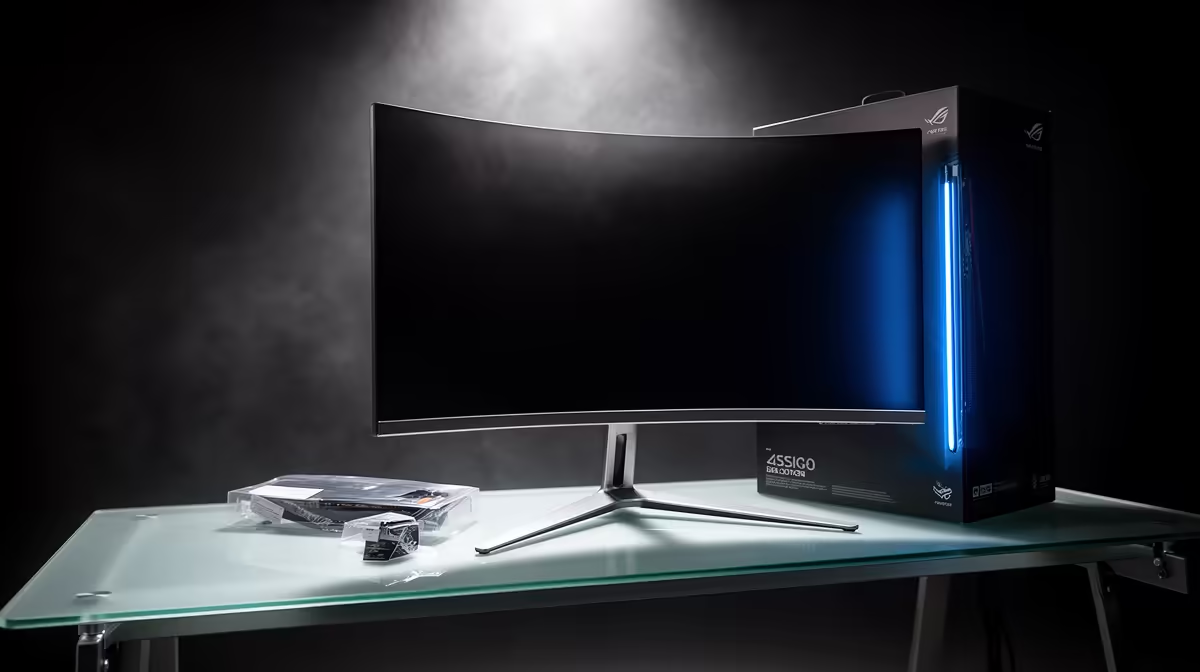
A monitor import can look like a bargain until the courier prices the box. Displays take up far more cargo space than their weight suggests, so international carriers may charge by volumetric weight. A 32-inch screen then brings a second problem: thin glass, a broad panel and a stand packed into one carton have little tolerance for a drop or crush.
Your comparison needs the full delivered cost, adequate damage cover and a workable claim route. If the import only saves a small amount before shipping, the carton and the risk can swallow that saving before the screen reaches your desk.
Couriers compare actual weight with volumetric weight and charge on the higher figure. The formula and divisor vary by carrier and service, so use the packed dimensions from the seller rather than the monitor's product dimensions.
Retail monitor cartons leave space for moulded foam, the stand, cables and a safety gap around the panel. That protection is useful, but it produces a large box. A lightweight 27-inch monitor can therefore be billed like a much heavier parcel.
Ask for four figures before you buy: length, width, height and gross packed weight. Put those numbers into the carrier's own calculator. A seller's free domestic delivery to a forwarding address says nothing about the cost of the international leg.
Oversize handling can sit outside the base freight quote. Remote-area delivery, address correction and storage can add more. Get a quote that names the service and its exclusions.
Moving from 24 to 27 inches sounds modest on paper. The shipping carton grows in two dimensions, and the stand or curved panel can add depth. Volumetric weight rises with all three measurements.
Ultrawide and curved monitors are harder again. Their long cartons resist conveyor turns, and the panel shape needs deeper protective packaging. A 34-inch ultrawide may cost far more to ship than two smaller items with the same combined mass.
Large screens also become harder to return. The original carton may not fit in a car, while a collection service can price the return on the same high volumetric weight as the outbound trip.
Compare exact cartons. Do not multiply a 24-inch quote by a rough percentage and assume it covers a 32-inch model.
The factory carton is designed to move the monitor through a distribution chain, but the condition of that carton matters. A marketplace seller may send it without an outer box, add tape across the printed surfaces or place accessories against the panel side.
Ask whether the monitor ships in its retail carton or a double box. Request corner protection if the seller offers it. A second carton adds size and cost, yet it can protect the manufacturer's packaging and spread an impact.
Original foam must fit the exact model. Loose fill around a heavy stand does little if the stand can move and strike the screen. A forwarder that repacks parcels should confirm how it will keep the stand, power brick and panel apart.
Photographs taken before forwarding help. They show whether the carton entered the international leg with a puncture, crushed corner or broken seal.
Standard carrier liability may be based on parcel mass or another capped formula. That amount can sit well below the price of a gaming monitor. Declared-value cover can raise the claim ceiling, though it does not guarantee that every kind of screen damage is covered.
Read the exclusions for glass, LCD panels, concealed damage, inadequate packaging and used electronics. Ask who buys the cover and who can lodge the claim. If the seller remains the contracting shipper, you may have to work through that seller after a loss.
Keep the product invoice, freight invoice, serial number and packaging requirements. Take images of every face of the unopened box before moving it. If there is visible damage, note it with the driver or collection point where the process allows.
The useful question is not whether the parcel is insured. Ask what event is covered, to what value, under whose name and with which evidence.
Open the carton with a camera running. Show the shipping label, seals, foam and monitor as it comes out. Do not throw away a torn bag or broken insert.
Photograph the serial label and the crack with the display off and on. Test only as far as safety allows. A hard impact can damage internal boards as well as the panel.
Report the problem within the carrier and seller deadlines. Those clocks can be short. Use the claim channel named in the shipping terms and keep the reference number.
Do not attempt a repair while the claim is open. Removing the back cover or disposing of the carton can weaken the evidence. The carrier may request an inspection or collection in the original packaging.
A manufacturer's warranty deals with covered product faults under its terms. A panel cracked by a courier impact is usually a transport claim. One party can send you to the other if the cause is unclear.
Ask the seller who carries transit risk under the sale and shipping terms. Check whether the warranty applies in South Africa and whether the exact serial can enter a local service channel. A global brand name does not settle either point.
Dead pixels, backlight faults and intermittent ports may appear without obvious carton damage. Record the unboxing and test the monitor at once, because the seller's arrival-damage window may be shorter than the product warranty.
If the unit must go overseas, you face another large-box freight charge. Confirm who pays it before assigning value to an overseas warranty.
Browse the monitor range available in South Africa and check the current monitor best sellers for realistic alternatives in the size and refresh-rate class you want.
Compare panel type, resolution, adaptive-sync support, ports, stand adjustment and pixel policy. Then put the local delivered price beside the imported total, including freight, cover, border charges and any adapter you need.
A local listing also gives you a local delivery trail and a closer place to start if the box arrives damaged. That practical difference is worth pricing, even when the overseas screen has a lower product price.
Before checkout, get the model code, packed dimensions, gross weight and regulatory region. Save the panel and pixel policy. Confirm the carrier service, damage exclusions, claim owner and maximum covered value.
Price the return as a separate shipment. If you would refuse to pay that amount after a fault, the overseas warranty has less value than it appears to have.
Finally, decide how much you must save to accept the added risk. A firm threshold stops a small headline discount from turning into a costly experiment.
The carton is broad and deep because it protects a thin panel. Couriers can charge on volumetric weight when that figure exceeds the box's actual mass.
It can, but the policy may exclude screens, glass, poor packing or concealed damage. Confirm the covered events, claim limit and evidence rules in writing.
Record the unopened carton and unboxing, retain every packaging piece, photograph the serial and damage, then report it through the seller and carrier channels within their deadlines.
Price the exact monitor carton, damage cover and possible return journey, then compare that complete figure with a locally supported display before you commit.
The carton is broad and deep because it protects a thin panel. Couriers can charge on volumetric weight when that figure exceeds the box's actual mass.
It can, but the policy may exclude screens, glass, poor packing or concealed damage. Confirm the covered events, claim limit and evidence rules in writing.
Record the unopened carton and unboxing, retain every packaging piece, photograph the serial and damage, then report it through the seller and carrier channels within their deadlines.
PCIe 5.0 vs PCIe 4.0 for video editing in 4k is mainly about fit, features, compatibility, cost, and upgrade path, not one automatic winner. SA buyers should match the choice to the setup.
Read more
Wi-Fi 7 vs Wi-Fi 6e for competitive esports comes down to router support, latency goals, device compatibility, and coverage. SA buyers should match the choice to the real network setup.
Read more
ATX 3.1 vs ATX 3.0 for mMO and live-service games buyers - what changes is mostly about compatibility, budget, upgrade path, and setup fit. SA buyers should check device support and real needs before expecting a clear win from either option.
Read more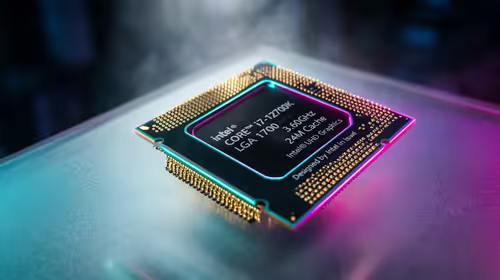
LGA 1851 vs LGA 1700 can affect Twitch and YouTube streaming when gaming and encoding share CPU resources. For SA creators, the real-world difference depends on encoder choice, memory support, motherboard cost, thermals, and upgrade plans.
Read more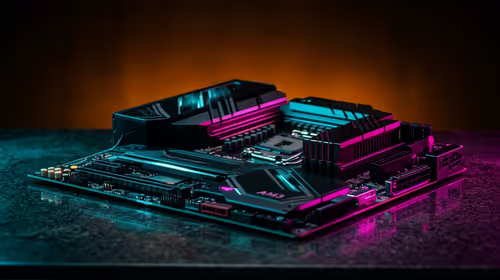
X870E vs X670E for aaa single-player gaming is mainly about fit, features, compatibility, cost, and upgrade path, not one automatic winner. SA buyers should match the choice to the setup.
Read more
Hall Effect switches vs Mechanical switches for mMO and live-service games is mostly about compatibility, budget, upgrade path, and setup fit. SA buyers should check device support and real needs before expecting a clear win from either option.
Read more
A fake 113GB GTA VI ISO reportedly used empty padding around a small malware payload. SA gamers should delete unofficial builds, keep Windows security active and wait for official channels.

Wi-Fi 6E vs Wi-Fi 6 matters for 4K video editing when files move across a network. The real-world difference between Wi-Fi 6E and Wi-Fi 6 for video editing in 4K depends on NAS access, cloud uploads, router range, and SA creator workflows.

The difference between PCIe 5.0 and PCIe 4.0 for SA gamers is mostly bandwidth headroom. Compare GPU slot needs, NVMe speed, motherboard support, and upgrade timing before paying extra for a newer platform.

Gaming PC stuck pixel checks in South Africa should confirm the monitor fault first. Use colour tests, screenshot comparison, cable swaps, display menu checks, and clear photos before deciding on support.

Shokz OpenFit Air 2 earbuds weigh 7.2g each and use a redesigned dual-driver open-ear layout. SA buyers should choose them for comfort and awareness, not maximum isolation.

AMD's current driver now lists a Radeon RX 9050 4GB, while product coverage details a narrowed memory system. SA buyers should weigh the low VRAM ceiling against current local Radeon options.

Samsung Display has demonstrated a 16-inch 2.5K OLED laptop panel running at 300Hz. SA buyers should wait for a named notebook, full panel specifications and a local price before planning an upgrade.

Microsoft says some Windows 11 game crashes after recent updates are linked to RGB-related drivers. Affected SA gamers should confirm the update and driver before using the published registry workaround.

RTX 5090 on a 650W PSU is a tight pairing with very limited headroom. For SA gaming PCs, focus on total system draw, PSU quality, connector support, CPU choice, and avoid OC plans unless the full build is carefully power-limited.
PCIe 5.0 vs PCIe 4.0 for video editing in 4k is mainly about fit, features, compatibility, cost, and upgrade path, not one automatic winner. SA buyers should match the choice to the setup.
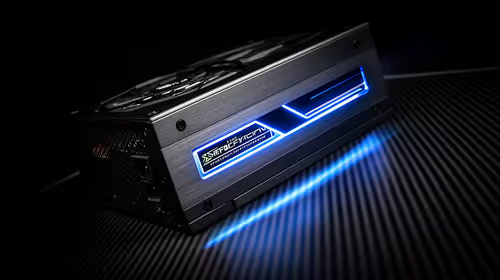
850W PSU safety for RTX 5090 is plausible with a quality unit and balanced parts. In SA, confirm connector support, CPU power draw, case airflow, PSU age, and spare capacity before building around 850W.
Wi-Fi 7 vs Wi-Fi 6e for competitive esports comes down to router support, latency goals, device compatibility, and coverage. SA buyers should match the choice to the real network setup.