


PCIe 5.0 vs PCIe 4.0 for Video editing in 4k in SA
PCIe 5.0 vs PCIe 4.0 for video editing in 4k is mainly about fit, features, compatibility, cost, and upgrade path, not one automatic winner. SA buyers should match the choice to the setup.
Read moreMotherboard buying order for esports gaming should be shortlisted around the job it must do. South African buyers should compare fit, performance, compatibility, and upgrade room, warranty path, and upgrade room before treating any pick as best.
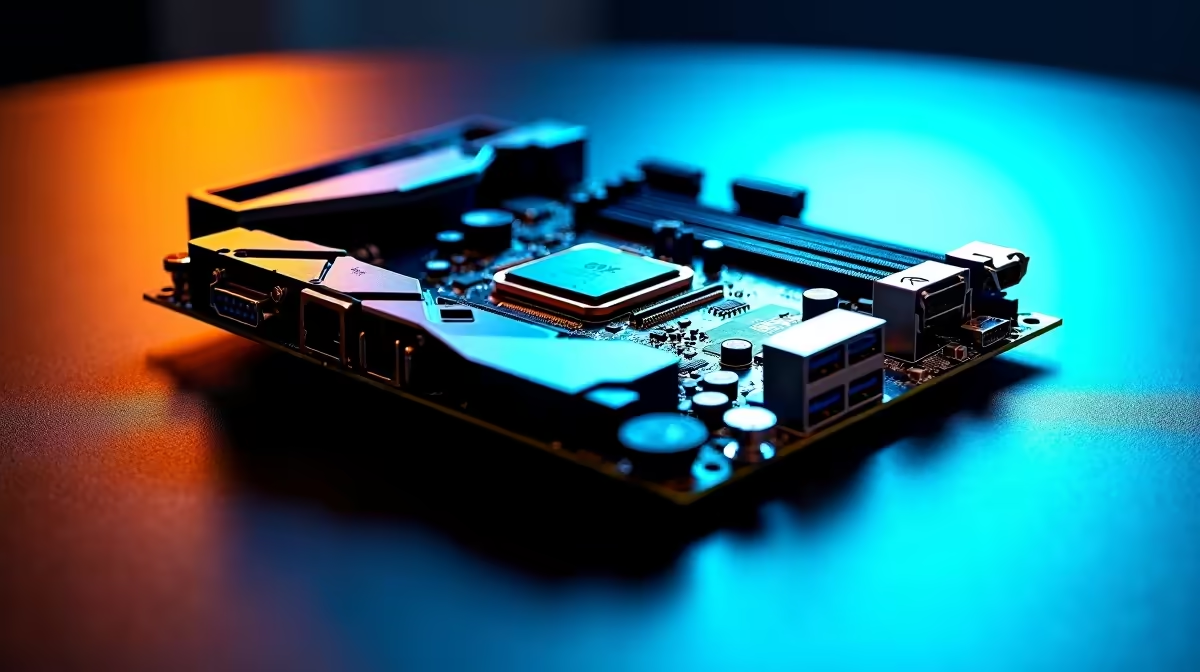
For esports gaming, the motherboard buying order is: a reliable board with a solid VRM and the right socket is the must-have, good connectivity and fast networking are nice-to-have, and high-end overclocking features or PCIe 5.0 are skip. A dependable B650 or B760 board from around R2,500 at Evetech is the value foundation for a stable esports rig.
Esports is about consistent, stable performance through long practice sessions and tournaments, so the must-have in a motherboard is reliability with a solid VRM and the correct socket for your CPU. A board with a strong, well-cooled VRM keeps the CPU at full clocks under load, so frame timing stays consistent, which matters in competitive play. A B650 (AMD) or B760 (Intel) board covers this for a mid-range esports CPU without overspending. Reliability is paramount, since a board fault that crashes you mid-match is the worst outcome, so a dependable board is the foundation of a competitive rig.
The nice-to-haves help an esports rig but are secondary. Fast 2.5GbE networking gives a small edge for low-latency wired connections and LAN transfers, and good connectivity ensures all your peripherals connect cleanly. Solid onboard audio helps for clear comms. What you can skip is high-end overclocking VRMs beyond what your CPU needs, PCIe 5.0 GPU slots that give no real gaming benefit today, and elaborate RGB armour that adds cost without performance. Esports titles run on modest hardware, so a flagship board is overspend. Focus on a reliable board with a solid VRM and good networking, and put the savings toward other parts.
A reliable B-series board with a solid VRM and fast networking is the esports must-have.
Reliability, a solid VRM and the right socket for your CPU. A strong VRM keeps the CPU at full clocks for consistent frame timing, and reliability prevents a fault crashing you mid-match.
It is a useful nice-to-have. A board with 2.5GbE networking supports low-latency wired connections and faster LAN transfers, which can give a small edge in competitive play.
No. Esports titles run on modest hardware, so high-end overclocking VRMs, PCIe 5.0 and RGB armour are overspend. A reliable B650 or B760 board covers an esports rig well, with savings going elsewhere.
reliable B650 or B760 board with a solid VRM and 2.5GbE networking for esports, and skip overclocking features and PCIe 5.0 you will not use.
PCIe 5.0 vs PCIe 4.0 for video editing in 4k is mainly about fit, features, compatibility, cost, and upgrade path, not one automatic winner. SA buyers should match the choice to the setup.
Read more
Wi-Fi 7 vs Wi-Fi 6e for competitive esports comes down to router support, latency goals, device compatibility, and coverage. SA buyers should match the choice to the real network setup.
Read more
ATX 3.1 vs ATX 3.0 for mMO and live-service games buyers - what changes is mostly about compatibility, budget, upgrade path, and setup fit. SA buyers should check device support and real needs before expecting a clear win from either option.
Read more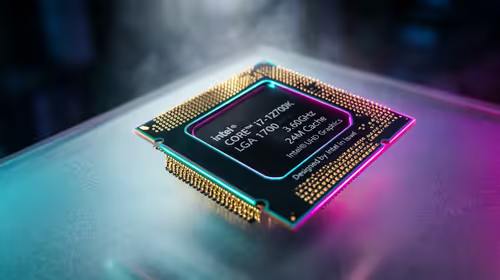
LGA 1851 vs LGA 1700 can affect Twitch and YouTube streaming when gaming and encoding share CPU resources. For SA creators, the real-world difference depends on encoder choice, memory support, motherboard cost, thermals, and upgrade plans.
Read more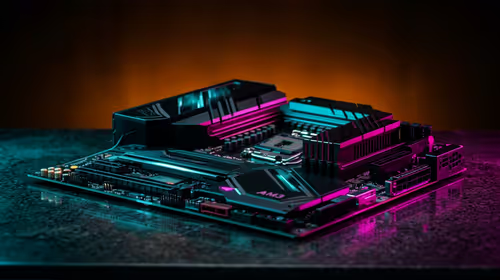
X870E vs X670E for aaa single-player gaming is mainly about fit, features, compatibility, cost, and upgrade path, not one automatic winner. SA buyers should match the choice to the setup.
Read more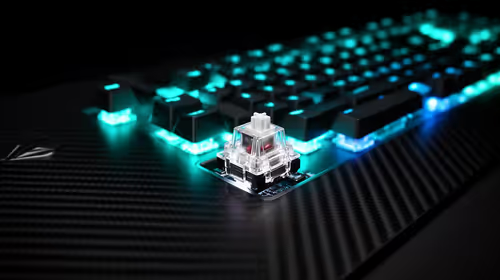
Hall Effect switches vs Mechanical switches for mMO and live-service games is mostly about compatibility, budget, upgrade path, and setup fit. SA buyers should check device support and real needs before expecting a clear win from either option.
Read more
Minisforum's M2 Pro pairs Core Ultra X7, Arc B390 graphics and 32GB onboard memory in 1.8 litres. SA buyers should weigh its fixed memory and $1,439 launch offer against local mini PCs.

Lenovo says Legion Go failures linked to BIOS N3CN42WW are not user error. Affected SA owners should stop retrying the update, preserve proof and open a support case.

Smart monitors can add apps and convenience, but they also add privacy settings and unwanted-software risk. SA buyers should audit the operating system before paying for extras.

A fake 113GB GTA VI ISO reportedly used empty padding around a small malware payload. SA gamers should delete unofficial builds, keep Windows security active and wait for official channels.

Shokz OpenFit Air 2 earbuds weigh 7.2g each and use a redesigned dual-driver open-ear layout. SA buyers should choose them for comfort and awareness, not maximum isolation.

AMD's current driver now lists a Radeon RX 9050 4GB, while product coverage details a narrowed memory system. SA buyers should weigh the low VRAM ceiling against current local Radeon options.

Samsung Display has demonstrated a 16-inch 2.5K OLED laptop panel running at 300Hz. SA buyers should wait for a named notebook, full panel specifications and a local price before planning an upgrade.

Microsoft says some Windows 11 game crashes after recent updates are linked to RGB-related drivers. Affected SA gamers should confirm the update and driver before using the published registry workaround.
Minisforum's M2 Pro pairs Core Ultra X7, Arc B390 graphics and 32GB onboard memory in 1.8 litres. SA buyers should weigh its fixed memory and $1,439 launch offer against local mini PCs.
Smart monitors can add apps and convenience, but they also add privacy settings and unwanted-software risk. SA buyers should audit the operating system before paying for extras.
Lenovo says Legion Go failures linked to BIOS N3CN42WW are not user error. Affected SA owners should stop retrying the update, preserve proof and open a support case.
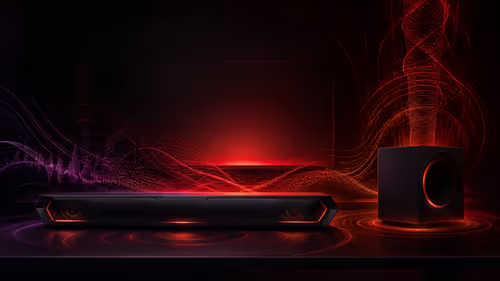
The ROG Gjallar gaming soundbar is now listed in the US at $599.99. SA buyers should compare its 2.1.2 audio, wireless bass and built-in chat controls with simpler local options.