Quick Answer
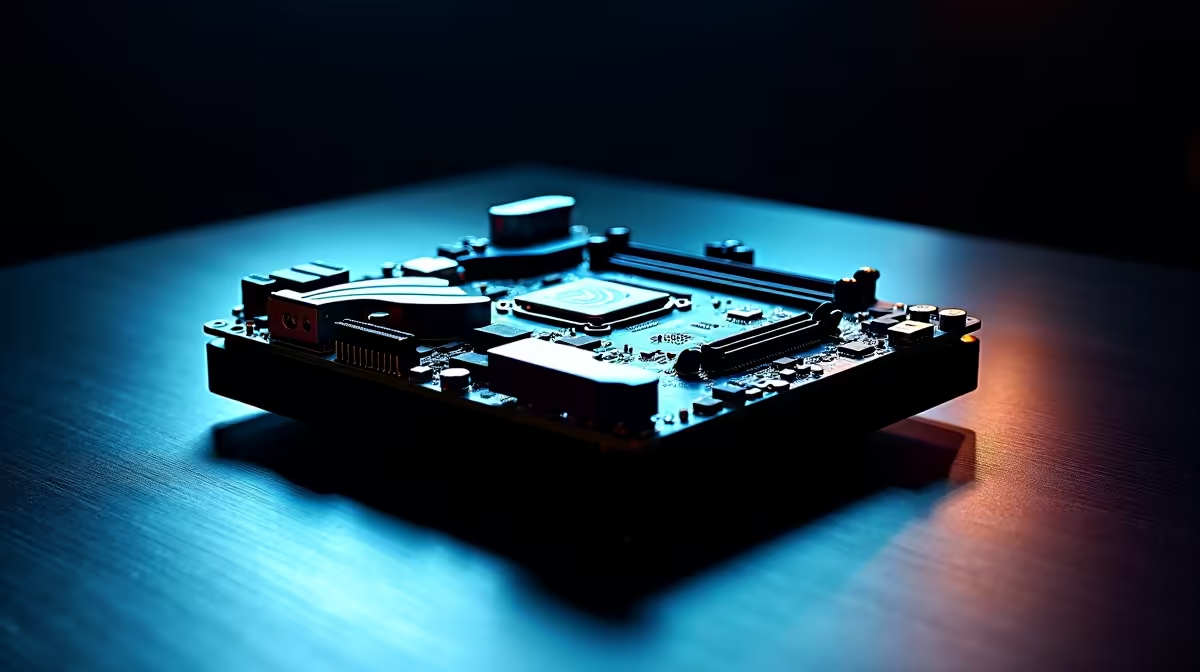
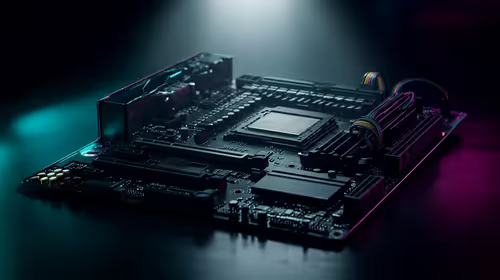
For a racing-wheel cockpit, the motherboard must-haves are enough USB ports and stable USB power for the wheelbase, pedals, and shifter; nice-to-haves are Wi-Fi 6 and extra M.2 slots; skip premium overclocking VRMs you will not use. A solid B650 or B760 board around R2,500 to R4,000 covers a sim-racing build well.
Must-have: USB and a reliable chipset
Sim-racing peripherals stack up: a wheelbase, pedals, shifter, handbrake, and a button box each want a USB port, and some draw real power. Prioritise a board with several rear USB ports (including USB 3.2) and stable USB power delivery so a direct-drive wheelbase stays connected. A mainstream B650 (AM5) or B760 (Intel) board near R2,500 to R3,500 has the I/O a cockpit needs.
Nice-to-have: connectivity and storage
Onboard Wi-Fi 6/6E and Bluetooth ease a cockpit set away from the router, and a second M.2 slot lets you keep racing titles on a fast drive separate from the OS. A 2.5GbE LAN port helps if you run wired for low online latency. These add convenience for a dedicated sim rig but are not essential to make it work.
Skip: features that do not help sim racing
You do not need a high-end overclocking board with massive VRMs and four M.2 slots for a racing build; a mid-range CPU drives sim titles comfortably. Skip the R6,000+ flagship and put that money toward the wheelbase, pedals, or a better monitor, which transform the racing experience far more than motherboard tier ever will.
FAQ
What motherboard features matter for a sim-racing cockpit?
Plenty of USB ports with stable power for the wheelbase, pedals, and shifter come first. Wi-Fi and a second M.2 slot are nice extras. A mainstream B650 or B760 board near R3,000 covers it.
Do I need a high-end board for racing wheels?
No. Sim titles run well on a mid-range CPU, so a flagship overclocking board adds cost without benefit. Spend the saving on the wheelbase, pedals, or monitor instead.
How many USB ports does a cockpit need?
Count your peripherals: wheelbase, pedals, shifter, handbrake, and button box can each need a port. Choose a board with several rear USB 3.2 ports or plan for a powered hub.
Pro Tip
Connect a direct-drive wheelbase to a rear USB port on the motherboard rather than a front-panel or unpowered hub; the rear ports give steadier power and fewer disconnects during long racing sessions.