Quick Answer
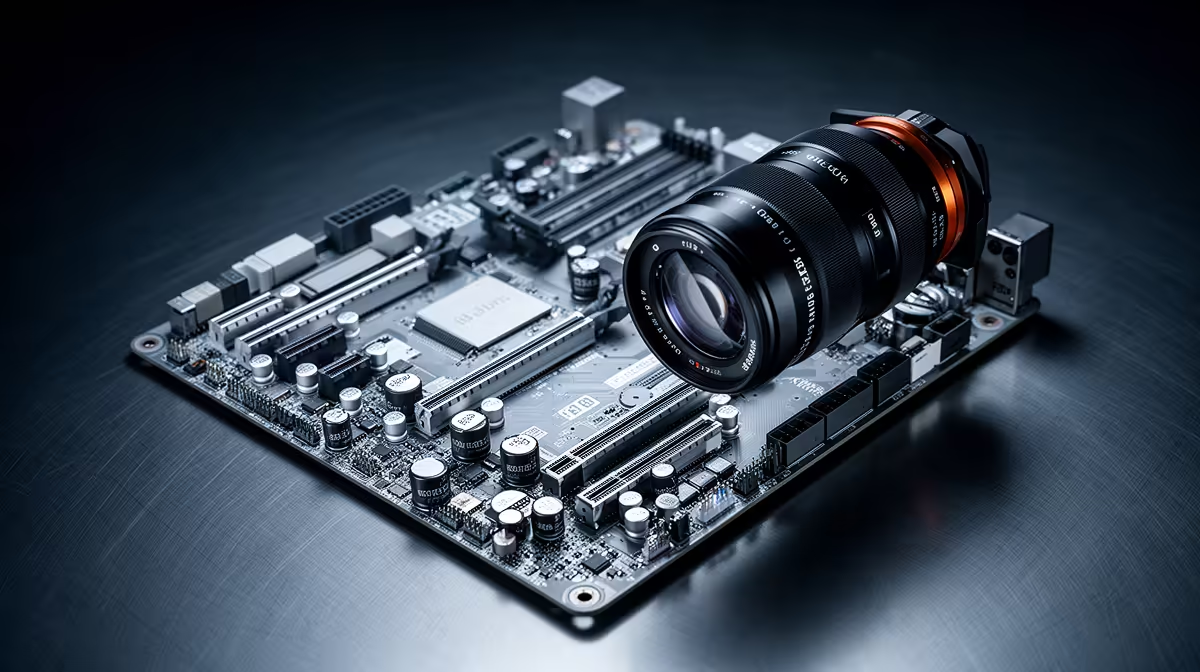
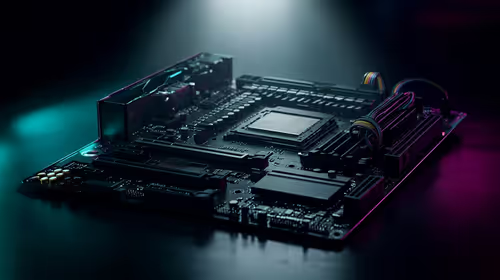
The practical answer is to buy the motherboard that fixes the measurable limit in family gaming rooms, then stop. Use MSI B650 Tomahawk WiFi, ASUS TUF Gaming B650-PLUS, Gigabyte B760M DS3H and MSI PRO Z790-A as reference points, keep the budget around roughly R2,000 to R6,500, and check PCIe 4.0 x16, two M.2 slots, 2.5GbE LAN and DDR5-6000 support before paying for cosmetic extras.
Compatibility Checks That Prevent Returns
Check socket, BIOS support, VRM cooling, M.2 count and rear USB before RGB headers. AM5 boards are strongest for future CPU swaps, while B760 and Z790 suit Intel 12th to 14th gen systems. In a family gaming rooms build, the first pass should compare PCIe 4.0 x16, two M.2 slots, 2.5GbE LAN and DDR5-6000 support against the screen, desk, room and users. Named reference options such as MSI B650 Tomahawk WiFi, ASUS TUF Gaming B650-PLUS, Gigabyte B760M DS3H and MSI PRO Z790-A make the shortlist concrete without pretending one model fits every cart.
Ports, Storage and Network Features
Budget around roughly R2,000 to R6,500 and separate must-have specs from nice finishes. For SA homes and digs, built-in Wi-Fi and local warranty handling often matter more than decorative heatsinks.
When To Pay For A Better Board
This question is really about family gaming rooms, so judge every spec against that use case first. The strongest pick is usually the middle tier: enough speed and features for daily use, but not the most expensive halo option.
FAQ
What budget should SA buyers keep aside for this motherboard?
Use roughly R2,000 to R6,500 as a broad planning range, then confirm the current Evetech listing before purchase.
Which spec should I check first?
Start with PCIe 4.0 x16, two M.2 slots, 2.5GbE LAN and DDR5-6000 support.
Is it better to buy the cheapest option now?
Only buy the cheapest option when it still meets the screen, room and workload target.