Few games make a distant horizon feel like an invitation in the way No Man's Sky on PC does. Its planets, creatures, materials and stations invite wandering, while crafting, base building and story paths give that wandering direction when you want one. The same flexibility applies to a PC setup: smooth exploration comes from a balanced machine and sensible settings, not a single component chosen in isolation.
Quick Answer
No Man's Sky is a space exploration sandbox with optional multiplayer, base building, crafting and a large procedurally generated universe. It can be enjoyed entirely alone, while co-op benefits from a stable connection and enough time for updates. For PC play, aim for balanced graphics performance, adequate memory, fast storage headroom and cooling that remains steady through a longer session.
🧩 Exploration works at your own pace
The central loop lets you land on unfamiliar worlds, scan what you find, gather resources and decide whether to keep moving or build a more permanent foothold. One session might be a short flight to finish a task; another may become an evening spent improving a base, following a story thread or looking for a particular kind of planet. That lack of a fixed route is part of the appeal.
Solo play is a complete way to experience it. You can explore, craft and progress without arranging a squad, which makes the game friendly to irregular schedules or a quiet weekend. Multiplayer adds shared discoveries and cooperative projects, but it should feel like an option rather than a requirement to access the main systems.
Before a first session, leave room for the game and its updates. A large download arriving just before friends join can turn an intended evening into a wait, especially on a connection shared by a household. Keeping the game client and graphics driver current also reduces the chance of a version mismatch or a bug that has already been addressed.
📶 Co-op from South Africa: connection habits matter
Exploring alone is generally less sensitive to a long international route than fast competitive games. The game can remain enjoyable while you travel and build at your own pace. During co-op, however, route distance, Wi-Fi quality and busy-hour congestion can affect how quickly shared actions feel to each player.
Fibre is often the steadier option for a group session because its capacity and consistency are usually better suited to a game update running alongside voice chat and other household traffic. LTE can work, but capped data and variable signal make it worth checking the download estimate before pressing update. If possible, update well before the planned session rather than asking every participant to wait in a lobby.
Use a wired connection where the desk allows it, or place the Wi-Fi device to reduce walls and interference. A sudden spike is not always a game-server problem; it can come from another device downloading, a busy household evening or a weak signal path. Closing unnecessary background transfers before joining friends is a modest change that can make co-op feel more predictable.
✅ Choose balanced PC parts, then tune the game
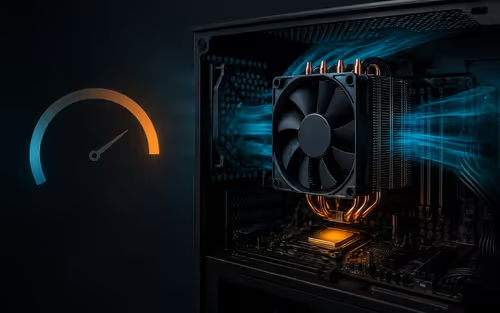
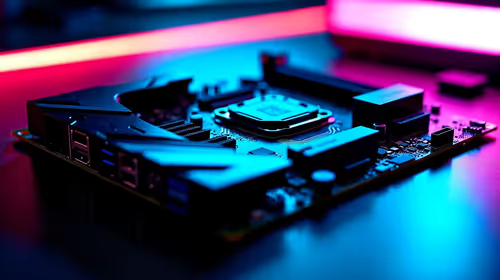
No Man's Sky benefits from a system in which the graphics card, processor, memory, storage and cooling can work together. Chasing a headline component while leaving little memory or a nearly full drive can create a poor experience in menus, loading, streaming new terrain or multitasking. Start from the screen resolution you actually use and the level of visual detail you value, then build around that target.
For a desktop, the gaming PC deals page is a practical place to compare whole-system directions. Look beyond the most prominent graphics label. Consider available storage, memory capacity, connectivity, case airflow and whether the configuration leaves a sensible path for a later upgrade. A system that stays composed during a long session is more useful than one tuned only for a brief benchmark.
Settings should reflect what you notice while playing. If the frame rate varies when entering dense scenes, lower the most expensive visual settings gradually rather than dropping everything at once. Keep an eye on temperature and fan behaviour too. A warm South African room or dusty intake can change how a machine behaves after an hour, so clean airflow and reasonable placement are part of the experience.
🔌 Desktop or laptop for a travelling explorer
A desktop suits somebody who wants straightforward upgrades, a larger display and a permanent desk setup. It can be easier to add storage, change a graphics card later, or improve cooling as needs change. A gaming laptop makes more sense when the machine must travel between home, res, work or family visits, provided its sustained performance and thermals suit the game rather than only its compact design.
The gaming laptop deals collection helps compare portable configurations around the whole package. Screen size, refresh behaviour, keyboard comfort, charger size and fan noise matter when a laptop is the place you will actually play. At a desk, use a solid surface and leave air space around the vents; bedding or a soft couch can trap heat and make a long session less comfortable.
Whichever form you choose, do a brief first-run check. Confirm that the display is using the expected refresh setting, that the game is installed on the intended drive, and that controller or headset connections work before a multiplayer plan begins. Tiny setup tasks are much less annoying before a group is waiting.
🛡 Keep discoveries and the hardware in good order
Back up important saves according to the platform tools you use, especially before making major changes to a PC or reinstalling storage. Screenshots and notes can also be surprisingly valuable in an exploration game because a memorable base or planet may be hard to describe later. Good organisation lets you return to a project instead of recreating it from memory.
Treat the machine with the same long-view mindset. Keep vents clear, avoid filling every storage drive to the edge, and allow updates to complete when the connection is convenient. None of those habits are glamorous, yet they reduce the interruptions that pull attention away from an otherwise relaxed game.
Frequently Asked Questions
What type of game is No Man's Sky?
It is a procedurally generated space sandbox built around exploration, resources, crafting, bases and optional shared play. Players can follow story paths or make their own goals.
Can No Man's Sky be played alone?
Yes. Solo exploration, building and progression are complete options, with multiplayer available when you want company rather than as a requirement.
Does South African latency spoil the game?
Exploration is usually comfortable, while co-op responsiveness depends more on route distance and connection congestion. Fibre is often steadier than LTE for a planned group session.
What PC feature matters most for smoother exploration?
Balance matters most. Graphics capability, sufficient memory, available storage and sustained cooling should support one another instead of placing all the budget in one part.
Are updates important before starting a session?
Yes. Updates can resolve issues and prevent multiplayer version mismatches. Allow time and data for them before friends are ready to join.
Should I choose a desktop or laptop for No Man's Sky?
Choose a desktop for easier upgrades and a permanent setup, or a gaming laptop when portability is the deciding need. Compare cooling and sustained performance alongside the screen and components.
How can capped-data users manage large updates?
Check the download estimate beforehand and use an uncapped fibre connection where possible. Starting early avoids exhausting an LTE allocation immediately before co-op.
Ready to explore from a PC that suits your routine?
Compare balanced desktop and laptop options around the display, storage, cooling and connection habits that will support your next long session.