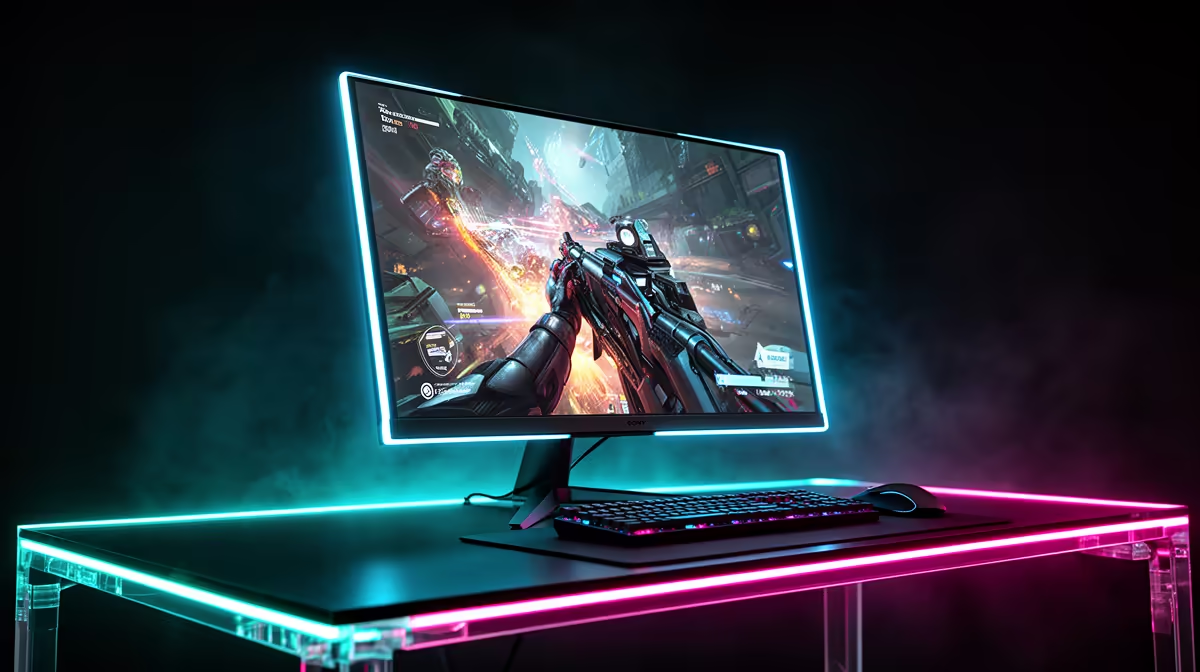
Sorting out FPS drops on your OLED gaming monitor starts with one clean test, not with swapping expensive parts on a hunch.
Quick Answer
Start by locking your OLED gaming monitor to one test scene, then confirm refresh rate, frame cap, and the latest stable drivers. A 27-inch 1440p OLED panel runs about R14,500, and 32-inch 4K OLED units pass R28,000. Measure frame rate before and after each change so the fix is evidence-based.
Match The Workload To The Hardware
Once your scene is stable, read which subsystem is pinned. High GPU load points to lower resolution scale or softer presets; high CPU load points to engine limits or memory behaviour; storage spikes show up when assets stream. Tying FPS drops on a OLED gaming monitor to a measured load pattern makes the next step obvious.
Confirm Memory And Storage Health
Make sure 240 Hz is enabled correctly and that the boot drive has free space and healthy speeds. Misconfigured memory profiles and a near-full drive both surface as FPS drops under load. A 27-inch 1440p OLED panel runs about R14,500, and 32-inch 4K OLED units pass R28,000. A quick check here often explains stutters that look like a GPU problem on the OLED gaming monitor.
Save Time
Lock the in-game preset and resolution first; only then touch one tuning option so you can attribute any gain correctly.
Check Display Mode And Frame Targets
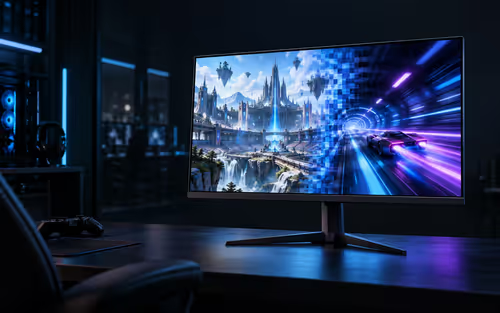
Confirm the panel is running its rated refresh, that resolution matches your intended target, and that any frame cap is deliberate. Verify VRR is on, choose fullscreen or borderless on purpose, and make sure the OLED gaming monitor is not silently falling back to a lower mode. With 0.03 ms response sorted at the source, FPS drops often eases before you touch anything else.
FAQ
Could a cable or port be causing FPS drops on my OLED gaming monitor?
It can. A marginal or wrong-spec cable produces drops and hitches that mimic deeper faults. Swap to a certified cable, try another port, and re-run the same scene to rule it out in minutes.
Is 0.03 ms response relevant when fixing FPS drops?
It can be. Confirming 0.03 ms response is configured correctly removes a common hidden cause before you blame other parts. Verify it, retest the same scene, and record the frame rate result.
Does a OLED gaming monitor need a specific power profile to perform?
Yes. Set Windows and any vendor utility to high performance, not eco or balanced, so frame rate is not capped to save energy. Then confirm temperatures stay in range during your test scene.
Pin down the limit before you upgrade your OLED gaming monitor.
Once your notes show whether frame rate is held back by drivers, display mode, thermals, or load, browse the matching Evetech monitor shortlist with confidence.