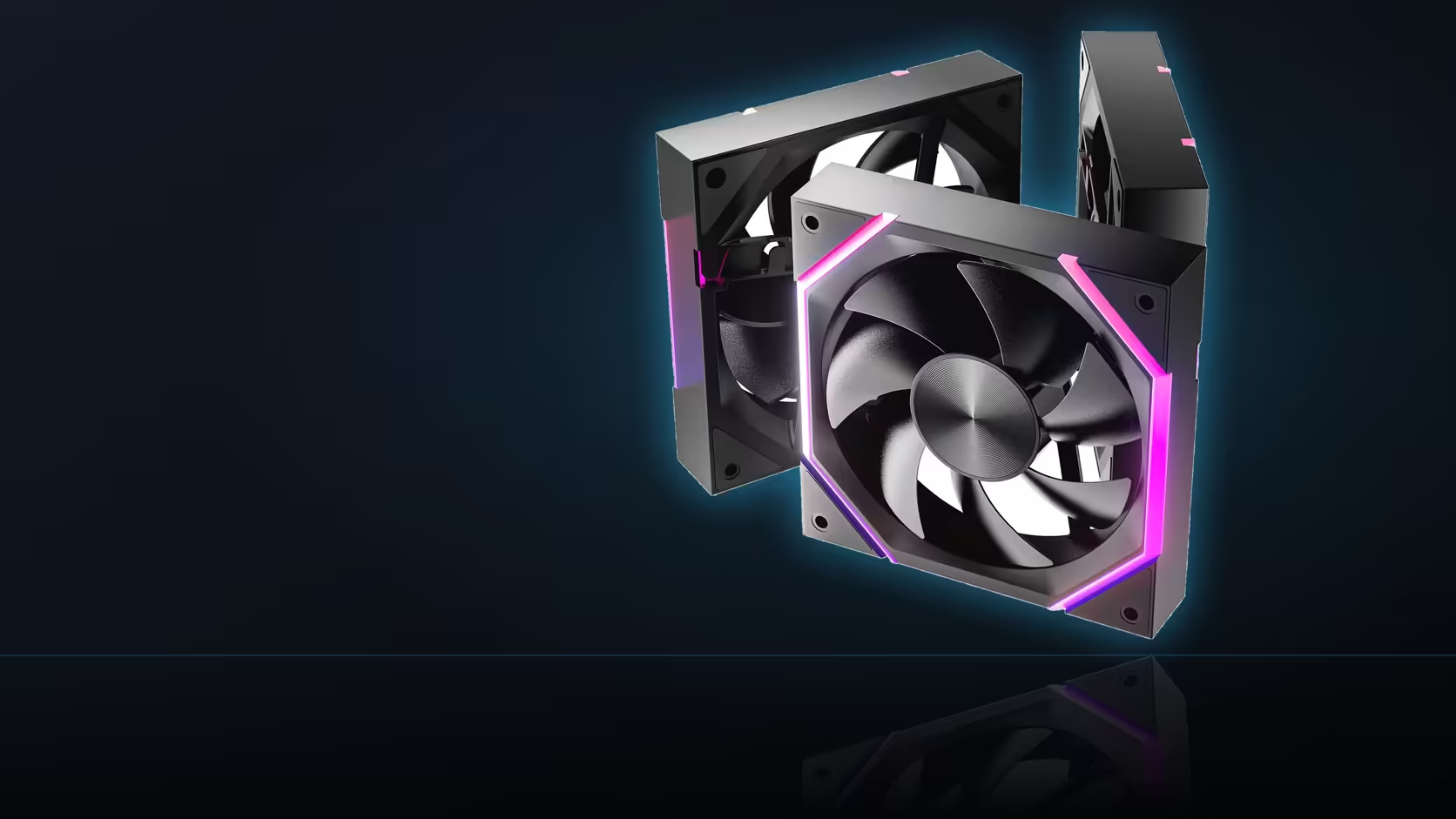
Two fans that look almost identical on a spec sheet can still pull a build in different directions, and the Nyota A12 against the Nyota Ultra is a clean example. Both are 120mm ARGB case fans from AsiaHorse, both run PWM, and both land in a three-pack - but the ring design and a small airflow gap separate them once you look closely.
Quick Answer
The Nyota A12 three-pack costs R499 and is rated at 61.5 CFM with a plain 16-LED ring, while the Nyota Ultra three-pack costs R649 and is rated at 58.5 CFM with an infinity mirror ring. Both spin from 800 to 2000 RPM under PWM control. On paper, the A12 is the cheaper option and the marginally faster one; the Ultra spends its extra R150 on visual depth rather than airflow.
🌀 The airflow gap is real but small
Three CFM separates the two models - 61.5 for the A12 against 58.5 for the Ultra. In a case with a dust filter, cable clutter, and a front panel restricting airflow, a 5% difference on paper rarely shows up as a measurable temperature change. It's a comparison figure more than a decision-maker on its own.
What the number does confirm is that AsiaHorse isn't charging the Ultra premium for extra cooling capacity. If raw airflow is genuinely your only priority between these two ranges, the A12 has the higher figure at the lower price.
Where the A12 pulls ahead outright
- Lower price per three-pack: R499 against R649.
- Marginally higher rated airflow: 61.5 CFM against 58.5 CFM.
- Same PWM speed range as the Ultra, so no compromise on control behaviour.
💎 What the Ultra's extra R150 buys
The infinity mirror ring is the entire case for the Ultra. Rather than a flat 16-LED ring, the Ultra layers its LEDs to create a sense of depth, which reads very differently on camera and through a tempered-glass panel than a single flat ring does. If the fan sits somewhere it will actually be seen - a front intake behind glass, especially - that visual difference is the whole reason to pay more.
Where the A12 pulls further ahead is flexibility of sale format. The Ultra is available as a single fan at R249 as well as a three-pack, and the range includes reverse blade versions in both colours. The A12 is a three-pack only, with no single-fan listing and no reverse blade option documented. That single-unit option matters for anyone filling one awkward position rather than a full row.
A practical framing
Think about where each fan sits before deciding on ring design. A rear exhaust or a bottom intake that nobody sees through a solid panel doesn't benefit from the Ultra's layered ring - the airflow figure and the lower price make the A12 the sensible pick there. A front row visible through glass is a different call entirely, where the mirror effect is doing real visual work and R150 across three fans is a modest premium for it.
🛠️ Matching the fan to the rest of the build
Neither fan changes your PWM setup meaningfully - both run the identical 800 to 2000 RPM range, so a curve tuned for one will behave the same way on the other. That consistency is worth knowing if you're mixing ranges across front and rear positions: a Nyota A12 rear exhaust paired with Nyota Ultra front intakes won't fight each other on speed behaviour, only on ring style.
Budget is the other half of the decision. Three A12 fans at R499 against three Ultra fans at R649 is a R150 gap for a full row - not large, but worth weighing against what else that money buys in a build, whether that's a better PSU or an extra case fan elsewhere.
🔇 The two noise figures aren't measured the same way
Reading the acoustic specs side by side is where this comparison gets genuinely confusing rather than clean. The A12 listing states a single ceiling - under 29 dBA - which describes the loudest the fan is expected to get across its stated airflow. The Ultra listing instead publishes a range, 6 to 30 dBA, spanning its full 800 to 2000 RPM band from the quiet end right up to the top. A ceiling and a range aren't the same kind of figure, so lining up "29" against "30" and calling it a near-tie skips over the fact that the A12 number only tells you the worst case, while the Ultra number also tells you roughly how quiet the quiet end gets. Neither listing publishes a full speed-to-noise curve for either model, so the honest comparison is that the Ultra's data happens to be more complete rather than the fan itself necessarily being quieter or louder at any given speed.
🔩 Radiator screws in the box settle nothing about either fan
The Ultra ships with radiator mounting screws included, while the A12 listing makes no mention of them at all. That difference looks like it points toward one fan being the radiator choice and the other the case-only choice, but neither listing publishes a static-pressure figure, which is the actual measurement that predicts how a fan copes with a dense radiator fin stack. Screws in the box are a fitting convenience, not a performance claim, and their absence from the A12's listing says nothing about whether it would struggle on a radiator - it simply means AsiaHorse hasn't bundled the longer hardware with that pack. Anyone planning either fan for a radiator position is better off judging the outcome from coolant temperatures in their own build than from what mounting hardware happened to ship in the box.
Frequently Asked Questions
Which fan moves more air on paper?
The A12, rated at 61.5 CFM against the Ultra's 58.5 CFM - a small gap that is unlikely to be noticeable through a real case.
What's the actual price difference between the two three-packs?
R150: the A12 pack is R499 and the Ultra pack is R649, both VAT included and both subject to change.
Does the Ultra come in a single-fan option?
Yes, at R249, which the A12 does not offer - the A12 is sold exclusively as a three-pack.
What makes the Ultra's ring different?
It uses an infinity mirror design that layers its LEDs for a sense of depth, where the A12 uses a plain flat 16-LED ring.
Do both fans share the same speed range?
Yes - both run 800 to 2000 RPM under PWM control, so curve tuning behaves identically between them.
Which is the better choice for a hidden fan position?
The A12 generally, since the mirror ring adds nothing where it can't be seen, and it costs less per pack regardless.
Does the Ultra offer reverse blade versions?
Yes, in both colours - a configuration the A12 range does not include based on current listings.
Ready to decide between the two based on where your fans will actually sit? Browse case fans and the matching case accessories to plan out a full airflow layout.
Weighing airflow against looks for your build?
Compare Evetech's case fan options to see what fits the visible and hidden positions in your case.