Quick Answer
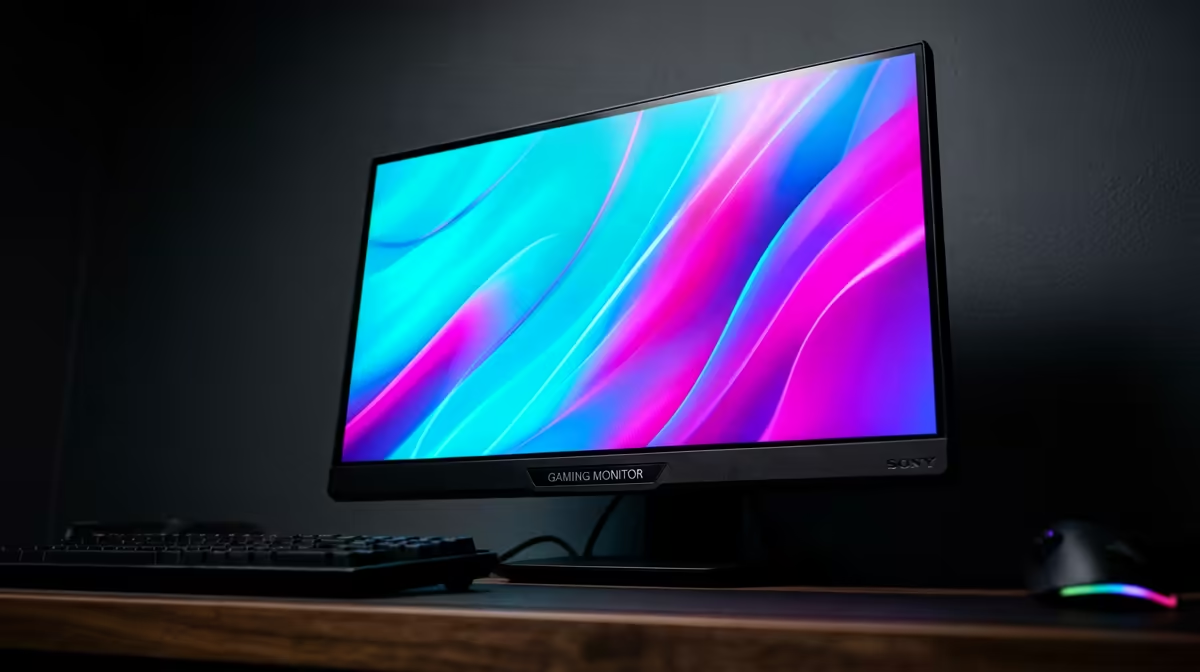
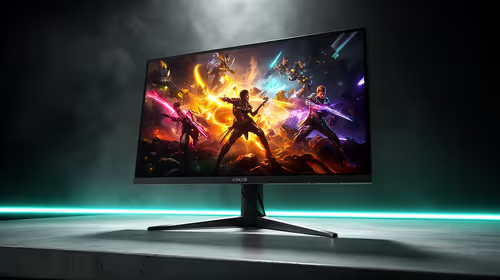
Start with the upgrade that changes daily use immediately, then step up when the rest of the setup can show the benefit. For shared gaming spaces, a Alienware AW3423DWF, Samsung Odyssey OLED G8 or LG UltraGear OLED class OLED monitor around R12,000-R28,000 with 175 Hz, 0.03 ms response and 1440p or ultrawide resolution is the sensible path.
What To Check First
Start with the constraint that can actually stop shared gaming spaces: connector support, physical fit, capacity, heat, or the number of devices attached. For OLED monitor, that means reading the spec line carefully instead of buying from the largest headline number. SA buyers should check desk depth, courier-safe packaging and warranty handling before choosing a large OLED panel. A realistic shortlist should include one value model and one step-up model, then remove anything that needs another urgent purchase to work properly.
Where The Money Changes The Experience
For screens, match the panel to the GPU. A 1440p 144 Hz or 175 Hz monitor is wasted if the graphics card only reaches 60 fps in the games you play, but it feels excellent when an RTX 4070 Super or RX 7800 XT class GPU can keep frames high. Check stand adjustment and VESA mounting before buying for a small desk. Treat R12,000-R28,000 as a broad category band rather than a live quote, then confirm the current Evetech listing before checkout.
SA Buyer Mistakes To Avoid
Do not let a single spec hide the practical checks. Confirm the exact model name, included cables or brackets, warranty terms and whether the item fits the room, case, desk or motherboard you already have. For shared gaming spaces, the safer choice is the one that works on day one with fewer adapters and no surprise clearance problems. If two options look close, choose the one with clearer specs and a support path you can explain.
FAQ
What spec should SA buyers check first for shared gaming spaces?
Check the spec that can block installation: socket, slot, wattage, cable type, port count, chair size or drive bay support. After that, compare speed and premium features because they only matter once the OLED monitor fits.
Is the cheapest OLED monitor good enough?
The cheapest option is good enough only when it meets the required capacity, fit and warranty basics. If it saves less than R500 but forces an adapter, weaker cooling or a smaller capacity, the saving is usually not worth it.
When should you spend more?
Spend more when the upgrade gives a weekly benefit such as lower noise, more storage, better frame consistency, stronger Wi-Fi coverage or a more comfortable seat. Skip premium extras when they do not change shared gaming spaces in normal use.