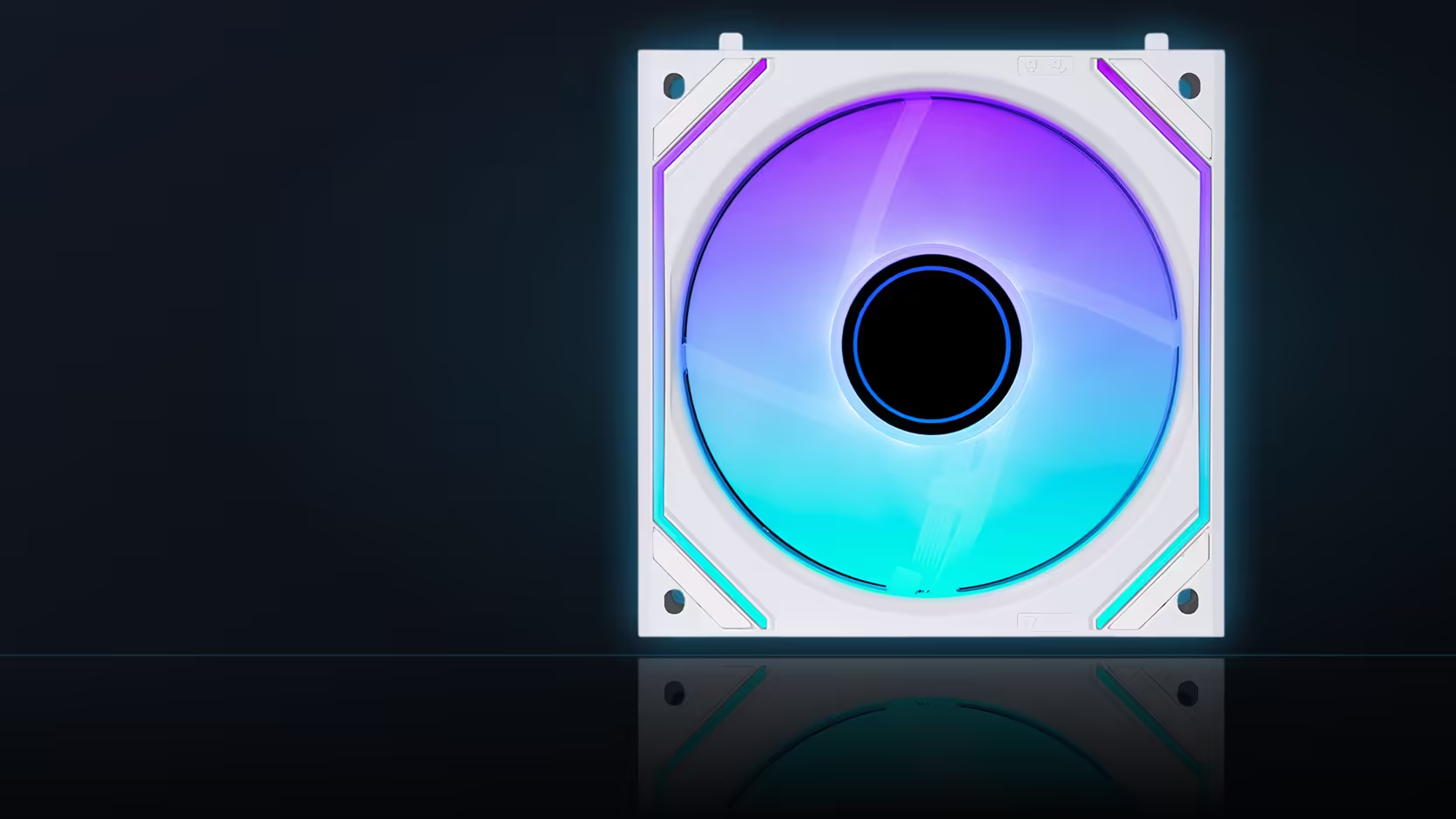
Three of the same lit fan placed together reads as a decision. The same three fans spread one to a wall around a case reads as three separate afterthoughts, even if every fan is doing identical cooling work in either arrangement. Composition, not component count, is often what separates a build that looks planned from one that just accumulated parts over time.
Quick Answer
A row of three Dawn Pro fans grouped together reads as a deliberate lighting element, while the same three fans scattered around different positions in a case tend to read as isolated points rather than a cohesive effect. The infinity-mirror design specifically rewards being seen in a repeating group, so grouping generally produces the stronger visual result. R699 VAT-inclusive is the going rate for the three-pack, sized around this exact arrangement.
🧩 Why grouped lighting reads better
The infinity-mirror effect repeats visually: three identical rings positioned side by side form a pattern the eye recognises immediately as intentional. Split across a case, front, top and rear, the same three rings lose that pattern entirely and instead register as three unrelated points of light competing for attention rather than reinforcing each other.
The psychology of repetition in a build
Repetition signals design intent in almost any visual medium, and case builds are no exception. A row of matching lit fans tells a viewer "this was planned," while a scattered arrangement, however functional, reads as pragmatic rather than composed, regardless of how good any individual fan looks on its own.
📍 Where a row usually goes
The front intake or the top exhaust panel are the typical homes for a grouped row, largely because most mid-tower cases are laid out with three matching 120mm positions along one of those panels already. Fit the pack there and the case's own structural layout does most of the composition work for you.
⚙️ When scattering is still the right call
Cooling requirements do not always align with visual preference, and when they conflict, airflow has to win. A build that genuinely needs intake at the front, exhaust at the rear, and a supplementary fan somewhere else entirely should place fans by their thermal job first, letting lighting composition follow wherever those positions happen to land rather than the other way around.
Positions hidden from view
Fan positions completely hidden behind a solid panel or tucked behind a radiator gain essentially nothing from ARGB lighting, since nobody will see them running. Those are the positions where cheaper, unlit fans free up budget that can go toward the visible row instead, without sacrificing anything a viewer would actually notice.
🔀 Does mixing models within one row work?
Different fan models placed side by side in the same row, even from within the same manufacturer's range, tend to break the visual pattern that makes grouping effective in the first place, since the rings, blade design or lighting density rarely match exactly across different models. Keeping a visible row to matching fans matters more than it does for hidden positions, where nothing about appearance needs to align.
🧮 What about extending a row to four?
A four-position front panel is common enough in larger cases, and adding a fourth Dawn Pro single to complete that row keeps the pattern intact rather than breaking it, since the fan is identical to the three in the pack. What undoes the composition is an odd fan sitting outside the line entirely, not simply adding a fourth matching unit inside it.
Does the three-pack still make sense for a four-fan case?
Yes. Buy the three-pack for the main row, then add a single Dawn Pro to complete a fourth position, rather than buying two separate packs and being left with two spare fans that have no case position waiting for them.
🖼️ Composition beyond the fans themselves
A grouped row is the biggest lever, but it is not the only one. Cable routing behind a row matters almost as much as the fans themselves, since stray cabling crossing in front of a lit ring undercuts the exact visual pattern grouping is meant to create. Tidy runs, tucked behind the motherboard tray wherever the case allows it, keep attention on the fans rather than on the wiring holding them together. A pass through case accessories for cable combs, ties, or a dedicated cover panel is worth doing at the same time as ordering the fans, rather than as an afterthought once the row is already mounted.
Background contrast changes what a row reads as
A dark case interior makes a lit row the dominant visual element by default, while a lighter or more cluttered interior competes with it for attention. If the case already carries other visible components, cabling, drive bays, a bright motherboard, the fan row has to work harder to read as the composed element rather than one bright spot among several. Keeping the rest of the visible interior simple is often what makes a three-fan row look as deliberate as it is meant to.
Frequently Asked Questions
Why does grouping fans together look better than spreading them out?
Because the infinity-mirror effect repeats visually, and three matching rings side by side read as a deliberate pattern rather than as separate, unrelated lights.
Where does a grouped row usually get mounted?
Across the front intake or top exhaust panel, since most mid-tower cases already provide three matching 120mm positions along one of those panels.
Is scattering fans ever the correct choice?
Where cooling requirements demand specific positions, airflow has to take priority, and lighting composition simply follows wherever the fans end up.
Does lighting matter on fan positions nobody can see?
Very little. Hidden positions gain nothing from ARGB, so cheaper unlit fans there can free up budget for a visible row instead.
What happens if different fan models are mixed within one visible row?
The visual pattern generally breaks, since rings, blade design or lighting density rarely match exactly between different models, even within the same brand.
Does the three-pack fit a four-position case layout?
Buy the three-pack for the main row and add a single Dawn Pro to complete the fourth position, rather than buying two packs and having two spare fans left over.
Should a fourth fan always be added to complete a row?
Only where the case actually has a four-position layout, since an odd fan sitting out of line undoes the same grouping effect you are trying to achieve.
Planning a fan row that actually looks composed?
Explore Evetech's case fan range to see options built around three or four-position layouts.