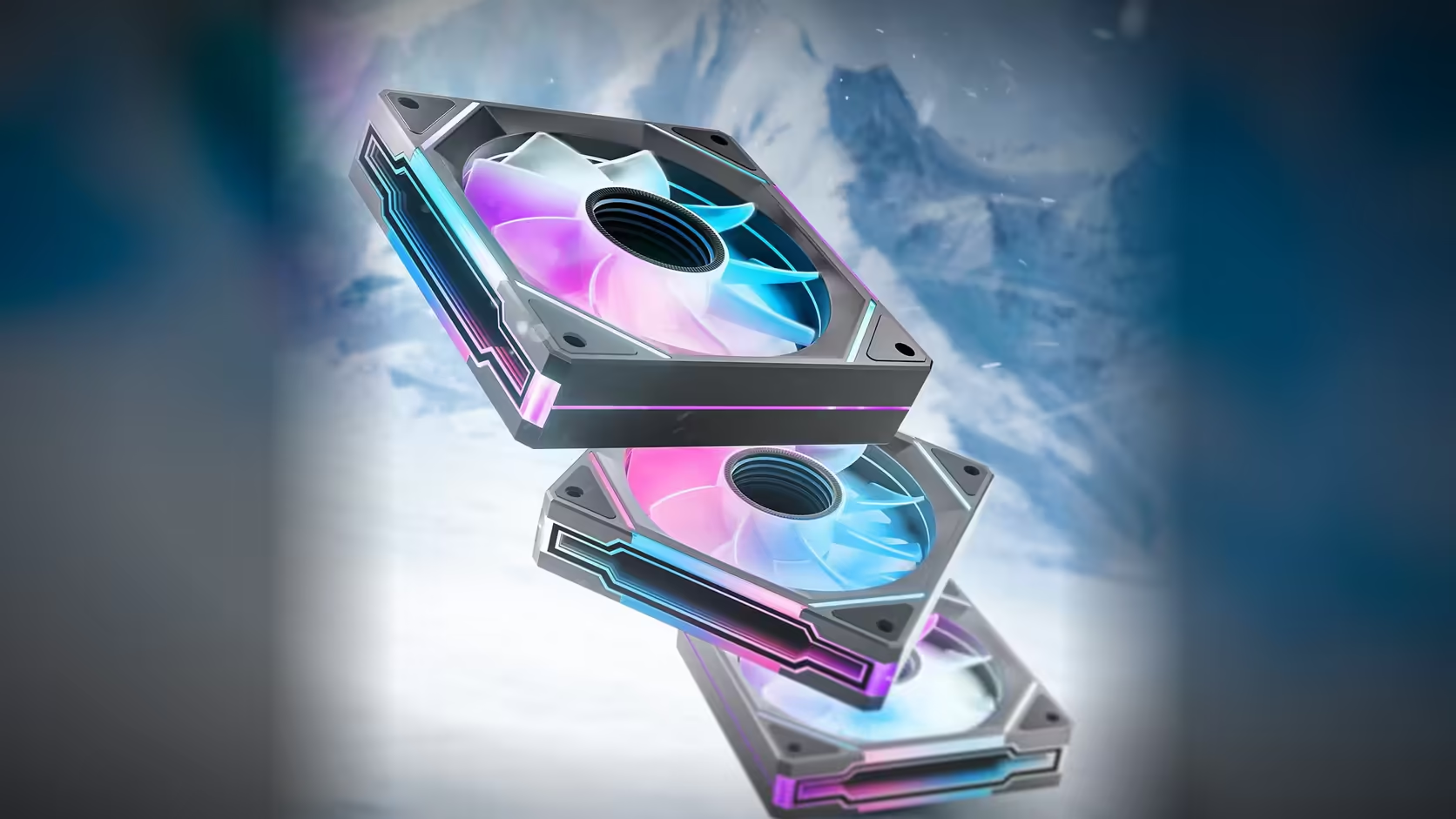
A dark ring and a stopped blade look like the same category of problem from across a room, but on the Amici 5GT they point down two entirely separate cables. Knowing which system is affected before opening the case narrows a fault to a single lead almost immediately.
Quick Answer
Because the Amici 5GT wires its PWM speed control and its ARGB lighting as two independent systems, a dark fan and a stopped fan are different faults pointing at different leads. A stopped motor suggests a problem on the 4-pin PWM cable or the header it reaches; a dark ring suggests a problem in the ARGB chain, which can affect not just that fan but everything linked after it.
Why the two systems fail differently
Every Amici 5GT carries its own PWM cable independent of every other fan's, so a fault on that cable affects exactly one fan and nothing else. The ARGB lead is different: it links fan to fan across a chain of three to four units, so a break or fault at one point in that chain can silence every fan downstream of it, not just the one where the actual fault sits.
Reading a stopped motor
If a fan has visibly stopped spinning, the most likely culprits are its own PWM lead or the fan header it connects to, since speed control on this model is never shared between fans. A partially seated connector at either end of that cable is the single most common cause, and it is worth checking before assuming anything more serious is wrong.
A fan can spin while unlit
One of the clearer signs that the two systems are genuinely independent is a fan that continues spinning normally while its lighting has gone dark. Since power for the motor arrives through a completely separate path from the lighting signal, a fault in the ARGB chain has no effect on whether the blades keep turning.
Reading a dark ring
A dark ring, particularly if it affects one fan and everything after it in the chain, points at the ARGB lead rather than anything to do with speed. The pattern of which fans are dark is itself diagnostic: one isolated dark fan in the middle of an otherwise lit chain suggests a fault at that specific link, while every fan going dark from a certain point onward suggests the break sits at the connection immediately before the first dark unit.
A fan can light while stopped
The reverse situation is equally telling. A fan that is fully lit but not spinning points squarely at the PWM lead or its header, since the lighting circuit working normally rules out a fault in the fan's power delivery generally and narrows the problem to the speed-control path specifically.
Where to check first
Whichever system is affected, the connector at the fan itself is worth checking before anything further downstream, since a lead that has worked loose at the fan end is the most common cause in either system. Reseating that connector firmly and testing again is a faster first step than tracing the cable's full run to the header.
How a splitter complicates the diagnosis
Where several fans share a PWM connection through a splitter, most boards report only one combined reading from that group rather than reading each fan individually. A single stopped fan behind a splitter may therefore not show up in monitoring software at all, which means a visual check of each fan, rather than relying on reported speed, becomes necessary to catch it.
Putting the two diagnostics together
A build with a genuine mixed fault, one fan dark and a different fan stopped, is actually easier to diagnose than it sounds, because the two symptoms point at entirely separate parts of the wiring. Treating them as one combined problem risks chasing a single cause that does not exist; treating them as two independent faults, each traced through its own system, resolves both faster. If a replacement unit is needed, the current Amici 5GT range is under Evetech's case fans section - case accessories covers splitters and extension leads worth checking as part of the same diagnosis.
When the fault turns out to be the fan itself
Occasionally the diagnosis lands on the fan rather than the cabling: a reseated connector changes nothing, the header tests fine with a different fan attached, and the original unit stays dark or stopped regardless. At that point a replacement single at R199 is the direct fix, matching the failed fan's colour and blade direction so the row continues to look consistent once the new unit is in. If the fan is still within its year of local warranty, a claim is worth pursuing before buying a replacement outright, since cover runs from the original purchase date rather than from when the fault was noticed.
Keeping a record for the next fault
Once a fault has been traced to a specific lead or header, noting that down alongside the build's other documentation makes the next diagnosis faster, particularly in a build running several fans where cables behind a tray can look identical to each other. A brief note naming which position uses which header, and which fans share a splitter if one is in use, turns a repeat fault into a quick check rather than a full retrace of the wiring.
Frequently Asked Questions
What does a stopped fan usually suggest?
A problem on its own 4-pin PWM lead or the header it connects to, since each fan's speed connection is entirely independent of the others.
What does a dark ring on its own usually suggest?
A problem in the ARGB chain, which can affect the fan where the fault sits and every fan linked after it in that same chain.
Why does the pattern of dark fans matter for diagnosis?
Because one isolated dark fan points at a fault at that specific link, while a run of dark fans from a certain point onward points at the connection just before the first dark unit.
Can a fan spin normally while its lighting is dark?
Yes, and it is one of the clearest signs the two systems are independent, since the motor's power arrives through a completely separate path from the lighting signal.
Can a fan light up normally while not spinning?
Yes, which points at the PWM lead or its header rather than at anything in the lighting chain.
Which connector should be checked first during a diagnosis?
The connector at the fan itself, since a partially seated lead at that end is the most common cause in either system.
Does a splitter make a stopped fan harder to detect?
Yes, since most boards report a single combined reading from a splitter, a stopped fan behind one may not show up in monitoring software without a direct visual check.
Chasing down a fan fault in your build?
Check Evetech's case fans and case accessories ranges if a replacement or splitter turns out to be needed.