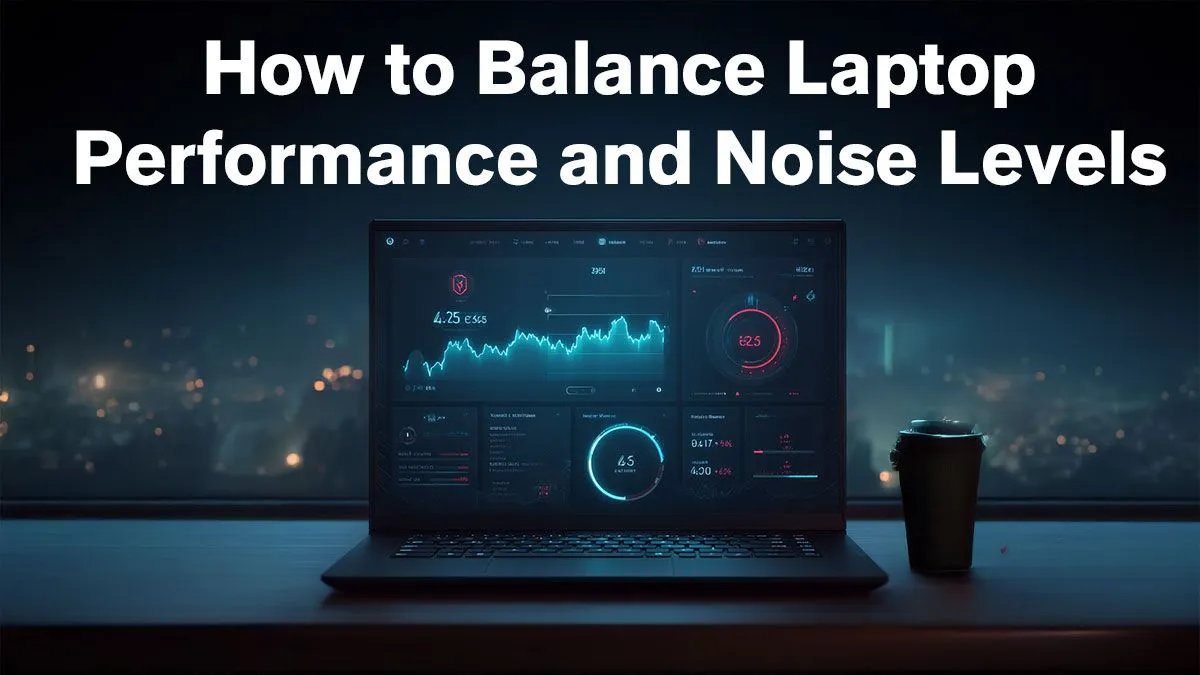
Tired of your laptop sounding like a jet engine during a clutch moment in Warzone? We've all been there. You need to hear footsteps, but your fans are screaming louder than your teammates. For South African gamers, finding that sweet spot between power and peace can feel impossible. But it’s not. Learning how to optimise laptop performance and noise management is the key to unlocking a better, quieter gaming experience without sacrificing those precious frames. 🚀
Understanding the Balance: Laptop Performance vs. Noise
At its core, the noise issue is simple physics. Your laptop's powerful components, the CPU and GPU, generate heat when they work hard. To prevent overheating, fans spin up to push that hot air out. The more power you demand, the more heat is produced, and the faster… and louder… your fans need to run. The goal is to find the perfect equilibrium.
Modern engineering has come a long way, with today's laptop specials for sale in South Africa featuring incredibly efficient cooling systems. But even the best hardware can benefit from a little fine-tuning. Effective laptop noise management isn't about eliminating sound completely; it's about controlling it so it doesn't ruin your focus.
Software Tweaks for Optimal Performance and Noise Management
Before you reach for a screwdriver, your first and most effective tools are already on your machine. A few clicks in your settings can make a massive difference in balancing performance and fan noise.
Adjust Your Windows Power Plan
Windows gives you basic control right out of the box. You can usually find these options under Settings > System > Power & battery.
- Balanced: The default mode. It ramps up performance when needed and quiets down during idle times. It’s a good starting point.
- High Performance: This tells your CPU to run at max speed all the time. Great for FPS, but it means your fans will almost always be active.
- Power Saver: This throttles performance to save battery life, resulting in a much quieter laptop, but it’s not ideal for gaming.
For gaming, start with Balanced and see if it's enough. If not, you can create a custom plan.
Pro Tip: Use Your Laptop's Control Centre
Most gaming laptops from brands like ASUS, MSI, or Dell come with their own control software (e.g., Armoury Crate, Dragon Center). These apps offer pre-set performance profiles like 'Silent', 'Performance', or 'Turbo' that are specifically tuned for your hardware. They are the easiest way to manage laptop noise.
Master Your Fan Curves
For the enthusiast who wants total control, adjusting the fan curve is the ultimate solution. Using software like MSI Afterburner, you can dictate exactly how fast your fans should spin at specific temperatures. For instance, you can tell your fans to stay quiet until the GPU hits 70°C. This level of customisation is particularly useful on machines with powerful Intel Core CPUs that can generate significant heat under load.
Physical Fixes to Keep Your Laptop Cool and Quiet 🔧
Sometimes, the best solution is a physical one. How you use your laptop can have a huge impact on its temperature and, consequently, its noise levels.
Give It Room to Breathe
This is the number one rule. Never use your gaming laptop on a soft surface like a bed or a couch. The fabric blocks the intake vents underneath, choking off airflow and forcing the fans to work overtime. Always use it on a hard, flat surface. A laptop stand is even better, as it elevates the machine to improve airflow significantly. 💨
Clean Your Vents and Fans
Over time, dust is your worst enemy. It clogs up heatsinks and fan blades, insulating components and trapping heat. If your laptop is older and suddenly running louder than it used to, a dust build-up is the likely culprit. A gentle clean with a can of compressed air every six to twelve months can restore its cooling efficiency and dramatically reduce noise. It's a crucial step in long-term laptop performance and noise management. Newer, power-efficient laptops with AMD Ryzen processors also benefit greatly from regular cleaning to maintain their peak performance.
Is It Time for a Quieter, More Powerful Machine?
While these tips can work wonders, there's a limit to what you can achieve with older hardware. Technology moves fast, and newer laptops feature vastly superior cooling solutions like vapour chambers and more advanced heat pipe designs. They are engineered from the ground up to handle the heat of modern components quietly.
If you're still fighting with a machine that sounds like it's about to take off, it might be time for an upgrade. You might be surprised at the quiet power you can get, even with a budget-friendly option. Today's gaming laptops under R20,000 offer a fantastic balance of performance and quiet operation that was unheard of just a few years ago.
Upgrade Your Rig, Not Your Headset
Stop fighting with fan noise and start focusing on the game. Explore our curated selection of high-performance machines designed for cool, quiet dominance. Find your next win in our best gaming laptop deals and hear every crucial footstep.