


PCIe 5.0 vs PCIe 4.0 for Video editing in 4k in SA
PCIe 5.0 vs PCIe 4.0 for video editing in 4k is mainly about fit, features, compatibility, cost, and upgrade path, not one automatic winner. SA buyers should match the choice to the setup.
Read morePBT plastic is harder and more textured, resisting the greasy shine that builds up on ABS keycaps within months of daily typing. ABS stays smoother and cheaper to produce, which is why it remains the default stock material on most budget and mainstream keyboards.
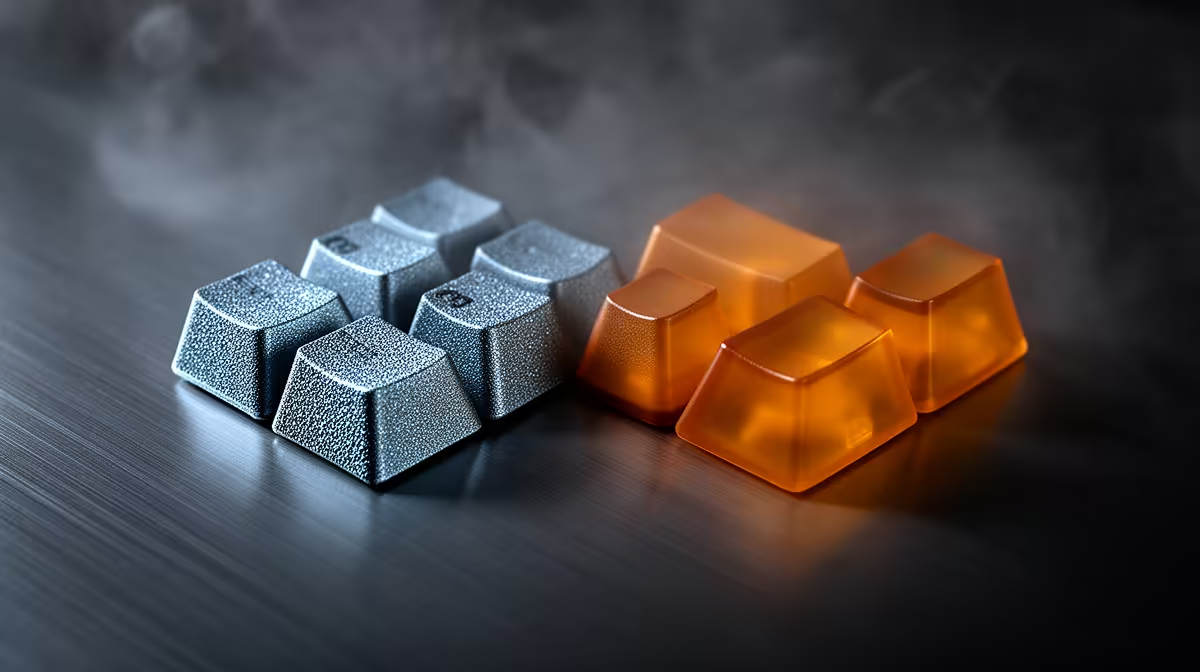
Months of daily use reveal keycap material through shine, texture and sound. The PBT vs ABS keycap decision balances wear, colour options, acoustics, feel and the quality of the exact moulding process.
PBT keycaps tend to resist surface shine and heat-related shape change better than common ABS sets. ABS is easier to mould in vivid colours and can produce sharp double-shot legends, but its surface often becomes smooth with use. Those are tendencies, rather than a quality ranking. A thick, well-made ABS set can feel and sound better to you than thin PBT with warped long keys. Compare material with wall thickness, legend method, profile, texture and layout support.
ABS, short for acrylonitrile butadiene styrene, is widely used because it moulds well and supports crisp colours and details. Manufacturers can produce complete keyboards and replacement sets across many price points.
Fresh ABS can feel smooth or lightly textured. Skin oils and repeated contact polish the surface, creating the shine people notice on frequently used keys. That cosmetic wear does not mean the cap has stopped working.
ABS can also support high-quality double-shot construction, where a second piece of plastic forms the legend. Enthusiast sets use the material by choice, not only as a budget shortcut. Thickness, mould quality and colour design still separate one set from another.
PBT, or polybutylene terephthalate, tends to keep its texture longer and resist the polished look that develops on ABS. Many users like its dry surface and muted sound.
It can be harder to mould into large, straight shapes. A poorly controlled PBT spacebar may arrive bowed, and colour options can be more constrained. Modern manufacturing has improved what is possible, but the PBT label cannot guarantee a straight key or accurate legend.
Some products described as PBT use blends. The exact formulation and manufacturing process may not be published. Judge the finished set and the maker's stated specification.
Texture can be added by the mould, so two PBT sets may feel less alike than expected. ABS can begin with a grainy surface and PBT can feel smooth. Oils, cleaning and wear change both.
Wall thickness affects mass and sound. Thick caps often lower or deepen the sound compared with thin caps on the same switch, but profile and internal space matter. A tall SA cap and a low Cherry-profile cap cannot be compared by material alone.
The switch underneath remains the main source of spring weight, tactility and actuation. A keycap changes the contact surface and moving mass; it does not turn a linear switch into a tactile one.
Pad-printed legends sit on the surface and can wear. Laser marking, dye sublimation and double-shot moulding build the legend in different ways. Each has material and colour constraints.
Dye sublimation is common on lighter PBT caps because dye is driven into the material. Reverse or multi-colour processes exist, but quality varies. Double-shot caps form the legend as a separate moulded section, allowing durable characters on ABS and some PBT products.
Shine-through legends need translucent material in the character. Check whether the set supports north-facing or south-facing lighting and whether side legends suit your view. A durable cap with dim unreadable legends may still be wrong for your desk.
Confirm the switch stem. Many standard mechanical boards use an MX-style cross, while low-profile and proprietary switches can need different mounts. Then inspect every key size.
Compact boards may use short right Shift keys, split spacebars or unusual modifier sizes. Full-size boards can have regional Enter shapes. A base kit that covers letters may still lack one critical key.
Keycap profile can also interact with switch orientation. Some Cherry-profile caps can contact certain north-facing switch housings before full travel. Newer switch shapes may reduce that issue, so check the exact combination rather than applying a blanket rule.
Inspect the spacebar, both Shift keys and Enter before judging a set. Long caps are harder to mould straight, and a bowed cap can rock on its stabilisers or bind at one end. PBT has a reputation for this risk, but any finished key should be checked.
Place the loose spacebar on a known flat surface without forcing it. A small shape difference may disappear once mounted; a severe bow can alter travel. Use the seller or manufacturer support route for a new defective set rather than heating or bending it by guesswork.
Stem alignment matters as much as the outer shape. A tight or offset stabiliser stem can damage a mount when pressed into place. Align every stem, apply even pressure and stop if the cap resists. The material name offers no protection from a poor fit.
Spacebar construction also changes sound. Some have internal ribs, extra thickness or dampening material. Compare that design before assuming the plastic family caused every acoustic difference.
Follow the maker's cleaning guidance. Strong solvents and high heat can mark plastic, damage legends or warp long keys. Remove caps with a suitable puller and keep stabilised keys aligned.
If shine bothers you, PBT is the safer direction. If you enjoy a polished surface and a particular ABS colourway, shine is wear you may accept. Neither material needs to look new forever to remain functional.
Keep a spare cap or photograph of the layout before swapping a whole set. That makes it easier to return unusual keys to the right row and profile.
The fairest feel test uses the same keyboard and switches. Type for an hour, then note fingertip grip, wrist position, spacebar sound and whether legends remain readable at your seating angle.
Do not judge sound from a close microphone clip alone. Desk, room, microphone gain and post-processing change recordings. Listen at your normal position and test the keys you use most.
Browse current gaming keyboard deals for complete boards with stated keycap materials. The keyboard best-seller selection provides another view of popular layouts and finishes.
No. It tends to resist polishing better, but texture can still change with long use and cleaning.
No. Premium double-shot sets also use ABS for colour, moulding and legend quality.
Material contributes, but thickness, profile, switch, plate and case decide the complete sound. Compare finished sets on the same board.
Compare gaming keyboards by finished keycap quality, layout fit and texture instead of material alone.
No. It tends to resist polishing better, but texture can still change with long use and cleaning.
No. Premium double-shot sets also use ABS for colour, moulding and legend quality.
Material contributes, but thickness, profile, switch, plate and case decide the complete sound. Compare finished sets on the same board.
PCIe 5.0 vs PCIe 4.0 for video editing in 4k is mainly about fit, features, compatibility, cost, and upgrade path, not one automatic winner. SA buyers should match the choice to the setup.
Read more
Wi-Fi 7 vs Wi-Fi 6e for competitive esports comes down to router support, latency goals, device compatibility, and coverage. SA buyers should match the choice to the real network setup.
Read more
ATX 3.1 vs ATX 3.0 for mMO and live-service games buyers - what changes is mostly about compatibility, budget, upgrade path, and setup fit. SA buyers should check device support and real needs before expecting a clear win from either option.
Read more
LGA 1851 vs LGA 1700 can affect Twitch and YouTube streaming when gaming and encoding share CPU resources. For SA creators, the real-world difference depends on encoder choice, memory support, motherboard cost, thermals, and upgrade plans.
Read more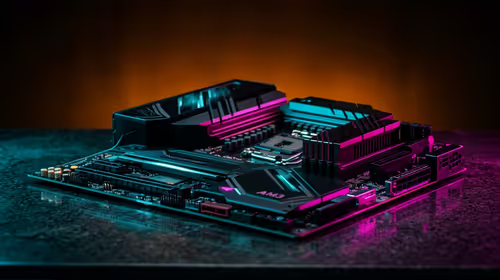
X870E vs X670E for aaa single-player gaming is mainly about fit, features, compatibility, cost, and upgrade path, not one automatic winner. SA buyers should match the choice to the setup.
Read more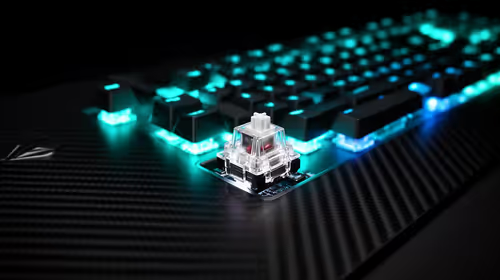
Hall Effect switches vs Mechanical switches for mMO and live-service games is mostly about compatibility, budget, upgrade path, and setup fit. SA buyers should check device support and real needs before expecting a clear win from either option.
Read more
A fake 113GB GTA VI ISO reportedly used empty padding around a small malware payload. SA gamers should delete unofficial builds, keep Windows security active and wait for official channels.

Wi-Fi 6E vs Wi-Fi 6 matters for 4K video editing when files move across a network. The real-world difference between Wi-Fi 6E and Wi-Fi 6 for video editing in 4K depends on NAS access, cloud uploads, router range, and SA creator workflows.

The difference between PCIe 5.0 and PCIe 4.0 for SA gamers is mostly bandwidth headroom. Compare GPU slot needs, NVMe speed, motherboard support, and upgrade timing before paying extra for a newer platform.

Gaming PC stuck pixel checks in South Africa should confirm the monitor fault first. Use colour tests, screenshot comparison, cable swaps, display menu checks, and clear photos before deciding on support.

Shokz OpenFit Air 2 earbuds weigh 7.2g each and use a redesigned dual-driver open-ear layout. SA buyers should choose them for comfort and awareness, not maximum isolation.

AMD's current driver now lists a Radeon RX 9050 4GB, while product coverage details a narrowed memory system. SA buyers should weigh the low VRAM ceiling against current local Radeon options.

Samsung Display has demonstrated a 16-inch 2.5K OLED laptop panel running at 300Hz. SA buyers should wait for a named notebook, full panel specifications and a local price before planning an upgrade.

Microsoft says some Windows 11 game crashes after recent updates are linked to RGB-related drivers. Affected SA gamers should confirm the update and driver before using the published registry workaround.

Minisforum's M2 Pro pairs Core Ultra X7, Arc B390 graphics and 32GB onboard memory in 1.8 litres. SA buyers should weigh its fixed memory and $1,439 launch offer against local mini PCs.

Smart monitors can add apps and convenience, but they also add privacy settings and unwanted-software risk. SA buyers should audit the operating system before paying for extras.

Lenovo says Legion Go failures linked to BIOS N3CN42WW are not user error. Affected SA owners should stop retrying the update, preserve proof and open a support case.
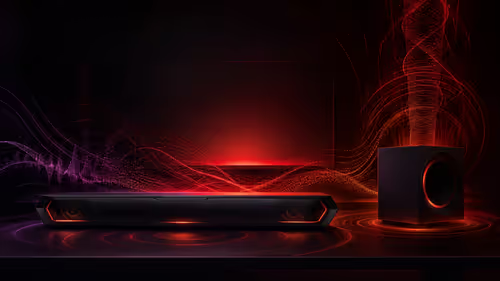
The ROG Gjallar gaming soundbar is now listed in the US at $599.99. SA buyers should compare its 2.1.2 audio, wireless bass and built-in chat controls with simpler local options.