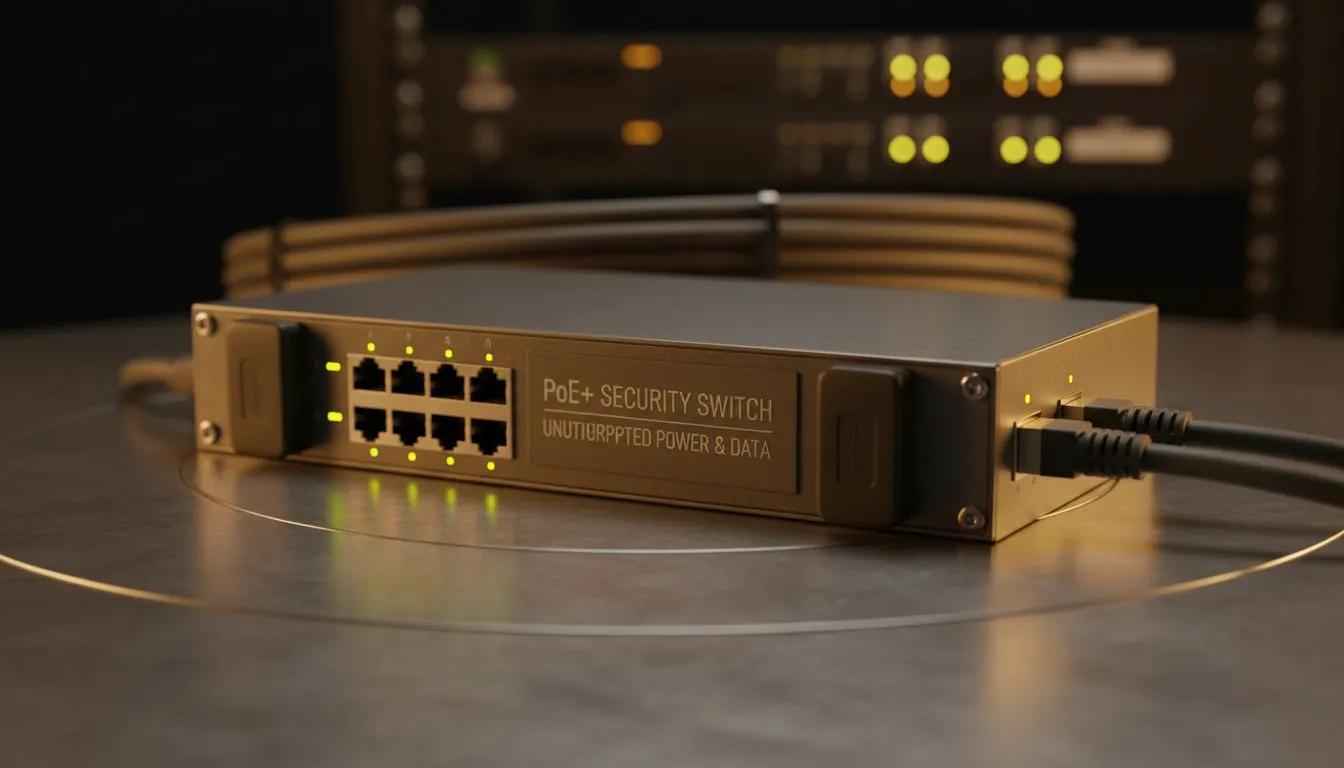
Loadshedding is an unfortunate reality for every South African. When the grid fails, your home or business becomes vulnerable. Maintaining PoE security during loadshedding: Keep cameras online to ensure your property remains protected during the darkest hours. It is not just about convenience... it is about ensuring your first line of defence never blinks when the lights go out. ⚡
Why PoE security during loadshedding is essential
Most modern security setups use IP cameras powered via Ethernet cables. This technology, known as Power over Ethernet, simplifies installation by sending data and power through one line. However, if your main switch loses power, every camera connected to it goes dark instantly. Criminals often monitor loadshedding schedules to find windows of opportunity. By centralising your power through high-quality PoE switches, you make it much easier to keep your entire surveillance net active with a single backup source.
Strategies for constant surveillance uptime
The most effective way to combat power cuts is to pair your networking gear with a reliable Uninterruptible Power Supply (UPS). Since your cameras draw relatively low wattage, a decent UPS can keep your security system running for hours. We often suggest Cudy networking gear for these setups. Their switches are known for efficient power distribution, which helps stretch your battery life further during those long Stage 6 sessions.
Selecting hardware that survives the surge
It is not just the lack of power that kills electronics... it is the surge when the electricity returns. Cheap components often fail after a few months of heavy loadshedding. Investing in premium PoE hardware provides better internal protection against voltage spikes. Look for devices with built-in surge protection to safeguard your investment. Spending a bit more upfront on a rugged switch can save you thousands in replacement cameras later. 🚀
Battery Life Pro Tip ⚡
Always calculate the total wattage of your cameras before buying a UPS. If your PoE cameras draw 60W total, a small 600VA UPS might only give you 15 to 20 minutes of runtime. Aim for a larger capacity or a dedicated DC UPS to survive a four-hour loadshedding block comfortably.
Optimising your backup duration
To get the most out of your backup power, you should audit your camera settings. Reducing the frame rate or resolution during night-time hours can slightly lower the power draw on some high-end units. Additionally, ensure your PoE switch is stored in a cool, ventilated area. Heat is the enemy of battery efficiency... keeping your gear cool ensures the batteries last longer through the summer heatwaves. ✨
Ready to Secure Your Home?
Don't let the next power outage leave you in the dark. Whether you need a basic setup or a high-performance surveillance backbone, we have the right gear to keep you online. Explore our range of PoE switches and networking specials and stay one step ahead of the blackout.