



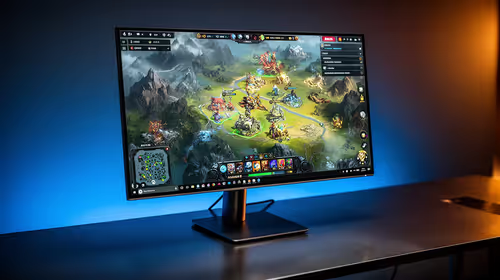
IPS vs VA for Strategy and Sim Games in SA
IPS vs VA for strategy and sim games should be judged by fit, not a single winner. Compare compatibility, latency, capacity, upgrade path, cost planning, and South African setup needs.
Read more- assess endurance metrics - review real-world failure data - recommend upgrade choices QLC vs TLC endurance: Understand real-world lifespan, failure risks, and smart tips to extend SSD life. 🔍💾
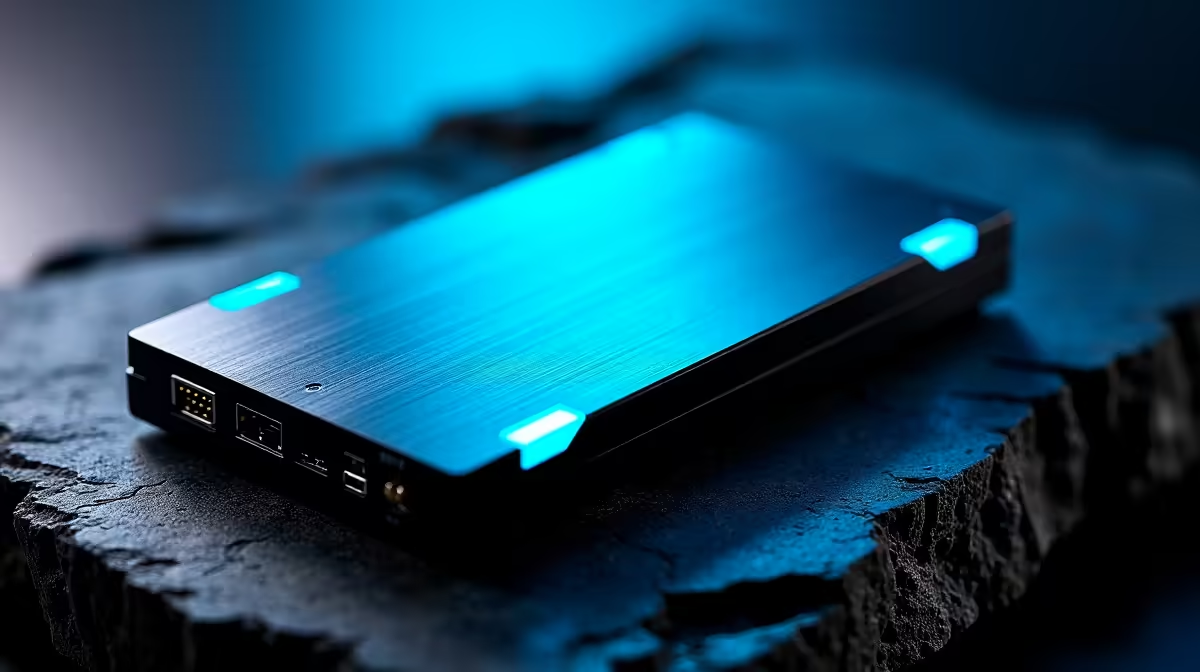
Building a beast of a PC in South Africa is a serious investment. You've picked the perfect CPU and a monster graphics card, but what about your storage? There’s a quiet debate raging online about QLC vs TLC endurance, with some gamers worried their new, affordable QLC SSD is a ticking time bomb. Is your massive game library really at risk? Let's cut through the noise and find out if QLC drives will fail sooner.
At its core, the debate is about how data is stored. Think of an SSD's memory cell as a tiny room.
The trade-off? Every time you write data, the "room" wears out a little. Because QLC cells are more crowded and complex, they can't endure as many write cycles as their TLC counterparts. This is the source of the anxiety around whether QLC drives fail prematurely. But the numbers tell a more interesting story for most modern solid-state drives.
For the average gamer, the answer is almost certainly no. SSD lifespan isn't measured in years, but in Terabytes Written (TBW). A typical 1TB QLC drive, like the Crucial P3, is rated for around 220 TBW.
What does that even mean? It means you could write over 120GB of data every single day for five years straight before you even approach the drive's endurance limit. Are you downloading and deleting Cyberpunk 2077 daily? Probably not. 😅
Gaming is a read-heavy activity. You install a game once (a big write), but then you spend hundreds of hours just loading levels and assets (reading). For storing and playing games, a QLC drive offers incredible value, letting you get more storage for your money.
So, who should still opt for TLC? The extra endurance of TLC is not just marketing fluff; it's vital for specific users. If your PC is more than just a gaming rig, you should pay close attention.
You're a prime candidate for a TLC drive if you are:
For these demanding tasks, the higher TBW rating and robust nature of high-performance NVMe SSDs using TLC NAND provide genuine, long-term reliability.
Most SSD manufacturers provide a free utility (like Samsung Magician or Crucial Storage Executive) to monitor your drive's health and total data written. It's a great way to see just how little data you actually write day-to-day. You can see for yourself that hitting the TBW limit is tougher than you think!
The QLC vs TLC endurance discussion often overshadows a key performance difference: sustained write speed. Both drive types use a small portion of their memory as super-fast SLC cache. For small file transfers, they feel equally snappy.
However, when you're moving a massive file—like a 100GB game folder—the cache can fill up. Once it's full, a QLC drive's write speed can drop significantly, while a TLC drive typically maintains much higher speeds. This is also a critical factor when choosing from the many external SSDs available, especially for videographers transferring footage on the go.
Let's break it down simply.
Ultimately, the fear that QLC drives will fail sooner is largely overblown for the vast majority of users. Both technologies are reliable options among the wide variety of SSDs for your rig. The choice isn't about good vs bad, but about finding the right tool for your specific job.
Ready to Find Your Perfect Match? The QLC vs TLC debate comes down to your needs and budget. Whether you need a high-capacity drive for your game library or a rock-solid workhorse for content creation, we've got the perfect fit. Explore our massive range of SSD specials and give your PC the speed it deserves.
QLC has lower write endurance than TLC because it stores more bits per cell; TLC typically offers better reliability and longer qlc vs tlc lifespan.
Many QLC drives last years for everyday tasks; lifespan depends on TBW, workload, and write patterns—see qlc drive lifespan 2025 estimates.
For gaming, QLC often holds up if you mainly read and install games; heavy constant writes make TLC a safer pick for durability.
Yes—use OS-level trim, avoid constant large writes, enable overprovisioning, and keep spare capacity to extend qlc ssd lifespan.
Check TBW, DWPD, and warranty length. TBW and drive writes are the best indicators of qlc vs tlc endurance differences.
QLC works for primary drives if your workload is read-heavy and you back up data; for sustained writes, choose TLC for reliability.
Manufacturers may offer shorter warranties or lower TBW on QLC drives; compare TBW and warranty to judge qlc vs tlc reliability.
IPS vs VA for strategy and sim games should be judged by fit, not a single winner. Compare compatibility, latency, capacity, upgrade path, cost planning, and South African setup needs.
Read more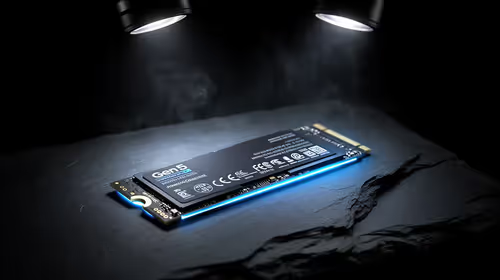
Gen 5 NVMe SSD guide for Bloemfontein gamers should be shortlisted around the job it must do. South African buyers should compare capacity, speed, thermals, and motherboard support, warranty path, and upgrade room before treating any pick as best.
Read more
Skip the RTX 5070 if your first-time builder budget needs better balance. Better SA picks can free room for the right CPU, PSU, case, monitor, storage, and cooling while still giving a strong first gaming PC experience this year in South Africa.
Read more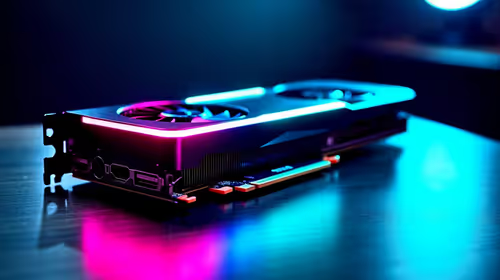
RTX 5080: weighing the pros and cons for SA should be shortlisted around the job it must do. South African buyers should compare GPU tier, VRAM, cooling, and PSU headroom, warranty path, and upgrade room before treating any pick as best.
Read more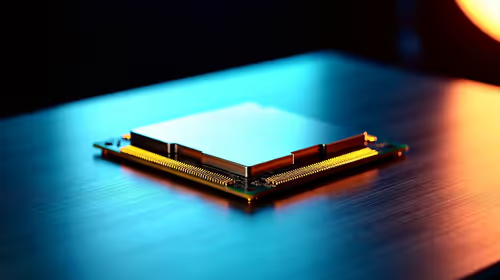
Core i5-13400F gives South African PC builders a capable mid-range CPU choice with clear limits. Check its gaming fit, discrete GPU requirement, LGA1700 platform costs, and upgrade path before locking in your parts list.
Read more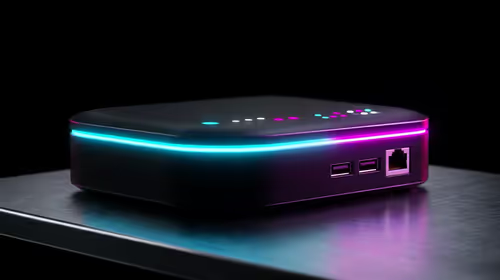
Pros and cons of the Wi-Fi 7 routers for SA should be shortlisted around the job it must do. South African buyers should compare WiFi standard, coverage, latency, and device support, warranty path, and upgrade room before treating any pick as best.
Read more
Steam content servers unreachable needs a download-path check, not an immediate reinstall of every game. Restart the client, inspect download settings and compare another connection when practical. Clearing the download cache is separate from deleting installed games.
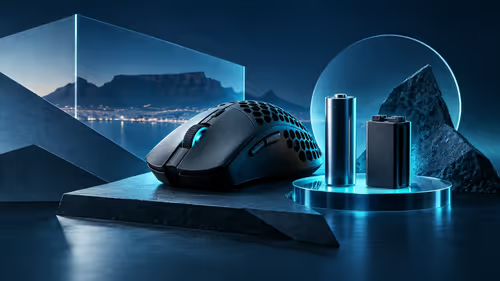
Keychron G6 HE has built-in and swappable battery versions with different weights. The product brief lists 42g and 46g respectively, each with a 3g tolerance. Choose by grip and battery preference before treating one headline weight as universal.
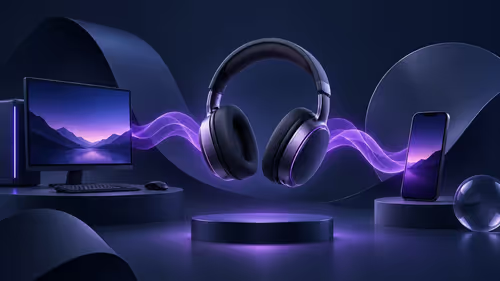
Corsair HS80 v2 MAX supports 2.4GHz wireless and Bluetooth. Its maximum battery figures use RGB-off conditions and differ by connection. Check microphone routing, comfort and the exact device support before assuming every wireless mode behaves alike.

Windows taskbar notification badges can be shown or hidden in Taskbar behaviours. This changes the small app indicators, not the underlying messages. Choose a calmer desktop while keeping a deliberate routine for checking important conversations and app updates.
Windows taskbar notification badges can be shown or hidden in Taskbar behaviours. This changes the small app indicators, not the underlying messages. Choose a calmer desktop while keeping a deliberate routine for checking important conversations and app updates.
Windows USB device in use can mean a program still has the drive open. Finish transfers and close files before retrying ejection. Better performance caching requires safe removal; a replacement drive is not the first fix for an open-file warning.

Windows Nearby Sharing not working starts with feature, Bluetooth and visibility checks on both PCs. My devices only depends on matching Microsoft accounts. Test a small harmless file before buying networking hardware or changing your home router.
Windows hardware reserved RAM is different from memory used by applications. Compare installed memory with firmware detection and the usable amount before buying modules. Reservations and reporting limits vary by system; no universal setting restores every byte.

Windows title bar window shake can minimise other open windows when you shake the active window by its title bar. Inspect the Multitasking setting and switch it off if that gesture interrupts your work. The preference costs R0 and does not require new hardware.

Windows Print Screen opens Snipping Tool when its keyboard preference is enabled. Change the option under Accessibility, Keyboard to choose another workflow. Test whether you need a clipboard image or a saved file.

Windows desktop icons missing may be a visibility setting. Right-click the desktop, choose View and inspect Show desktop icons. If only system icons are absent, use Desktop icon settings. Check the Desktop folder before assuming files were deleted.

Windows set time zone automatically greyed out calls for a location and device-policy check. Automatic time-zone selection relies on location services. A manual time-zone choice is separate from synchronising the clock; check both before replacing hardware.