We see this question a lot from Evetech customers, so here is the grounded answer. Below we tackle "Ray Tracing and Path Tracings for Cinematic Story Games" with concrete SA pricing and specs.
Quick Answer
Choose ray tracing for cinematic story games when you want richer reflections without sacrificing pace, since most cards near R27,000 keep frames steady around 180 fps. Path tracing looks more cinematic but can halve that to roughly 55 fps. The honest answer for SA players: ray tracing for responsiveness, path tracing for showcase scenes.
What Ray Tracing Adds for Cinematic Story Games
Ray tracing improves shadows, reflections, and ambient lighting without forcing every scene to its limit. On a card around R14,900 it typically holds 180 fps at 1440p, which keeps cinematic story games feeling responsive. Turn it on where the effect is visible from your usual camera angle and dial it back if pacing ever wobbles.
Frame Pacing and Visibility Trade-Offs
In cinematic story games, consistent frame pacing matters more than peak detail. Ray tracing usually preserves that consistency; path tracing can introduce dips that hurt feel. Run a full evening on your settings, watch the 1% lows, and keep whichever option stays smooth at 180 fps or close to it.
Picking a GPU for Cinematic Story Games in SA
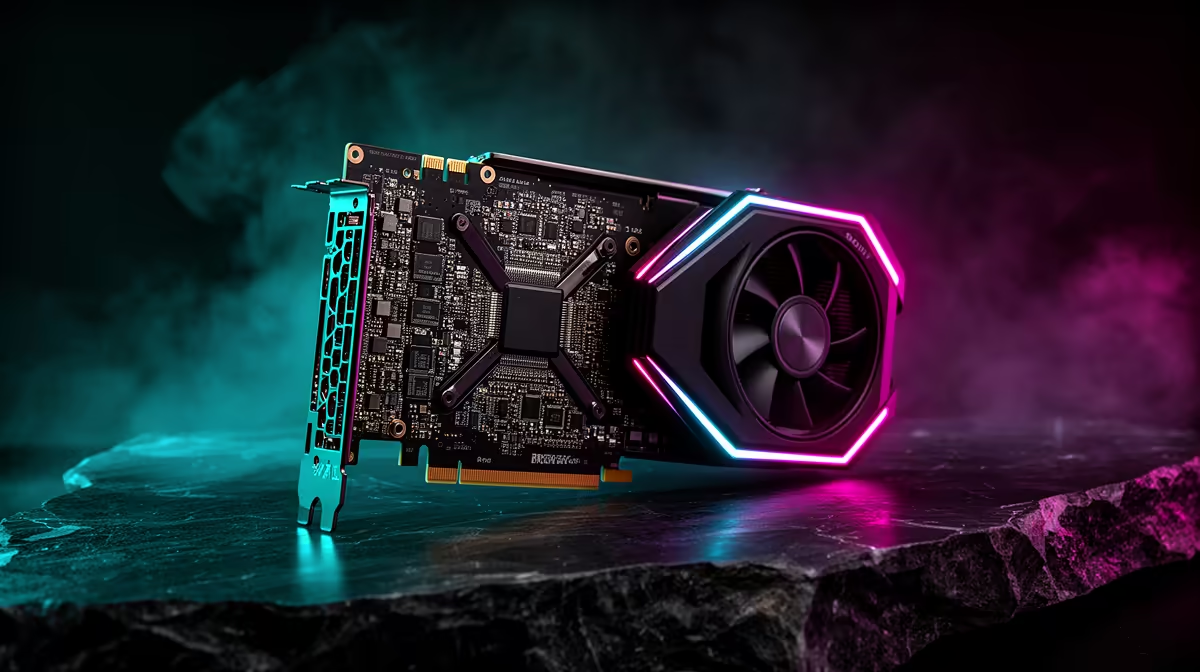
For cinematic story games, match the card to your monitor first. Entry ray-tracing cards start near R27,000; a comfortable 1440p ray-tracing tier sits around R14,900; serious path tracing wants R14,900 or more. Spend on the GPU that keeps your target frame rate before chasing the flashiest lighting label.
FAQ
Will ray tracing hurt my frame rate in cinematic story games?
It costs some frames, but on a balanced build you can usually hold 180 fps at 1440p, dropping to about 55 fps in heavy scenes. If pacing dips during cinematic story games, lower the ray-tracing quality before turning it off entirely.
Does path tracing need upscaling for cinematic story games?
In most titles, yes. Upscaling is what makes path tracing playable for cinematic story games, often lifting frames from near 55 fps to a far smoother range. Enable it and pick a quality level that keeps the feel you want.
Is ray tracing or path tracing better for cinematic story games?
Ray tracing is the better all-rounder for cinematic story games because it keeps frames near 180 fps while still improving lighting. Path tracing looks more realistic but suits players with a card near R14,900 and patience for tuning.
Sort it at Evetech
Pick a GPU near R14,900 that holds your target frame rate, then enable ray tracing first and try path tracing only if frames stay smooth.