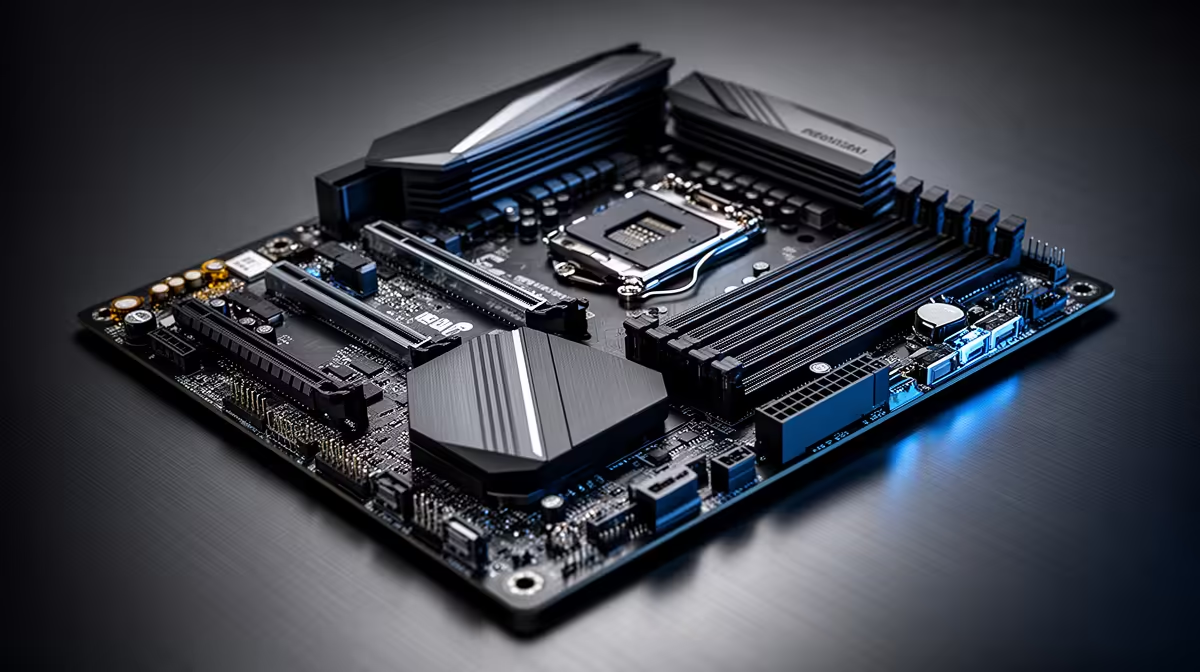
When a build is aimed at timeline scrubbing, exports and high-bitrate footage, the gap between B850 and B650 shows up in specific places rather than across the board.
Quick Answer
B850 wins on paper since B850 mandates PCIe 5.0 storage and adds USB4 options, but for 4K video editing the felt difference is modest. Most SA buyers in the R3,500 to R8,500 range get better value from B650 plus more GPU or panel budget.
Heat, fit and platform checks
Before you commit, confirm your board, cooling and case actually support the AMD chipset you want. SA ambient temps run warm, so airflow and proper mounting matter; a throttled part is no faster than the cheaper one it replaced.
Where your Rands do the most work
For a 4K video editing machine in the R3,500 to R8,500 bracket, the order that moves the needle is usually GPU, then display, then memory, then this AMD chipset choice. Spend top-down and you rarely regret it.
Real-world feel during 4K video editing
In day-to-day timeline scrubbing, exports and high-bitrate footage, the difference between B850 and B650 is felt in scratch-disk throughput and stable preview playback. If you cannot notice it side by side on your own panel, you do not need to pay for it yet.
FAQ
Can I move to B850 later without rebuilding?
Often yes, if your motherboard already supports it. Buy a platform with the right slots now and you keep the door open without paying for B850 today.
Does B850 make a difference for scratch-disk throughput and stable preview playback?
A measurable one in the right scenario, yes. Whether it is a felt difference depends on the rest of your hardware keeping pace.
Is B850 worth it just for 4K video editing?
Only if your platform is new and the price gap is small. For pure 4K video editing, B650 delivers nearly the same feel, and B650 covers the same Ryzen chips for less outlay.
Buyer Tip
Confirm your motherboard supports the AMD chipset you want before checkout, then size the part to your 4K video editing budget.