You’re in the final circle in Warzone, the enemy is one shot… and then it happens. Your character freezes, teleporting a few metres to the left, and the "Connection Interrupted" icon flashes. Eish. High ping strikes again. For South African gamers, battling latency can feel as tough as the final boss. But what if you could significantly reduce ping in gaming? Let's dive into the practical fixes that will get you a smoother, more responsive experience. 🚀
First, What Exactly is Ping?
Before we fix the problem, let's quickly understand it. Ping, measured in milliseconds (ms), is the time it takes for data to travel from your PC or console to the game server and back again. Think of it as your digital reaction time. A low ping (e.g., under 40ms) is lekker—your actions are near-instant. A high ping (150ms+) means a noticeable delay, or lag, which gets you eliminated. The goal is always to get that number as low as possible for a smoother gaming experience.
Quick Fixes to Lower Your Ping Right Now
You don't always need a massive overhaul to see improvement. Sometimes, the simplest changes can help you reduce ping in gaming almost instantly.
Go Wired with Ethernet
Wi-Fi is convenient, but it's prone to interference from walls, microwaves, and other devices. For the most stable and lowest latency connection, nothing beats a direct line. Plugging your PC or console directly into your router with a quality Ethernet cable is the number one way to get a better connection. It's a simple fix that eliminates wireless instability. If your current cable is old or you need a longer one, check out Evetech's range of wired networking gear.
Clear the Digital Traffic
Your internet connection is a shared resource. If someone is streaming 4K Netflix in the other room or your PC is downloading a massive update in the background, your game's data has to wait in line. Before you jump into a match, close unnecessary applications on your PC—especially web browsers with many tabs, cloud-syncing services like Dropbox, and any game launchers downloading updates.
The 5-Minute Network Reset 🔧
Experiencing a sudden ping spike? Try a classic power cycle. Unplug your router and your fibre box (ONT) from the wall. Wait a full minute, then plug the ONT back in first. Once its lights are stable, plug your router back in. This often clears up temporary network glitches and can improve your ping.
Optimise Your Home Network for Gaming
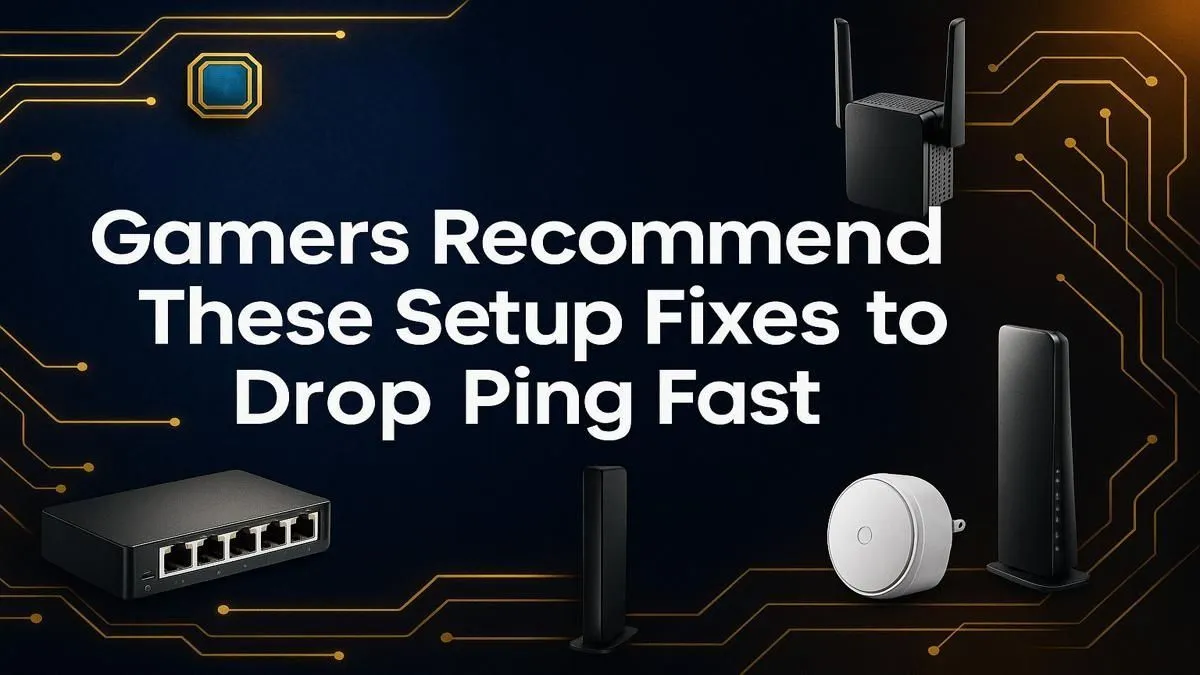
If the quick fixes aren't enough, it's time to look at your network hardware. Your router is the heart of your home internet, and an old or budget model can be a major bottleneck preventing you from lowering your ping.
Position and Power Matter
Your router's physical location is crucial. Place it in a central, open area, away from thick walls or large metal objects. Elevating it can also improve signal coverage. If you're stuck with Wi-Fi, ensure you're using the 5GHz band instead of the 2.4GHz band. It has a shorter range but offers much faster speeds and less interference, which is ideal for reducing latency in games.
Consider a Hardware Upgrade
If your router was provided by your ISP years ago, it's likely holding you back. Modern routers, especially those with Wi-Fi 6 technology, are built to handle the demands of multiple devices and high-bandwidth activities like gaming. They offer features like QoS (Quality of Service), which lets you prioritise traffic to your gaming device. Many top-tier TP-Link routers offer gaming-specific features that can make a real difference. ✨
Advanced Strategies to Reduce Gaming Latency
Still struggling? Let's explore some more advanced tweaks. These require a bit more effort but can be the final piece of the puzzle for achieving low ping.
Tweak Your DNS Settings
Your Domain Name System (DNS) server is like the internet's phonebook. Sometimes, your ISP's default DNS can be slow. Switching to a public DNS server like Google's (8.8.8.8) or Cloudflare's (1.1.1.1) can sometimes speed up connection times and slightly reduce your ping. It's a simple change in your network settings and is easily reversible if you don't see an improvement.
Invest in a Modern Mesh System
For larger homes or areas with lots of Wi-Fi dead spots, a single router might not be enough. A mesh Wi-Fi system uses multiple nodes to blanket your entire home in a strong, stable signal. This ensures you have a solid connection no matter where your gaming setup is. Brands are making this tech more accessible, and you can find powerful and affordable Cudy mesh systems that eliminate dead zones for good. ⚡
Ready for a Lag-Free Setup?
Don't let high ping dictate your K/D ratio. Upgrading your network hardware is the most reliable way to ensure a stable, low-latency connection. Explore our range of wireless networking solutions for performance that leaves lag in the dust.