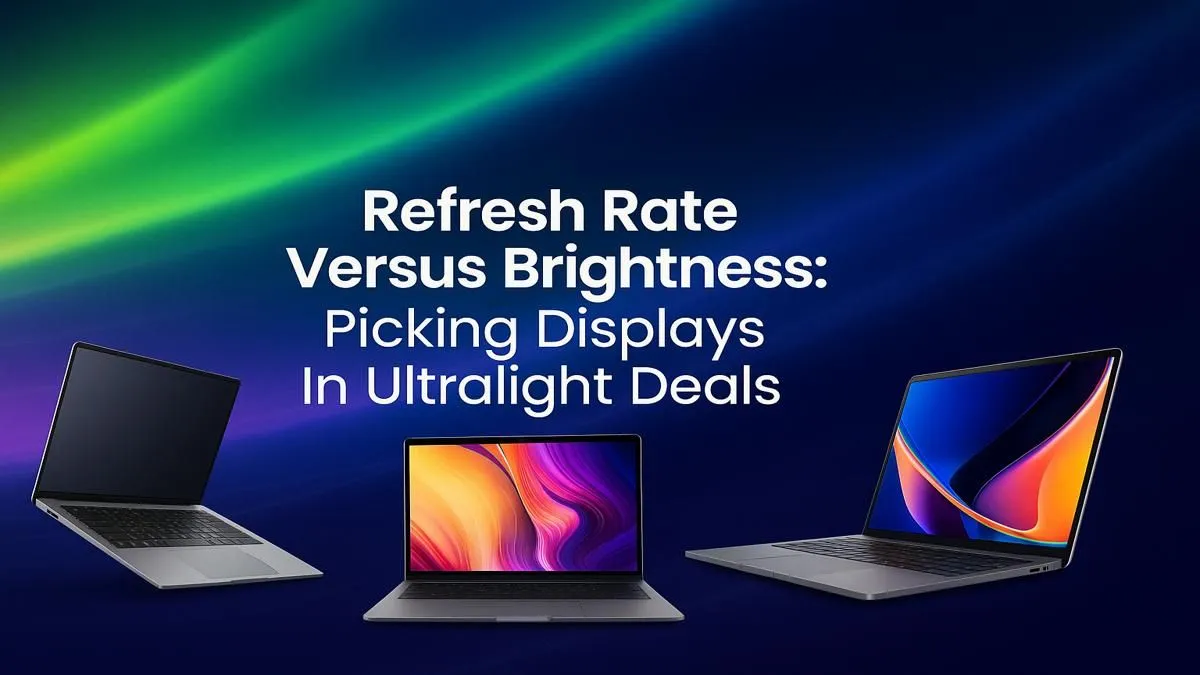
Staring at your screen, wondering why your new rig feels… off? Maybe your gameplay isn't as buttery-smooth as you expected, or the colours look washed out under the bright South African sun. You're not alone. The culprit is often a simple but crucial choice: focusing on the wrong display tech. The great debate of refresh rate vs brightness is where many gamers and creators get stuck. Let's clear up the confusion and help you pick the right display.
Refresh Rate Explained: The Secret to Buttery-Smooth Motion ⚡
Think of refresh rate, measured in Hertz (Hz), as the number of times your screen draws a new image per second. A standard 60Hz display refreshes 60 times, while a 144Hz display does it 144 times. For fast-paced games like Valorant or Apex Legends, a higher refresh rate means you see enemy movements sooner and experience far less motion blur. This isn't just a "nice-to-have"; it's a competitive edge.
So, is more always better? For pure gaming, absolutely. The jump from 60Hz to 120Hz or 144Hz is massive, making every action feel incredibly fluid and responsive. If you're chasing high FPS and silky gameplay, prioritising a high refresh rate is a no-brainer. Many of today's best laptop specials for sale in South Africa come with high-refresh-rate panels as standard.
Decoding Brightness: Why Nits Matter More Than You Think
Screen brightness is measured in "nits" (technically candela per square metre). While refresh rate handles how smoothly you see things, brightness determines how clearly you see them, especially in well-lit environments. A dim screen (around 250 nits) will look faded and reflective near a window or under office lights, washing out colours and making details hard to see.
This is where Ultradlight tech truly shines. For content creators who need perfect colour accuracy or professionals working on the go, a brighter screen (350+ nits) is essential. It punches through glare and ensures your vibrant designs and important spreadsheets look exactly as they should. The latest Dell Snapdragon laptops, for instance, often focus on power efficiency and brilliant displays perfect for mobile work.
Pro Tip: Don't Forget the Finish!
Check for 'Anti-Glare' or 'Matte' screen finishes. A 300-nit matte display can often feel more usable in a bright room than a 400-nit glossy one because it diffuses annoying reflections.
Refresh Rate vs Brightness: Which One Wins for You?
The right choice in the refresh rate vs brightness battle depends entirely on your primary use case. There's no single "best" answer, only what's best for you.
For the Competitive Gamer 🏆
Priority: Refresh Rate.
You need speed and fluidity above all. Aim for 120Hz as a minimum, with 144Hz or higher being the sweet spot. A brightness of 300 nits is perfectly fine for most indoor gaming setups. Many affordable HP notebook deals offer fantastic high-refresh gaming panels that won't break the bank.
For the Creator & Digital Nomad 🎨
Priority: Brightness & Colour Accuracy.
You need a screen that displays your work accurately, anywhere. Look for 400+ nits and strong sRGB or DCI-P3 colour gamut coverage. While a high refresh rate is a great bonus for smooth scrolling, it's secondary to a bright, vibrant canvas. The gorgeous OLED screens found on many Lenovo Yoga laptops are a perfect example of displays built for creative excellence.
Ultimately, picking the right display tech means matching the panel's strengths to your daily grind… or nightly gaming session. By understanding the trade-offs between motion clarity and visual punch, you can invest in a screen that truly elevates your experience.
Ready to Find Your Perfect Display?
Now that you know what to look for, explore our massive range of laptops tailored for every need. Shop now at Evetech for performance that puts you in control.