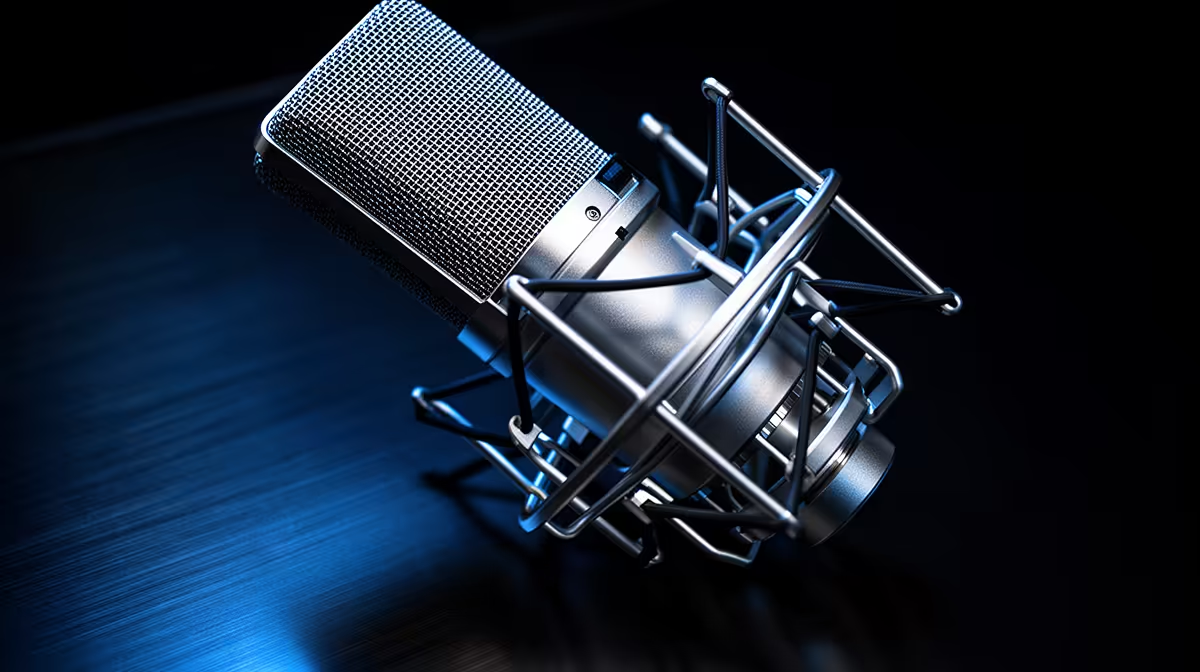
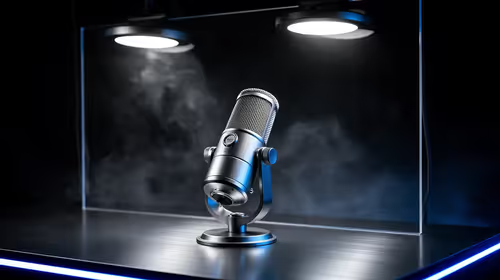
A quiet condenser microphone can reveal breath, room tone and the hum you stopped noticing years ago. That sensitivity is part of the appeal of the NT1 family, but it means the room and signal chain matter as much as the capsule. The RODE NT1 5th Gen price in South Africa should therefore be compared as a studio setup, not a microphone in isolation.
Quick Answer
RODE NT1 5th Gen listings and Rand prices can move across South African specialist stock and overseas routes, so no fixed figure is safe to repeat. Bringing the microphone across the border adds carrier charges, customs duty and a seller process that may sit elsewhere. Evetech's current streaming essentials category shows locally listed studio and creator microphones for comparison.
🎙️ Understand the NT1 5th Gen signal paths
The NT1 5th Gen is a studio condenser microphone designed for detailed voice and instrument capture. Confirm the exact model and included accessories before purchase.
Its generation is known for offering both traditional XLR use and a digital USB path. Those routes serve different setups.
XLR connects the microphone to an audio interface with suitable microphone gain and phantom power. This route can fit a larger studio system.
USB connects the microphone to a supported computer without a separate interface. Check operating-system, driver and software requirements.
Do not connect XLR and USB in an unsupported way. Follow the current manual for power and routing.
Condenser microphones need correct phantom power over XLR. Mute monitoring and lower gain before switching it.
Low self-noise helps on quiet sources, but room noise and preamp gain can still dominate the recording.
🏠 Fix the room before chasing processing
The NT1's sensitivity can capture hard-wall reflections, fans, traffic and keyboard noise. Listen to the room with headphones before buying acoustic accessories.
Place the microphone close enough for a strong voice level without crowding the capsule. A sensible distance reduces the room relative to speech.
Use a pop filter and speak across the capsule rather than blasting air into it. Learn the correct front side from the manual.
A shock mount can reduce desk and floor vibration. It cannot remove keyboard sound travelling through the air.
Move the microphone away from a computer exhaust and noisy graphics card. A longer boom-arm reach can be more useful than heavy noise reduction.
Soft furnishings and movable absorption can tame strong reflections. Cover the path behind and beside the speaker before filling the room with thin foam.
Record thirty seconds of silence and normal speech. That test reveals whether the room, cable or computer needs attention.
📦 Calculate the whole South African studio cost
Use a current quote naming the NT1 5th Gen, colour, shock mount, pop filter, cable, seller, currency and date. Bundles can differ.
International freight and customs duty can affect the landed amount. Condenser capsules and shock mounts need careful packaging.
If you plan to use XLR, include an interface, supported cable and microphone stand. For USB, include a suitable computer port and cable length.
Ask who handles capsule noise, a failed USB connection, loose XLR pins or cosmetic damage. Get the claim destination and carrier responsibility.
Review Evetech's webcam range when the microphone forms part of a video or streaming setup.
Compare current local microphones by pickup pattern, connection, included mount, room suitability and warranty. A dynamic microphone can be easier in an untreated, noisy room even when a condenser has lower self-noise.
Keep the pouch, mount, cable, serial details and carton. Store the microphone dry and protected from dust.
Check the seller's early inspection window. Test both supported connection paths if you plan to rely on both.
Include headphones in the chain. Speakers playing while recording can create feedback or bleed.
Check whether your boom arm accepts the supplied shock mount thread without a stack of loose adapters. The microphone should stay upright when the arm is moved and never fall towards the desk.
If the room serves as both office and studio, test typing, chair movement and computer fans at the intended gain. A quieter microphone specification cannot reject sounds that reach the capsule.
Plan file backup and sample rate before a long recording. XLR and USB routes may appear as different devices in your editing software, so name the working input clearly.
🧪 Set a clean voice baseline
Mount the microphone securely and connect it with gain down. Enable phantom power only for the XLR route where required.
Set the microphone about a hand-span from your mouth as a starting point. Aim the correct side and fit the pop filter.
Speak at normal and excited levels while raising gain. Leave headroom so peaks do not clip.
Record without plugins. Listen for hum, hiss, room echo, mouth noise and plosives.
Move the microphone and improve the room before adding a gate. Physical changes tend to sound more natural.
For USB, install supported software and record the original firmware or settings. Test the correct device and sample rate.
For XLR, try another known-good cable if noise appears. Keep audio leads away from power bricks.
Add compression or equalisation one step at a time. Match playback loudness when comparing.
Save a clean preset and a processed preset. Keep screenshots of gain and software routing.
Record a full episode-length test. Heat, software drift and room noise may appear over time.
Listen to the recording on headphones, laptop speakers and a phone. Plosives, harshness and excess bass can hide on one playback system.
Recheck microphone position after adjusting the chair. A small change in speaking angle can alter level and room tone more than a new plugin.
Keep food, drinks and moisture away from the capsule and shock mount. Cover the microphone when the room becomes dusty.
Frequently Asked Questions
Is there a fixed South African NT1 5th Gen price?
No durable figure covers changing listings and bundles. Check a current offer for the exact package.
Does Evetech stock the RODE NT1 5th Gen?
Do not infer model stock from this guide. The linked Evetech category shows microphones available now.
Why does the NT1 suit podcasting?
It is a detailed low-noise condenser with XLR and USB workflow options, provided the room and placement are controlled.
What can shipping add?
The total depends on freight, customs duty, insurance, package size and possible support transport.
Can South Africans obtain local warranty support?
Support follows the current seller route. Confirm where USB and capsule faults are diagnosed.
Which local studio microphone should I choose?
Compare Evetech's current options by room noise, pickup pattern, XLR or USB needs, included accessories and warranty.
Ready to record a cleaner podcast or voiceover?
Browse Evetech's current streaming essentials and webcams, then match the microphone, room and connection to your content.