Quick Answer
For SA gamers at 1440p, the RTX 5060 Ti (16GB) is the smarter pick over the RX 9060 XT for ray-traced titles and DLSS support, holding roughly 90-110fps in modern games. Choose the RX 9060 XT if you want stronger raw rasterisation value around R9,000 and play mostly without heavy ray tracing.
How they compare at 1440p
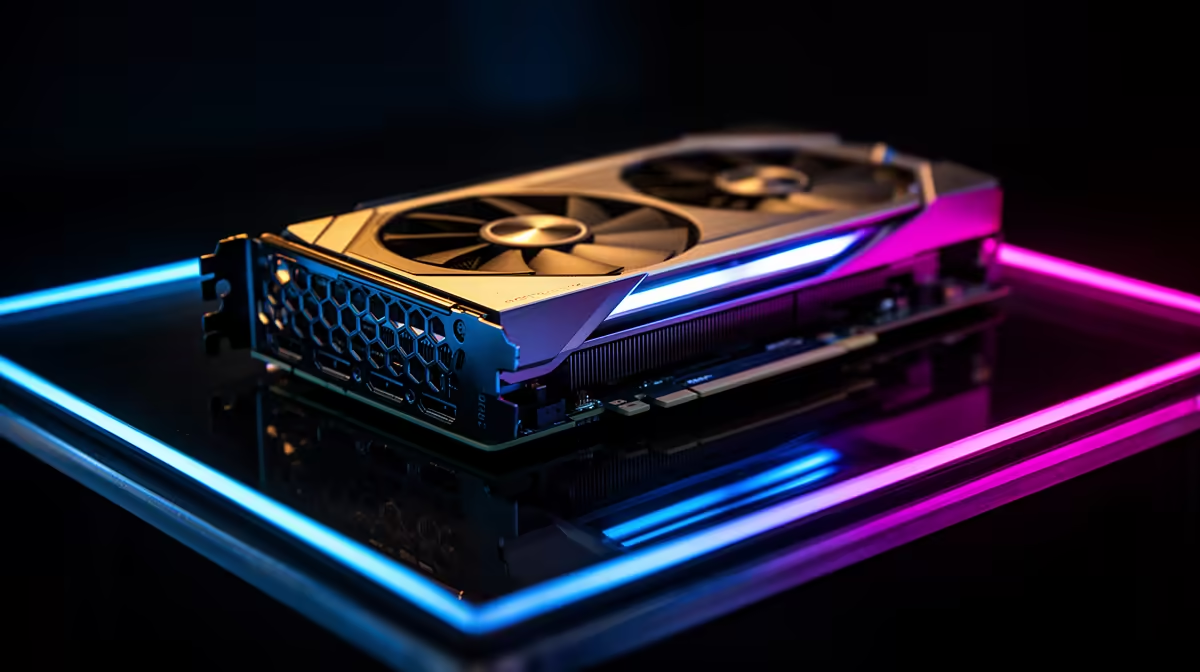
Both cards target 1440p comfortably, clearing 100fps in titles like Fortnite, EA FC and Call of Duty at high settings. The RTX 5060 Ti pulls ahead when ray tracing is enabled, reaching around 70-90fps with DLSS in Cyberpunk 2077, while the RX 9060 XT often wins on pure rasterisation per rand. Both ship with 16GB VRAM, which keeps texture-heavy games smooth and gives headroom for future titles. For esports, both sit well above 200fps.
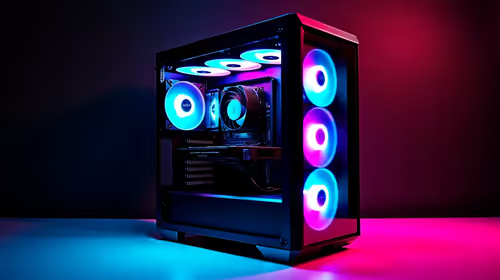
Plan for adequate case airflow as well, since both cards run warmer under sustained 1440p loads, and good cooling protects your frame rate during long sessions.
Value and power for SA builds
At Evetech, the RX 9060 XT tends to sit around R9,000 while the RTX 5060 Ti runs a bit higher for its feature set. The RTX 5060 Ti draws roughly 180W and pairs well with a 550W power supply, while the RX 9060 XT suits a 600W unit. Check your case clearance: some 16GB models exceed 270mm, so measure first to avoid a costly return. A 1440p 144Hz monitor is the ideal match for either card.
FAQ
Which card is better value in South Africa?
The RX 9060 XT generally offers stronger rasterisation per rand around R9,000. The RTX 5060 Ti costs a bit more but adds DLSS and stronger ray tracing.
How many frames can I expect at 1440p?
Both clear 100fps at high settings in most modern titles. With ray tracing on, the RTX 5060 Ti holds around 70-90fps using DLSS in demanding games.
Do I need 16GB of VRAM?
Both cards ship with 16GB, which keeps texture-heavy 1440p games stutter-free and gives useful headroom for upcoming releases.
case (up to 270mm) and confirm a 550-600W power supply before ordering, so you avoid an expensive return.