Quick Answer
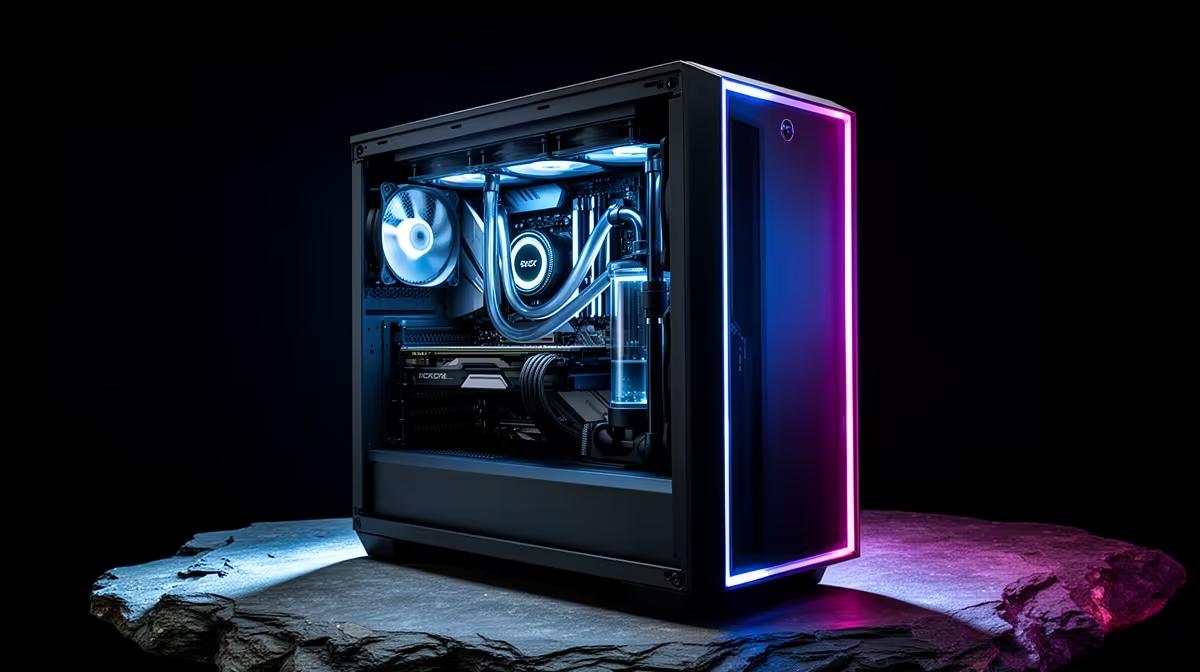
Yes, choose a case with both 360mm radiator support and 430mm GPU clearance if you are building around current-gen high-end hardware. These two specifications together cover every RTX 50-series and RX 9000-series card on the market and allow the best available AIO cooling. Skipping either spec forces a compromise on hardware choice or cooling performance that you will likely regret within one upgrade cycle.
Why Both Specs Work Together 🔧
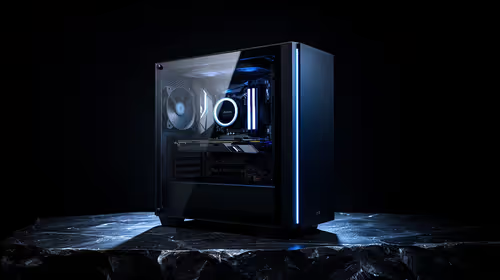
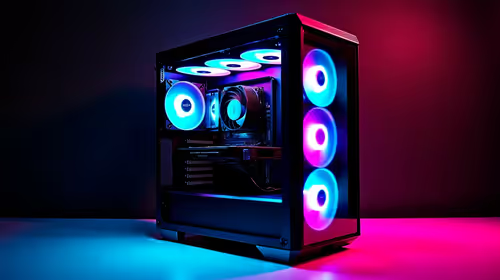
A 360mm AIO radiator and a long GPU are a common pairing in high-end builds, and they can conflict physically if the case is not designed to accommodate both. In some ATX mid-towers, mounting a 360mm radiator at the front consumes so much vertical space that GPU clearance drops from the rated 430mm to an effective 380mm due to the radiator bracket protruding into the GPU lane. Always check whether the GPU clearance specification is measured with the front radiator installed or with the front bay empty. Cases that genuinely deliver 430mm GPU clearance with a 360mm front radiator installed are less common and typically sit in the R4,000 to R6,500 segment in the SA market.
What Each Spec Future-Proofs in Your Build 💡
The 360mm radiator spec future-proofs the CPU cooling path. If you start with a Ryzen 7 9800X3D today and upgrade to a Ryzen 9 9950X or a next-generation high-TDP processor two years from now, a 360mm AIO handles the thermal jump without replacing the case. The 430mm GPU clearance future-proofs the graphics path. Current RTX 5090 flagship cards reach 366mm; if next-generation GPUs follow the same growth trend, a 430mm-cleared case will accommodate them without needing replacement either. Combined, these two specs mean the case remains usable through two or more hardware generations, which in SA terms can represent five to eight years of use and multiple R30,000-plus GPU upgrades.
When a Smaller Case Is Still Justified 🖥️
Not every build needs both specs. A Ryzen 5 9600X build with an RX 9060 XT card measuring under 300mm and a 240mm AIO is perfectly at home in a compact Micro-ATX case with 300mm GPU clearance and 240mm radiator support. Spending R4,000 on a large ATX case for a R15,000 build is disproportionate. The 360mm plus 430mm combination is specifically the right answer for builds centred on an RTX 5080 or 5090, Ryzen 9 9950X or Core Ultra 9, and 360mm AIO, where the total component investment exceeds R50,000. Scale the case spec to the hardware tier.
Verify Radiator-GPU Clearance Compatibility ⚡
Search for your specific case model on enthusiast forums or YouTube build videos showing a 360mm front radiator installed alongside a triple-fan GPU. If both fit without cable-routing conflicts, you have verified real-world compatibility rather than relying on the manufacturer's spec sheet, which sometimes measures clearance under ideal (non-radiator-installed) conditions.
FAQ
Do I need 430mm clearance if my GPU is only 340mm long?
Not strictly, but extra clearance provides cable routing space for the 16-pin power connector, which routes straight up from the rear of RTX 50-series cards. With only 20 to 30mm of clearance above the connector, a right-angle adapter is necessary; 430mm clearance lets you route the cable naturally without an adapter.
Can I install a 360mm front radiator and a 430mm GPU without a riser cable?
Yes, in cases specifically designed for this configuration. The GPU seats in the standard PCIe slot at the rear of the motherboard, and the front radiator mounts in the front bracket area above the drive cage.
What is a realistic budget for a case with both specs in South Africa?
Expect to pay R3,200 to R5,500 for a genuine mid-tower ATX case that delivers 360mm front radiator support and 430mm GPU clearance simultaneously. Discounted older-generation models with both specs occasionally appear at lower price points.
Need a case that fits your 360mm AIO and triple-fan GPU?
Browse Evetech's ATX gaming cases spec'd for 360mm radiators and 430mm GPU clearance to find the right match.