Quick Answer
For a clean cable-managed setup, buy the streaming microphone in this order: the mic first (a HyperX SoloCast at R1,200-R1,600 or QuadCast at R2,500-R3,200), then a boom arm at R400-R900 to get the cable off the desk, then a single USB-C run routed behind the desk. Skip multi-cable XLR chains unless you need an interface.
Buy The Mic Before The Accessories
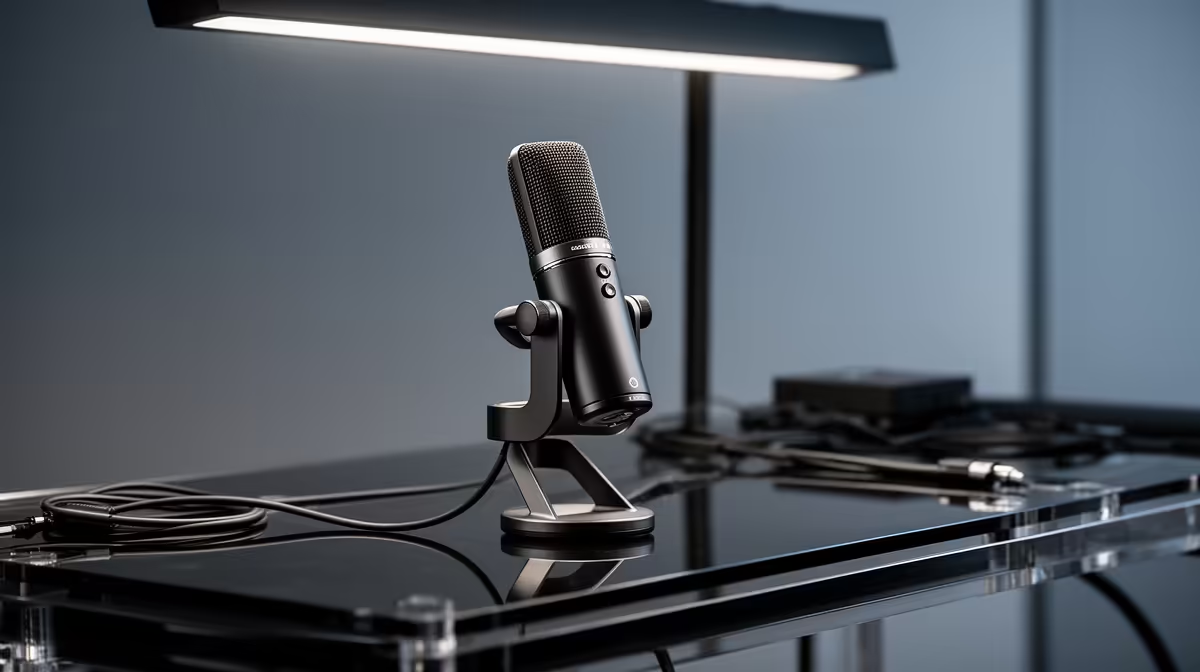
A clean desk starts with the right core mic, because that decides every cable after it. A USB cardioid mic uses one cable, which is the cleanest possible path: a HyperX SoloCast at R1,200-R1,600 or a QuadCast at R2,500-R3,200 both run on a single USB cable. An XLR mic, by contrast, needs a cable plus an interface plus its own USB, tripling the clutter. For a cable-managed setup, USB-first is the order that keeps the desk tidy from day one.
The Boom Arm Is The Real Cable-Management Win
After the mic, the boom arm at R400-R900 is what actually cleans the desk, because most arms have internal or clip-on cable channels that hide the run entirely. It also frees the desk surface and gets the mic to mouth height. Choose an arm rated for your mic's weight, since a heavy QuadCast will droop on a flimsy R150 arm. Route the cable through the arm channel, down the desk leg, and into a USB-C port at the back for an invisible path.
One Cable, Routed Once
With a USB mic on an arm, you have exactly one cable to manage. Use a USB-C cable just long enough to reach behind the desk, not a coiled two-metre excess, and tie it to the desk leg with a velcro strap alongside your other rear-routed cables. Avoid the temptation of a USB hub on the desk surface, which adds clutter; plug the mic directly into a rear port so the only thing visible is the mic itself.
FAQ
What order should I buy streaming mic gear in?
Mic first, then a boom arm at R400-R900, then route one USB-C cable behind the desk. USB cardioid mics keep it to a single cable, which is the cleanest path.
Does a USB or XLR mic give a cleaner desk?
USB, because it needs one cable, while XLR adds an interface and extra cabling. For a cable-managed setup, a USB cardioid mic on a boom arm is the tidiest choice.
How do I hide a microphone cable?
Run it through the boom arm's internal channel, down the desk leg, and into a rear USB-C port. Use a velcro strap to bundle it with your other rear-routed cables.
Pair a USB cardioid mic from Evetech with a weight-rated boom arm, then route the single cable behind your desk for a streaming setup with nothing on show.