Late-night gaming means keeping your voice clear for the squad without waking the house. The right streaming microphone captures a relaxed, low-volume voice cleanly while ignoring fans, keyboard clatter and the hum of a sleeping flat. This checklist shows South African buyers what actually matters when the room has to stay quiet.
Quick Answer
For quiet late-night gaming, prioritise a cardioid USB microphone with a built-in gain dial and zero-latency headphone monitoring, typically R1,200 to R3,500 in South Africa. A tight cardioid pattern plus a software noise gate keeps a soft 1am voice audible to teammates while rejecting fan and keyboard noise behind the capsule.
Pick A Cardioid Pattern For A Quiet Room
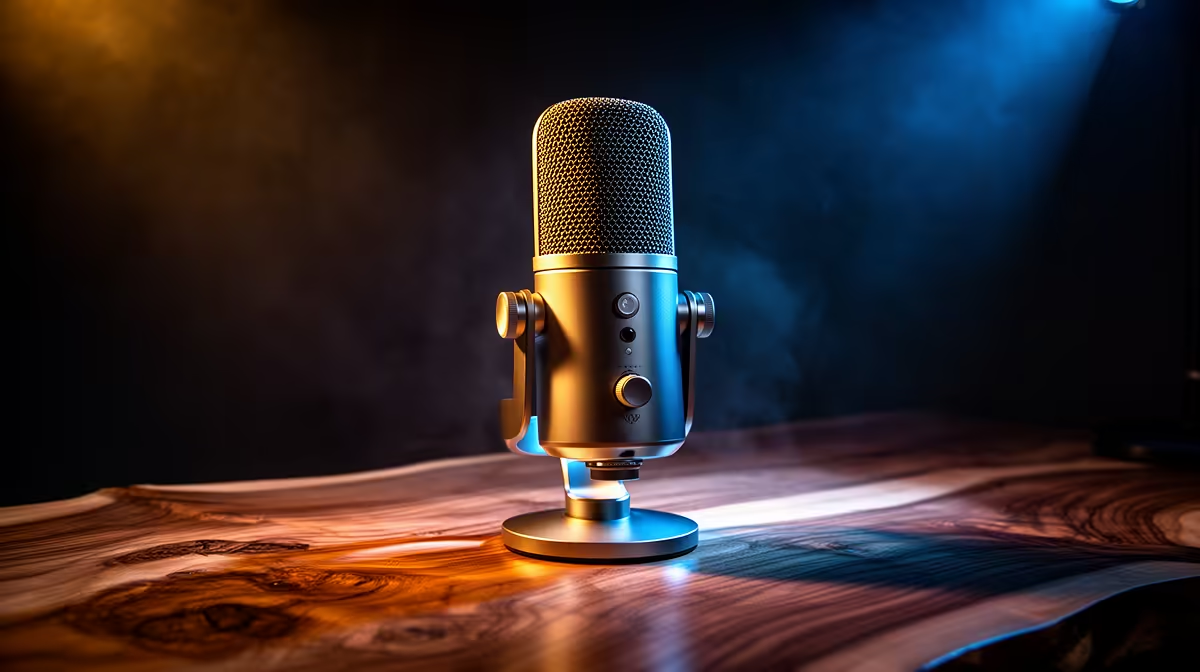
Polar pattern matters most after dark. A cardioid microphone picks up sound from the front and rejects the rear, so your PC fans and mechanical keyboard stay out of the mix. Avoid omnidirectional capsules that grab the whole room. Entry options like the Fifine A6 or HyperX SoloCast (around R1,200 to R1,800) deliver a clean cardioid pattern, while a Razer Seiren or Elgato Wave (R2,500 to R3,500) tightens rejection further for a near-silent background.
Use Gain Control And A Noise Gate
A physical gain dial lets you turn the capsule down so you can speak softly without clipping at 1am. Pair it with a software noise gate in OBS, Discord or NVIDIA Broadcast set around -40dB so the mic only opens when you actually talk. This combination is what makes whisper-level comms work: teammates hear your callouts, but the line stays dead silent between sentences.
Add Monitoring And Isolation
Zero-latency headphone monitoring through the mic lets you hear your own level and keep it low without guessing. Mount the microphone on a shock-mounted boom arm to stop desk thumps travelling up the stand, and position it 10cm to 15cm off-axis to dodge plosives. A small foam windscreen costs under R150 and tames harsh breath sounds during quiet, close-up speech.
FAQ
What microphone pattern is best for late-night gaming?
Cardioid is the clear winner because it captures your voice from the front and rejects fan and keyboard noise from behind. It keeps a soft voice clear without dragging the whole room into the stream.
Can a USB mic stay quiet enough for a sleeping house?
Yes, paired with a gain dial turned low and a software noise gate around -40dB. That setup lets teammates hear a relaxed voice while the line stays silent between callouts.
Do I need an XLR mic for quiet gaming?
No, a good USB cardioid mic in the R1,200 to R3,500 range is plenty for late-night comms. XLR adds cost and an interface without solving the noise-control problem any better.
Browse Evetech cardioid USB microphones with gain control and headphone monitoring, then pair one with a shock-mounted boom arm for clean, quiet late-night comms.