Prepping a mic for a LAN means planning for a loud, crowded hall, not a quiet bedroom. The right starter-to-serious path keeps your voice clear over the room roar.
Quick Answer
For LAN parties, a dynamic cardioid mic on a boom arm beats a sensitive condenser because it rejects the hall noise around you; start with a USB dynamic from around R1,500 and step up to an XLR dynamic and interface near R3,500 as you get serious.
Starter Setup
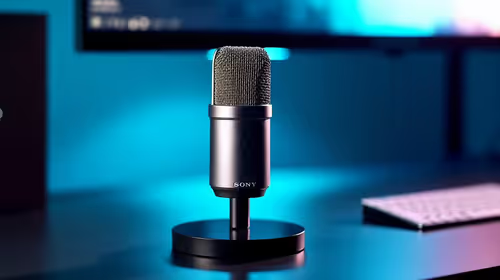
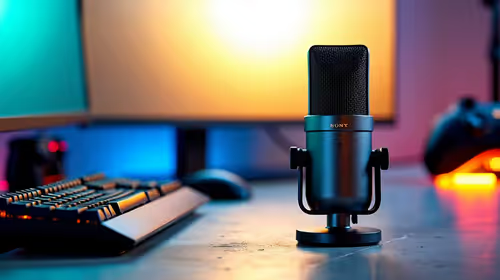
A USB dynamic mic positioned close to your mouth is the cheapest way to sound clear in a noisy venue. It plugs straight into the laptop and rejects most crowd noise when set 10-15cm from your lips with a noise gate enabled.
Stepping Up to Serious
As you commit, move to an XLR dynamic mic with a small audio interface. This gives cleaner gain, better control, and a path to add a second mic for duo casting. An interface with two inputs around R3,000-R4,000 covers a co-host setup.
LAN-Specific Practicalities
Bring a boom arm clamp that fits venue tables, a short XLR or USB cable to reduce trip hazards, and a pop filter. Label your gear, since a packed LAN hall makes it easy to mix up identical mics.
FAQ
What mic type is best for a LAN party?
A dynamic cardioid mic. It only picks up sound close to it, so the surrounding crowd, fans and keyboards stay off your audio far better than a sensitive condenser would in a loud hall.
Should I start with USB or XLR for LAN streaming?
Start USB from around R1,500 for simplicity, then move to XLR with an interface near R3,500 once you want better control or a second mic for co-casting.
Do I need a noise gate at a LAN?
Yes. A noise gate cuts the mic when you are not speaking, keeping crowd noise out of your stream between sentences in a loud venue.
LAN, run a dynamic mic 10-15cm from your mouth with a noise gate, and bring a table-clamp boom arm so venue desks do not limit your placement.