Quick Answer
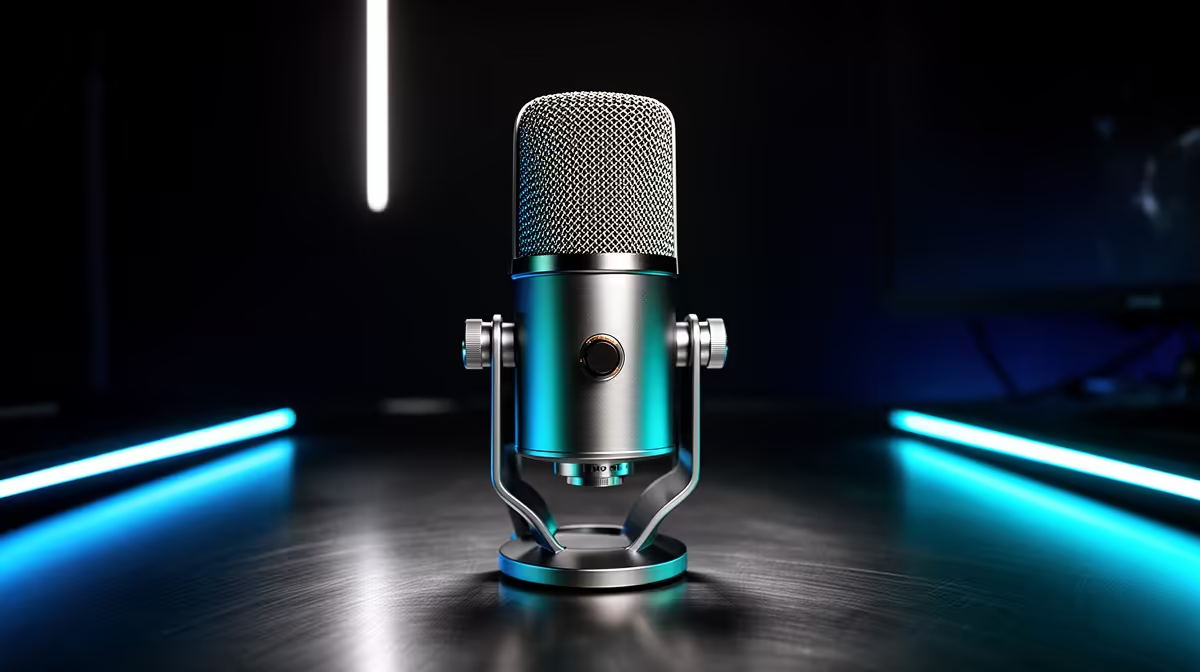
For shared gaming spaces, step up from a starter mic to a serious one when housemates, fans or open windows leak into your audio; a tight cardioid mic with strong rejection around R3,000 keeps your voice clean without gating out half your words. Isolation, not raw quality, is the upgrade here.
The Upgrade That Suits A Shared Room
In a shared flat or lounge, the problem is rarely your voice and almost always everything else: chatter, a TV, a kettle, traffic. A serious mic with a tight cardioid or hypercardioid pattern and good off-axis rejection focuses on you and pushes the rest down. Pair it with a shock mount to kill desk thumps from a shared table and a pop filter for clean speech, and your stream stops broadcasting the whole household.
Practical Isolation In A Busy Space
Position the mic close and angle it away from the noisiest direction, such as a doorway or window. A boom arm helps you keep that consistent placement even when the desk is shared. If you cannot treat the room, a dynamic mic rejects more background than a sensitive condenser, which is often the better pick for a busy shared space.
FAQ
Dynamic or condenser mic for a shared space?
A dynamic mic rejects more background noise, so it usually suits a busy shared room better than a sensitive condenser that picks up the whole household.
Will a tight pattern stop housemate noise completely?
It reduces but does not eliminate it; combine a tight cardioid pattern with close placement and a shock mount for the cleanest result in a shared room.
Is a boom arm worth it on a shared desk?
Yes; a boom arm keeps the mic at a consistent distance even when the desk is shared, so your level stays even between sessions.
In a shared space, prioritise a tight-pattern or dynamic mic and place it close, angled away from the noisiest direction, before worrying about premium tone.