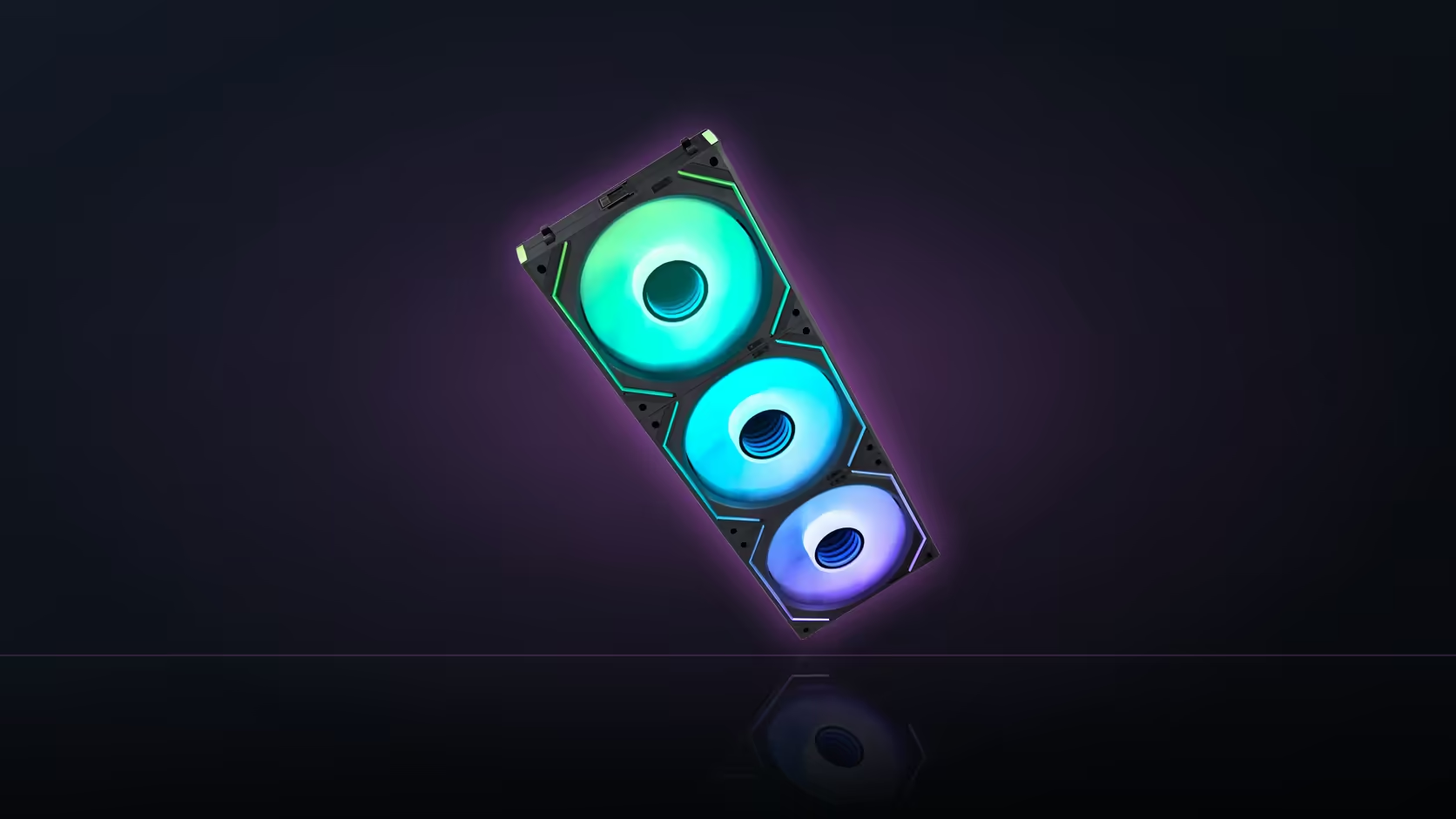
A row of fans arranged perfectly symmetrically looks considered, deliberate, the kind of detail that separates a planned build from one assembled in a hurry. But symmetrical lighting and a genuinely sensible airflow plan do not always ask for the same fan positions, and treating symmetry as the deciding factor over airflow is how a good-looking build ends up running warmer than it should.
Quick Answer
Where a symmetrical, evenly lit fan arrangement conflicts with what the airflow actually needs, cooling should win, and the lighting composition should be adjusted around that decision rather than the other way round. AsiaHorse fans in this range, priced from around R199 for the Amici 5GT single up to R599 for a Nyota Pro 3-pack, cool and light a build equally well regardless of which specific positions they end up occupying.
💨 Why airflow and symmetry disagree
Air moves through a case in one direction at a time, entering through intake positions and leaving through exhaust ones, and effective cooling usually wants specific positions filled for specific reasons rather than an evenly balanced pattern across the whole interior. Lighting symmetry, on the other hand, wants fans distributed evenly wherever the window shows them, purely for visual balance, with no reference to whether those positions actually make sense for air to move through.
🏆 Why cooling has to win when they clash
A build that looks perfectly balanced through the window but runs hotter than it needs to has traded something real, actual thermal performance, for something purely decorative. That is not a reasonable swap either way, and it is why the airflow requirement should be settled first, with the visual arrangement built around whatever positions that requirement actually calls for.
🎚️ Rebalancing lighting instead of moving fans
The good news is that visual balance does not always require identical fan positions. Adjusting brightness rather than physically moving a fan is often enough, letting a visually heavier side of the case be toned down through lower brightness rather than through relocating hardware that is exactly where the airflow plan needs it to be.
⚪ Does an empty position actually look wrong?
Not necessarily, and this is worth remembering before assuming every mount needs filling to look complete. A deliberate gap can read as intentional restraint rather than an oversight, particularly where the fans that are fitted are arranged well and clearly serve a purpose rather than simply occupying available space.
🙈 Unlit fans in positions the window does not show
This is often the cleanest resolution to the whole conflict. A fan in a hidden position, behind a shroud or on the case's far side from the window, can serve airflow exactly as well as a fully lit equivalent while contributing nothing to the visible composition at all, which sidesteps the symmetry argument entirely rather than trying to win it.
🔀 Reverse blades and the symmetry question
Blade direction adds another wrinkle worth knowing about. Reverse-spinning versions exist within this range for the Dawn Pro, Nyota Ultra and Amici 5GT families, but not across every fan AsiaHorse sells, so a build hoping to mirror fan orientation for visual symmetry is limited to whichever of those specific families is actually fitted, rather than being a universal option across the whole range.
🌡️ Testing whether the airflow plan actually works
The only real measure of whether a fan arrangement succeeds is temperature under sustained load, not how the interior looks through the glass. Run the machine under a genuine workload and check component temperatures before assuming a symmetrical, evenly lit layout is performing as well as it looks.
🧭 Deciding the intake and exhaust pattern first
Settling the airflow plan before worrying about symmetry means starting with a simple question: where does cool air enter the case, and where does warm air leave it. Front and bottom positions are the usual intake points in a typical mid-tower, while the top and rear are the usual exhaust points, and getting that basic pattern right matters far more than how evenly the fans are spaced once the pattern is set. Only once that direction is settled does it make sense to think about which of the remaining choices, fan model, blade orientation, lighting brightness, should be used to bring some visual order to the layout without undermining the airflow decision that came first.
🧩 A practical example
Picture a case with three front intake positions and two rear exhaust positions, a common enough layout. Perfect visual symmetry would want the same number of fans, evenly spaced, on both the intake and exhaust sides, but the airflow plan is already asymmetric by design, with more intake than exhaust to build slight positive pressure inside the case. Forcing symmetry here would mean removing an intake fan or adding an unnecessary exhaust one purely to make the numbers match, undermining the pressure balance the case was designed around for the sake of an appearance that a viewer would likely not even register as deliberately symmetrical in the first place.
Settle your airflow requirements first, then work through Evetech's case fans lineup and the wider case accessories shelf to build the visual composition around whatever positions cooling genuinely calls for.
Frequently Asked Questions
Why do lighting symmetry and airflow requirements disagree?
Because airflow needs specific intake and exhaust positions to work well, while lighting symmetry simply wants fans distributed evenly wherever they are visible through the window.
Which one should win when they conflict?
Cooling, since a build that looks visually balanced but runs hotter than it needs to has traded real thermal performance for something purely decorative.
Can the lighting be rebalanced without moving any fans?
Often, yes, by adjusting brightness per side or per fan rather than physically relocating hardware that the airflow plan genuinely needs where it sits.
Does an empty fan position always look like a mistake?
Not necessarily. A deliberate gap can read as intentional restraint, particularly when the fans that are fitted are well arranged and clearly purposeful.
What role do unlit, hidden fans play in resolving this?
They serve airflow exactly as well as a lit equivalent without affecting the visible composition, often the cleanest way to sidestep the whole conflict.
Does fan blade direction matter for visual symmetry?
It can, since reverse-blade versions exist for the Dawn Pro, Nyota Ultra and Amici 5GT within this range, but not across every family AsiaHorse offers.
How should the airflow plan actually be tested?
By checking component temperatures under sustained load, which is the only measurement that genuinely confirms whether the arrangement works as intended.
Balancing cooling performance against a symmetrical fan layout?
Explore Evetech's case fans range and settle your airflow plan before finalising the visual arrangement.