Quick Answer
Tool-free PC case design uses thumb screws, snap-fit clips, magnetic mounts, and slide-lock mechanisms to let you remove panels, install drives, and mount fans without a screwdriver. Modern tool-free cases genuinely reduce build time, with experienced builders completing panel swaps in under two minutes per step versus five or more with traditional screws.
The Core Tool-Free Mechanisms Explained 🔩
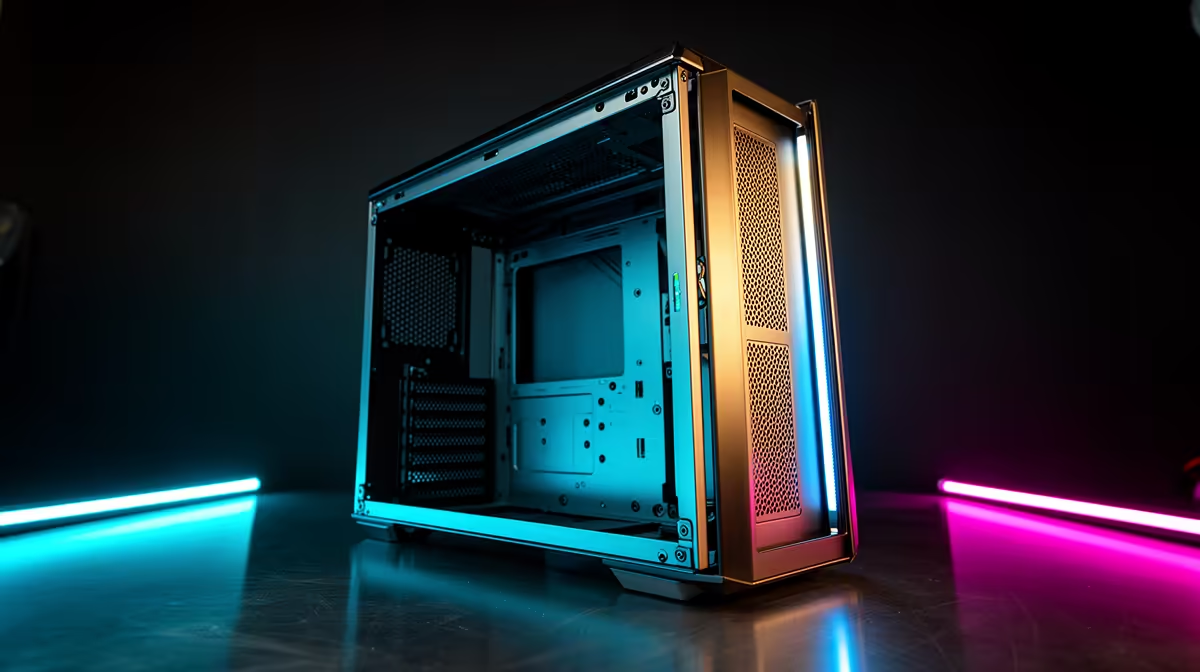
Today's tool-free designs fall into four categories. Thumb-screw panels use oversized knurled fasteners you tighten by hand. Magnetic latches use rare-earth magnets embedded in the panel frame that snap onto steel chassis lips, offering one-touch removal with no fastener at all. Slide-lock systems have a panel that indexes into a rail at the bottom, then locks at the top via a push-release lever, making them the most secure and wobble-free option. Drive trays use a squeeze-release plastic rail that grips 3.5-inch HDDs or 2.5-inch SSDs without screws. Premium cases in the R3,500 to R7,000 range stocked at Evetech typically combine all four mechanisms across every removable component.
What Tool-Free Features Actually Speed Up Builds 🚀
The biggest time saver is the side panel mechanism. Builders reopening a case to reseat RAM, swap a GPU, or add a fan reach into a tool-free design and have the panel off in under 15 seconds. Tool-free PCIe slot covers eliminate another frustration: the stamped-metal covers on budget cases must be broken off and cannot be replaced, while tool-free alternatives use thumb-screw or retention-bar covers that reinstall cleanly. For South African builders doing annual cleaning sessions where ambient dust load is higher during dry seasons, tool-free access means filter cleaning actually gets done instead of being postponed.
What to Look for When Buying a Tool-Free Case 🛒
Not all tool-free features are created equal. Magnetic panels with weak magnets rattle at high fan speeds above 1,200 RPM and can pop off if the PC is moved. Plastic drive clips can become brittle over three to five years in warmer climates, so metal-clip drive trays offer better longevity. Slide-lock panels are mechanically superior for daily-use machines because they hold the panel rigid regardless of vibration. Cases under R1,800 typically have tool-free side panels but retain screws for the top mesh and drive trays, while cases above R3,000 implement the full tool-free suite across all removable components.
Keep a Thumb Screw Reserve on Hand ⚡
Even in a fully tool-free case, some components like the motherboard, CPU cooler bracket, and PSU still require conventional screws. Buy a mixed M3 M4 M5 thumb screw assortment from a local hardware store so you always have replacements if originals strip or go missing. This is especially useful for builders who reuse cases across multiple component generations.
FAQ
Are tool-free cases less sturdy than traditional screw-mount cases?
At the mid-to-premium tier they are equally sturdy. The steel gauge of the chassis itself determines rigidity, not whether the panels use screws or latches. A 0.8mm SGCC steel case with magnetic panels is structurally as solid as the same steel gauge with screws.
Can I transport a tool-free case safely?
Yes, with basic precautions. Magnetic-latch panels should be secured with a strip of tape for vehicle transport. Slide-lock panels stay put on their own. As a general rule, remove the GPU before transporting any PC in a vehicle regardless of case type.
Do tool-free cases come in ITX form factors?
Yes, though the selection is smaller. ITX-sized tool-free cases are available in the R2,000 to R4,500 range locally, with the most common implementation being thumb-screw or magnetic top and side panels on a compact footprint.
Want a build that is actually easy to work inside?
Evetech stocks a broad range of tool-free ATX, mATX, and ITX gaming cases from R1,800 upward, many with magnetic panels, screwless drive trays, and full tempered glass. Browse the full case range at Evetech.