Quick Answer
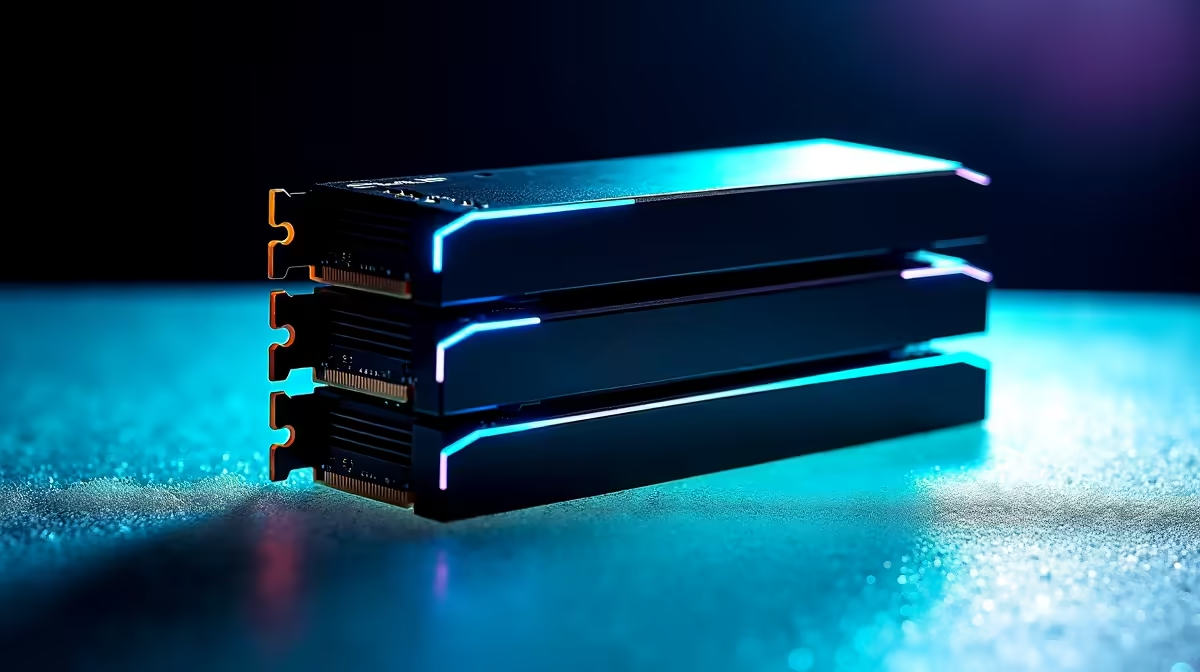
A good 1TB to 2TB PCIe 4.0 NVMe drive (around 7,000MB/s, R1,100 to R3,200) covers quiet late-night gaming comfortably; the real upgrade is capacity and a DRAM cache, not the headline sequential number. Pick the tier by the job, not the badge: a budget NVMe SSD covers the essentials, a balanced one is the value sweet spot most buyers should target, and premium only pays off for specific demanding needs.
PCIe 4.0 vs 5.0 for this use
A PCIe 4.0 drive reads at roughly 5,000 to 7,000MB/s, while PCIe 5.0 pushes 10,000 to 14,000MB/s but runs hotter and costs far more. For quiet late-night gaming, real-world game load and file work barely separate the two, so a quality Gen4 drive is the smart spend; keep Gen5 for sustained large-file transfers where the speed actually lands.
Capacity and the DRAM-cache detail
Size matters more than peak speed: 1TB fills fast once you install a few modern games at 100GB-plus each, so 2TB is the comfortable target for active libraries. Prefer drives with a DRAM cache and a higher TBW endurance rating; budget DRAM-less drives slow down under sustained writes, which you feel when copying large project folders or game installs.
Slot, heatsink and the upgrade path
Check your motherboard's M.2 slots: the top slot usually runs full PCIe 4.0 x4 from the CPU, while secondary slots may share bandwidth with SATA or drop to x2. Gen5 drives benefit from a heatsink to avoid throttling. Leaving one M.2 slot free gives you a clean upgrade route, so you can add a second drive later without cloning.
Budget, balanced or premium: which tier fits
The budget tier handles the core job and suits tight wallets or light use. The balanced tier is where most buyers land, adding the headroom and quality that make daily use better without overspending. The premium tier earns its cost only for demanding, specific workloads. Match the tier to your real needs and you avoid both under-buying and overpaying.
FAQ
Is PCIe 5.0 worth it over PCIe 4.0?
For most of quiet late-night gaming, no. Game loads and everyday file work see only a small difference, while Gen5 costs more and runs hotter. Spend the saving on capacity instead, unless you routinely shift very large media files.
How much SSD capacity do I actually need?
1TB is the floor but fills quickly with modern 100GB games; 2TB is the comfortable choice for an active library. Going larger only pays off if you keep big media archives on the same drive.
Does a DRAM cache make a real difference?
Yes, under sustained writes. DRAM-less drives slow noticeably when copying large folders or installing big games, whereas a DRAM-equipped drive holds its speed. For heavy use, pay the small premium for one.
Buyer's tip
Before checkout, fit your NVMe drive in the top CPU-connected M.2 slot, pick 2TB if your library is active, and choose a DRAM-cache drive over a cheaper DRAM-less one.