Quick Answer
A three-tier streaming microphone plan for home-theatre gaming runs about R1,200 budget, R3,000 balanced and R6,500-plus premium, separated by capsule quality, isolation and accessories. Choose the tier by how reflective your living-room space is and how serious your stream is.
Budget, Balanced And Premium Tiers
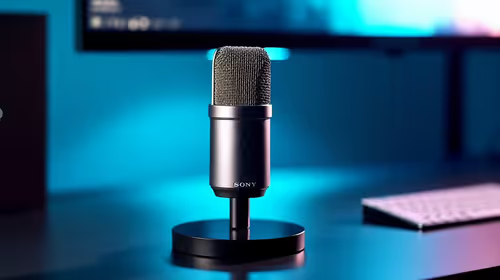
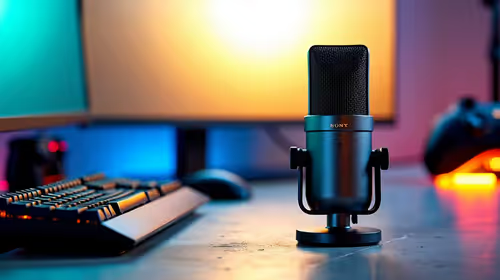
The budget tier near R1,200 gets a basic USB cardioid mic that beats a headset, fine for casual party chat in a quiet room. The balanced tier near R3,000 adds a better cardioid capsule, stronger off-axis rejection and usually a shock mount, which tames the echo a large lounge produces. The premium tier above R6,500 brings an XLR mic plus an audio interface, the cleanest tone and the most control, suited to a polished home-theatre stream.
Match The Tier To Your Room And Goals
A home-theatre space is big and reflective, so isolation matters more than at a small desk. If you stream casually, the budget tier is enough. If room echo and speaker bleed creep into your audio, the balanced tier's tighter capsule and shock mount fix most of it. Step up to premium only if you want broadcast-grade tone and plan to grow your setup; the interface and XLR mic give the most room to improve.
FAQ
What separates the budget and premium mic tiers?
Capsule quality, isolation and accessories. Budget USB mics suit quiet rooms, while premium XLR-plus-interface setups give the cleanest tone and most control for a serious stream.
Which tier suits a big, echoey lounge?
At least the balanced tier; its tighter cardioid capsule and shock mount reduce the echo and speaker bleed a large home-theatre room produces.
Is an XLR mic worth it over USB?
Only at the premium tier and if you want broadcast tone or plan to grow. For most home-theatre streamers, a good balanced USB mic is plenty.
tier to your room first; a reflective lounge needs at least the balanced tier's tighter capsule and shock mount to sound clean on stream.