Quick Answer
Titanium-coated 50mm drivers are stiffer and lighter than standard mylar drivers of the same diameter. The result is less driver flex at high volumes, reduced harmonic distortion, and sharper transient response in the treble range. In practice the difference is audible but subtle: higher clarity and a slightly brighter sound signature compared to the warmer, rolled-off response of standard mylar.
What the Driver Coating Actually Changes Physically 🔬
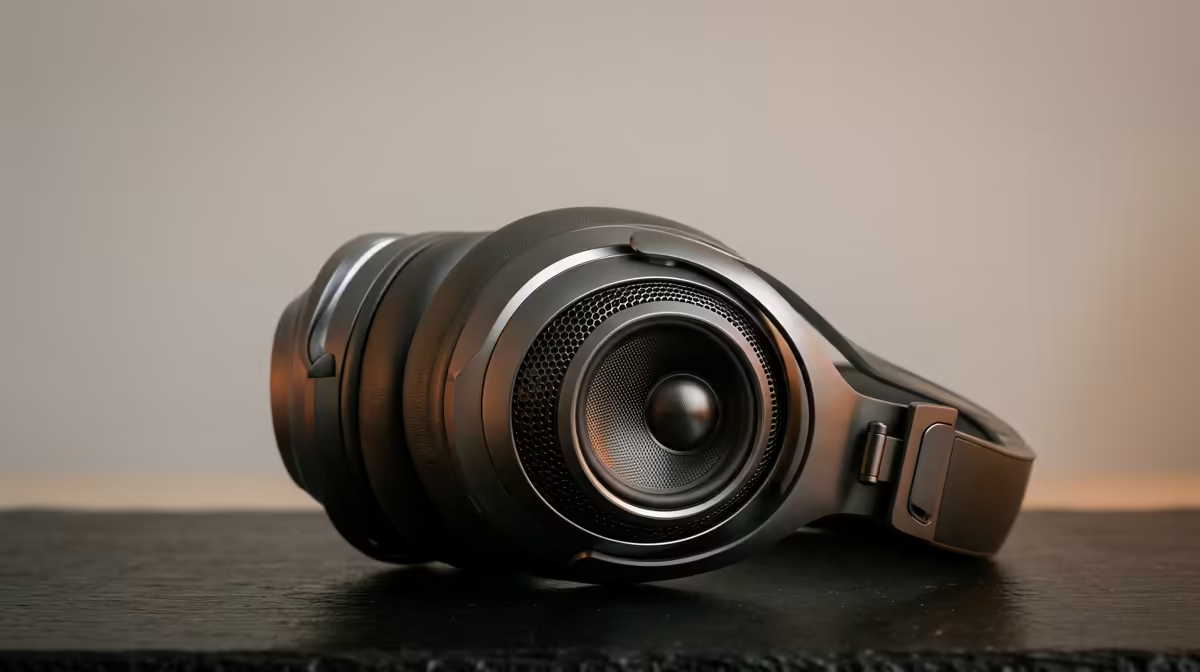
A dynamic driver works like a tiny loudspeaker: an electromagnet vibrates a diaphragm attached to a voice coil. Mylar (polyethylene terephthalate) is flexible and inexpensive, producing a warm sound with roll-off above 12,000 Hz. Titanium coating deposits a thin metallic layer onto the mylar diaphragm, increasing stiffness without adding significant mass. This allows the diaphragm to reproduce high-frequency transients, the crack of a sniper rifle, high-pitched directional audio cues, without buckling under the rapid movement forces required.
Sound Profile Differences in Real Listening Scenarios 🎧
Titanium-coated drivers tend to produce a slightly V-shaped or treble-forward frequency response before EQ is applied. For gaming, this means sharper positional audio: footsteps, reload sounds, and environmental audio cues are easier to locate in surround mode. For music listening, titanium drivers sound detailed but can be fatiguing if the headset tuning is treble-heavy without adequate bass reinforcement. Standard 50mm mylar drivers sound warmer and more forgiving, which matters when using the headset for all media including low-bitrate streams. Neither coating is objectively better: it depends on your primary use case and listening preferences.
Driver Size: Does 50mm vs 40mm Matter More? 📊
Driver diameter is a secondary consideration to coating and tuning. A well-tuned 40mm driver can outperform a poorly tuned 50mm titanium driver in every measurable way. The physical advantage of 50mm is greater cone area, which theoretically extends bass and widens soundstage. Premium gaming headsets in the R1,500 to R3,000 range locally commonly use 50mm drivers with titanium or standard mylar, paired with careful acoustic chamber design. For SA gamers deciding between headsets in the R1,200 to R2,500 range, published frequency response measurements are a more reliable guide than driver coating alone.
Use the Headset's EQ Profile Before Judging the Sound ⚡
Most gaming headsets with titanium drivers include multiple EQ presets in the companion app. Try Music, Movie, and Gaming presets before deciding the headset sounds too bright. Titanium driver headsets often sound their best with a slight treble cut (minus 2 to 3 dB above 8,000 Hz), which smooths brightness without losing the detail advantage. Adjust in the companion app before reaching any conclusions about driver quality.
FAQ
Are titanium drivers worth paying R500 extra over a standard driver headset?
If audio quality and gaming positional accuracy are priorities, yes. The stiffness advantage delivers measurably lower distortion at high volumes and sharper transient response. If you primarily care about comfort and battery life, driver coating is a lower-priority spec.
Does driver coating affect microphone performance?
No. The driver coating is a playback specification only. Microphone quality is determined by a completely separate capsule component and is unrelated to driver material.
Can EQ fully compensate for the differences between titanium and standard drivers?
EQ adjusts frequency balance but cannot replicate the lower distortion of a titanium diaphragm at high volumes. At moderate levels, EQ brings the two signatures close together. At high volumes above 90 dB SPL, titanium drivers maintain linearity while standard mylar flexes non-linearly, producing coloration that EQ cannot remove.
Want headset drivers that keep up with your most demanding audio sessions?
Evetech stocks gaming headsets with titanium and premium driver options across a range of budgets, available with nationwide delivery in South Africa.