Power Up Like a Pro: Demystifying Universal Power Banks ⚡
Load shedding got your gaming session cut short? Or perhaps you're out exploring Mzansi and your phone's battery gives up the ghost right when you need directions most? In today's always-on world, a reliable power bank isn't just a gadget; it's an essential survival tool for South African tech users. But with so many options, understanding universal power bank ports, protocols, and device compatibility can feel like trying to decipher ancient runes. Let's cut through the jargon and get you charging smarter.
Decoding Power Bank Ports: More Than Just USB
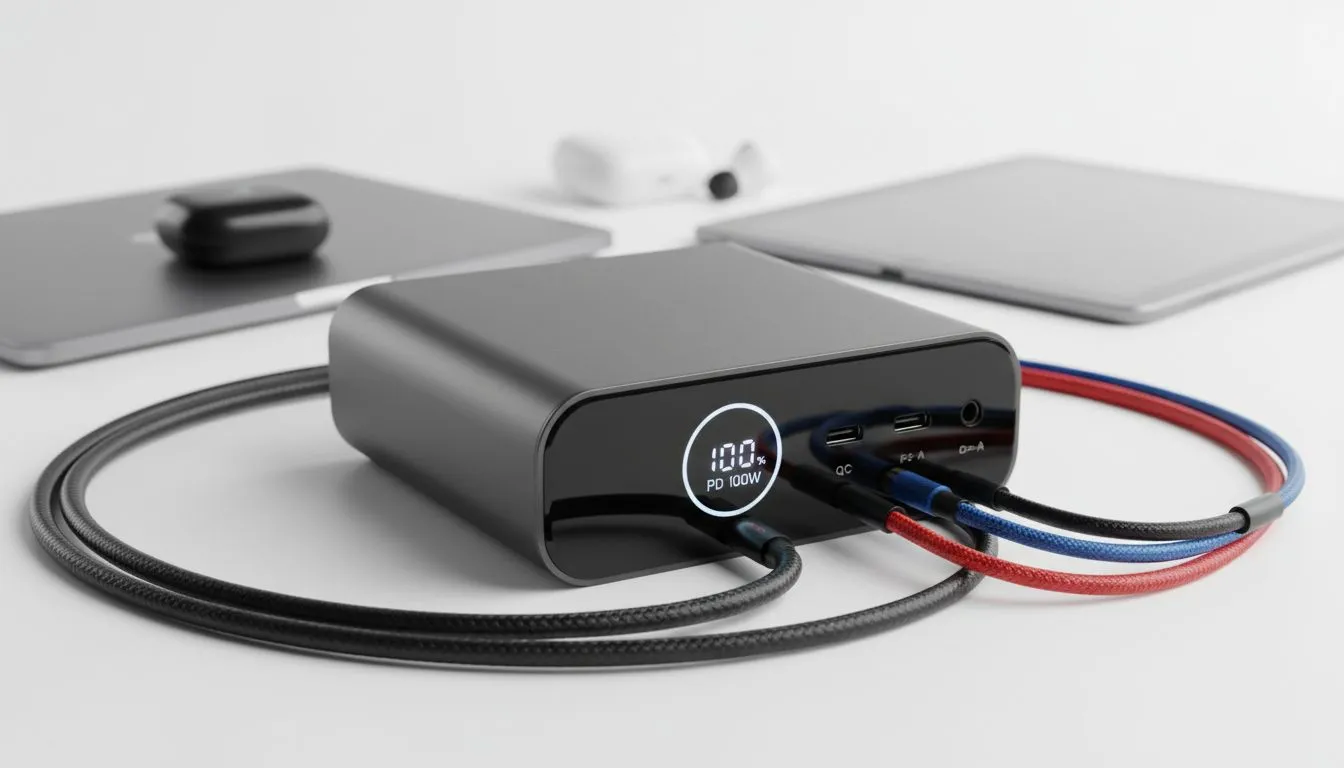
Gone are the days of a single USB-A port. Modern power banks offer a mix of connections, each with its own purpose. Knowing what each port does is crucial for optimal charging.
- USB-A (Output): The classic rectangular port. Still widely used for charging older phones, smartwatches, and peripherals. Many power banks will have at least one.
- USB-C (Input/Output): This reversible port is the future. It's used for both charging the power bank itself and delivering power to compatible devices. USB-C supports faster charging speeds and, crucially, Power Delivery (PD) protocols.
- Micro-USB (Input): Increasingly rare on newer models, but still found on some budget-friendly power banks for charging the unit itself. It's slower than USB-C.
When browsing for your next portable charger, consider what devices you primarily use. If you're rocking the latest smartphone or laptop, USB-C with Power Delivery is a non-negotiable feature for efficiency. You can explore a wide variety of options, including those with advanced USB-C capabilities, by checking out our full range of power banks.
Understanding Charging Protocols: The Brains Behind the Power
A port is just a physical connection; the protocol is the language devices use to communicate charging needs. This is where universal power bank magic truly happens.
- USB Power Delivery (PD): This is the gold standard for fast charging across a wide range of devices, from smartphones and tablets to even some laptops. PD allows for higher power outputs (up to 100W or more) and intelligently negotiates the optimal voltage and current. If your laptop charges via USB-C, you absolutely need a power bank with PD.
- Qualcomm Quick Charge (QC): A popular fast-charging technology primarily found on Android devices with Qualcomm chipsets. QC 3.0 and QC 4+ are common, offering significant speed improvements over standard charging. Many power banks support both PD and QC, offering broad device compatibility.
- Proprietary Protocols: Brands like Samsung (Adaptive Fast Charging) and Huawei (SuperCharge) have their own fast-charging standards. While a universal power bank might not always hit peak proprietary speeds, PD or QC will often provide a very respectable fast charge.
Optimising Your Charge ✨
Always use high-quality cables that support the charging protocols (like PD or QC) of both your power bank and your device. A cheap, generic cable can bottleneck even the most advanced power bank, leading to slower charging times. Don't compromise on cables!
Device Compatibility: Will It Charge My Tech?
This is the million-rand question. The key to ensuring universal power bank compatibility lies in matching the output capabilities of the power bank with the input requirements of your device.
- Smartphones & Tablets: Most modern phones and tablets will benefit from a power bank that supports USB Power Delivery (PD) or Qualcomm Quick Charge (QC). Even entry-level power banks can charge these, but fast charging makes a world of difference. For reliable, innovative solutions, especially if you're looking for brands known for quality, consider Promate power banks.
- Laptops: Charging a laptop with a power bank requires a unit with high power output (typically 45W or more) and USB Power Delivery (PD) over a USB-C port. Always check your laptop's charger for its wattage to ensure the power bank can meet its demands.
- Gaming Handhelds & Consoles: Devices like the Nintendo Switch or Steam Deck can also benefit from PD-enabled power banks for on-the-go charging, keeping your gaming sessions uninterrupted.
Choosing Your Perfect Power Partner
So, how do you pick the right power bank? Consider these factors:
- Capacity (mAh): How many times do you need to charge your device? A 10,000mAh bank might offer 2-3 phone charges, while 20,000mAh or more is better for multiple devices or laptop charging.
- Output Power (Watts): Match this to your device's charging needs. For fast phone charging, look for 18W-30W. For laptops, 45W-65W (or more) is essential.
- Ports & Protocols: Ensure it has the right mix of USB-A, USB-C, PD, and QC to suit all your gadgets.
- Budget: You don't always need to break the bank for a decent charger. There are many capable power banks under R500 that can handle daily phone charging. However, if you need more power and features for laptops or multiple devices, investing in a higher-end model, like those in the R500 to R1200 range, often pays off in performance and longevity.
Understanding the interplay of ports, charging protocols, and device compatibility is key to making an informed decision. Don't just grab the first power bank you see; choose one that truly complements your digital lifestyle and keeps you powered up, no matter where your South African adventures take you.
Ready to Find Your Perfect Match?
Don't let a dead battery spoil your day or cut short your gaming session. Evetech has a massive selection of power banks, from budget-friendly options to high-capacity, fast-charging beasts. Explore our full range of power banks today and find the ideal portable power solution for all your devices.