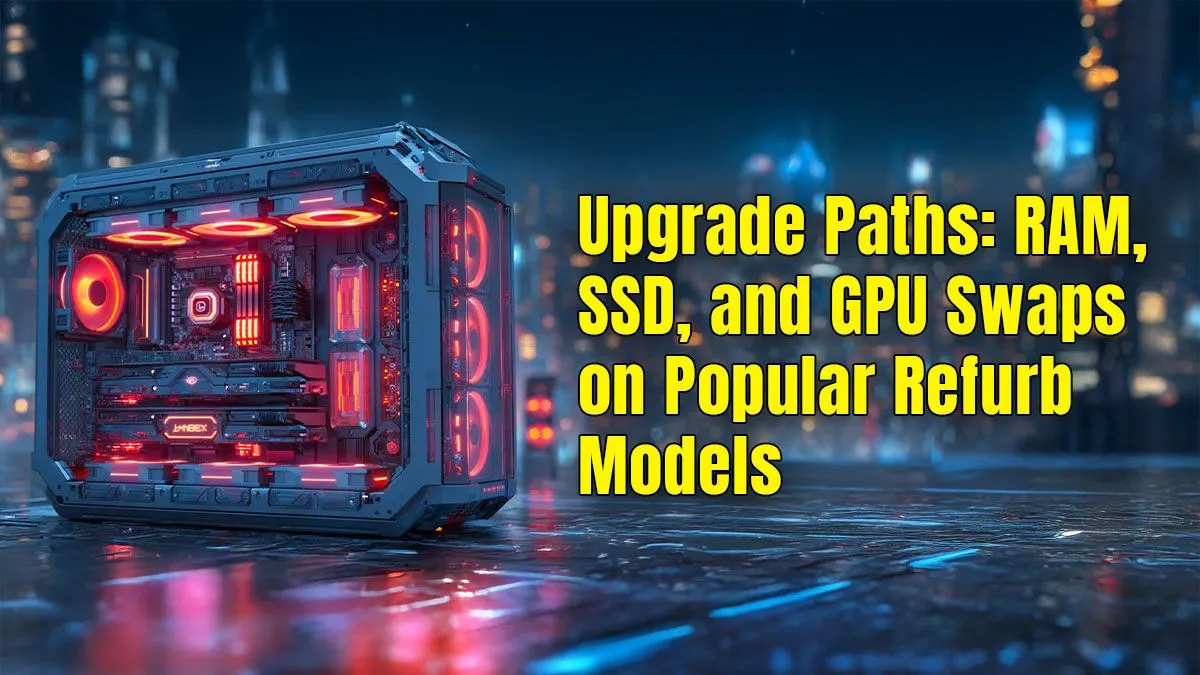
Scored a sweet deal on a refurbished PC but itching for more power? You're not alone. Many South African gamers are turning pre-loved rigs into budget beasts. This guide is your roadmap. We’ll cover the essential upgrades—RAM, SSD, and GPU—to transform your bargain buy into a performance powerhouse without breaking the bank. Let’s get that rig ready for the next level. 🚀
Why Bother Upgrading a Refurbished PC?
Let's be clear: "refurbished" doesn't mean "redundant." It means incredible value. The beauty of upgrading refurbished PCs is that you start with a solid, cost-effective base and then strategically invest in components that deliver the biggest performance jump for your ZAR.
Instead of buying a brand-new system, a targeted refurbished PC upgrade lets you build a surprisingly powerful machine for a fraction of the cost. We're focusing on the big three: RAM, SSD, and the mighty GPU.
The RAM Swap: Your First Easy Win 🔧
Random Access Memory (RAM) is your PC's short-term memory. More of it means smoother multitasking and less stuttering in open-world games. If your rig came with 8GB, jumping to 16GB is a massive, noticeable improvement.
How to Upgrade Your RAM
- Check Compatibility: Identify your motherboard's RAM type (likely DDR3 or DDR4). Tools like CPU-Z can help.
- Power Down: Unplug your PC completely.
- Open Up: Open the side panel and locate the RAM slots.
- Swap It: Push down the clips on either side of the old RAM sticks. They’ll pop up. Gently pull them out, align the notch on your new RAM, and press it firmly into the slot until the clips click into place.
While this guide focuses on desktops, the principle of more RAM for better performance is universal. If you need a portable setup, our wide range of laptop specials for sale in South Africa often feature models with plenty of memory for work and play.
The SSD Upgrade: Say Goodbye to Loading Screens ⚡
If your refurbished PC still runs on a mechanical Hard Disk Drive (HDD), an upgrade to a Solid State Drive (SSD) is the single biggest quality-of-life improvement you can make. The difference is night and day.
Windows will boot in seconds, not minutes. Games that took forever to load will be ready in a flash. This isn't just a minor speed bump; it's a complete transformation of how your PC feels to use. This SSD swap guide step is essential for any modern gaming rig.
Clone, Don't Reinstall!
Use free software like Macrium Reflect or Clonezilla to copy your entire old drive (including Windows) to your new SSD. This saves you hours of reinstalling everything from scratch. Just plug in both drives, run the cloning tool, and you're good to go!
For gamers on the go, an SSD is non-negotiable. It's why all the best gaming laptop deals you'll find today come standard with zippy solid-state storage.
The GPU Swap: The Ultimate Gaming Upgrade
This is the big one. Your Graphics Processing Unit (GPU) is the heart of your gaming experience, directly controlling your frame rates (FPS) and how beautiful your games look. Upgrading your refurbished PC's GPU delivers the most significant jump in gaming performance.
Before You Buy a New GPU
- Power Supply (PSU): Does your PSU have enough wattage to power the new card? Check the GPU's power requirements and see if your PSU has the necessary 6-pin or 8-pin PCIe power connectors.
- Physical Space: Get out the measuring tape! Will the new, likely larger, graphics card physically fit inside your PC case?
- Bottlenecks: Pairing a beastly new GPU with an ancient CPU will hold it back. Aim for a balanced upgrade. A good GPU swap guide always highlights this.
Whether your rig runs an older Intel or AMD processor, a balanced GPU upgrade is key. This same logic applies when choosing a new machine, whether it's one of our powerful AMD laptops on special or a cutting-edge model from our Intel laptops on special lineup.
Your Quick Guide to Upgrading Refurbished PCs ✨
Feeling ready to get started? Here’s a quick summary of the process for your first refurbished PC upgrade.
- Assess: Run a monitoring tool while gaming to see what's holding you back. Is your RAM maxed out? Is your GPU at 100% load while your CPU is chilling?
- Research: Check your motherboard, PSU, and case limitations before buying any new parts.
- Install: Work in a clean, static-free environment. Watch a few tutorial videos for your specific component swap if you're unsure.
- Test: Boot up, install the latest drivers, and enjoy your newly powerful rig!
Ready for a Fresh Start?
Upgrading can be rewarding, but sometimes a brand-new rig is the simplest path to glory. Check out our awesome selection of gaming laptops under R20k for performance that leaves lag in the dust.