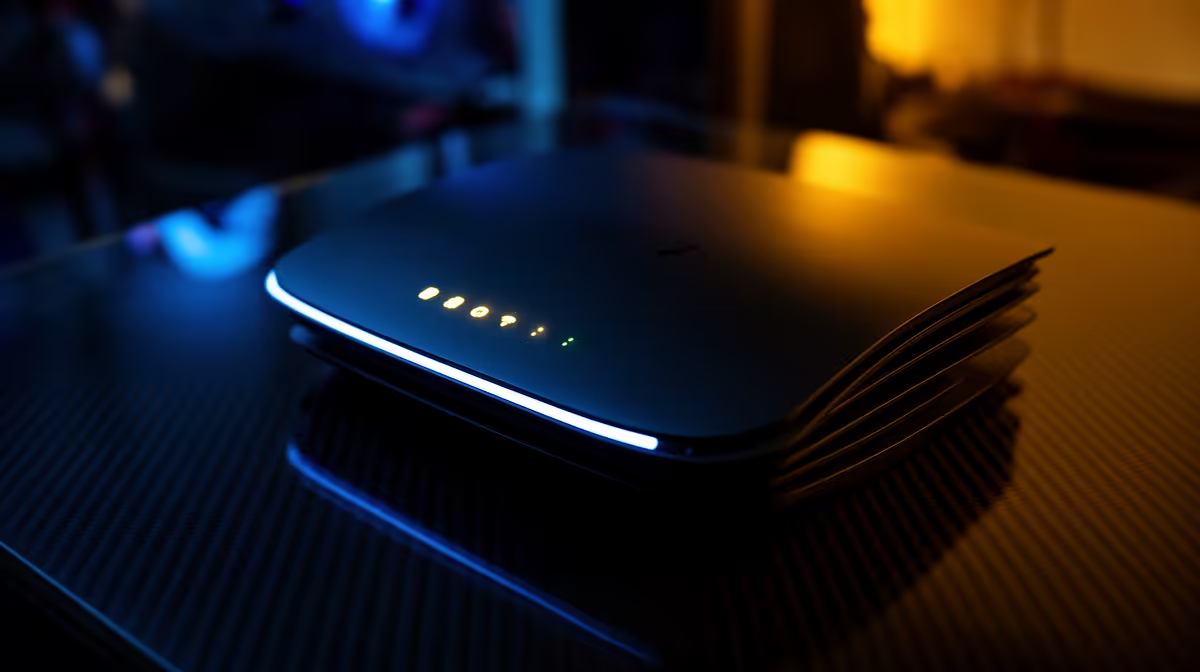
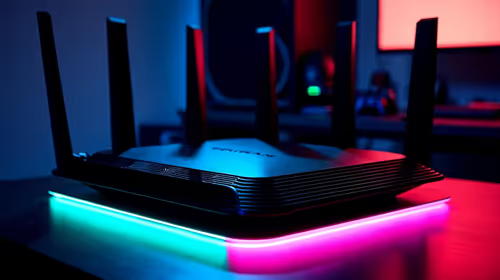
Standing in front of two years of waiting versus a router you can plug in this weekend, the choice almost makes itself once you look at the calendar. Upgrading your router in 2026 means choosing Wi-Fi 7, which is certified, mature, and on the shelf right now, against a Wi-Fi 8 standard that is not expected to be finalised until 2028 and will not reach homes in volume until after that. Waiting means going without real, available gains for years to chase a standard whose main promise is reliability, not speed.
Quick Answer
Buy Wi-Fi 7 now. It is certified and widely available in 2026, while Wi-Fi 8 is not expected to be finalised until around 2028 with consumer products arriving later still. Wi-Fi 7 already delivers Multi-Link Operation across bands, wide 6GHz channels, and lower latency, all available today. Browse current options in the networking range at Evetech.
What Wi-Fi 7 gives you today
The case for buying now rests on features you can actually use. Wi-Fi 7 brings Multi-Link Operation, which lets a device use the 2.4GHz, 5GHz, and 6GHz bands at the same time or switch between them dynamically. That reduces congestion, balances traffic, and adds a layer of redundancy so the connection stays stable when one band gets busy. It is one of the most practical improvements in years for a crowded home.
Wi-Fi 7 also brings very wide channels on the 6GHz band, double the width available on the previous generation, which lets a lot more data move at once on that clean, less-crowded spectrum. Combined with lower latency, the result is snappier video calls, smoother high-resolution streaming, and more responsive online gaming. These are concrete, measurable gains, and they are sitting on the shelf rather than two years away.
What Wi-Fi 8 will and will not change
It helps to understand what you would actually be waiting for. Wi-Fi 8, the 802.11bn standard, is not primarily a speed upgrade. Its theoretical top rate stays around 23Gbps, the same as Wi-Fi 7, with the same maximum channel width and modulation. The headline goal is Ultra High Reliability, which means keeping connections stable in congested, high-interference, high-mobility conditions rather than going faster.
The reliability features coming later
Wi-Fi 8 builds on the same foundation with refinements aimed at dense environments. An enhanced version of Multi-Link Operation promises predictive link switching with tighter synchronisation, so devices hand off between bands without losing packets. Multiple access points can coordinate rather than compete, and resources are shared more cleverly across many devices. These are genuine improvements for homes packed with dozens of simultaneous connections, but they are evolutionary on top of what Wi-Fi 7 already does, not a revolution.
The timeline is the deciding factor
The standard is on track to be finalised around 2028, and broad consumer availability is expected only after that, with some analysis pointing toward 2029 before products are common. The first Wi-Fi 8 routers will also carry the usual early-adopter premium. So waiting is not a matter of months, it is a matter of years spent without the real gains Wi-Fi 7 offers now.
How to decide for your home
The right answer depends on your situation, but for most people in 2026 it points the same way.
If your current network struggles, upgrade now
A network that buffers, drops devices, or strains under several streams at once will see an immediate benefit from Wi-Fi 7. There is no reason to live with a struggling connection for two more years when a mature, available standard fixes it today. The return on the upgrade is immediate.
If you are building a foundation, Wi-Fi 7 carries forward
Wi-Fi 7 access points, multi-gig switches, and a solid wired backbone are exactly the foundation a future Wi-Fi 8 setup would sit on. Buying Wi-Fi 7 now is not a dead end; it is the groundwork that the next generation builds on, so the spend carries forward cleanly rather than being wasted.
If your current gear is recent and coping, you can wait
The one case for patience is a home with a capable, recent router that already handles everything you throw at it comfortably. If nothing is straining, there is no urgency to upgrade at all, and you can simply revisit the question when Wi-Fi 8 hardware actually ships. Waiting to avoid a need you do not have is fine; waiting while your network struggles is not.
What your devices can actually use
A router standard is only half the equation; your devices have to support it to benefit. Wi-Fi 7 features like Multi-Link Operation only kick in when the connecting device is also a Wi-Fi 7 client. A recent flagship phone or a new laptop may support it, while older devices will connect at their own older standard and simply not see the new gains. That is not a reason to avoid Wi-Fi 7, since it remains fully compatible with older devices, but it does shape how quickly you feel the upgrade.
The practical reading is that buying a Wi-Fi 7 router now future-proofs the network for the devices you will own over the next few years. As you replace phones and laptops with Wi-Fi 7 models, more of your fleet starts using the advanced features, and the router you already own keeps delivering more value over time. By the time Wi-Fi 8 hardware is common, your Wi-Fi 7 base will have served years of real benefit, which is the opposite of waiting and getting nothing in the meantime.
Matching the router to your home
Whichever way you lean, size the router to your space and device count rather than the biggest number on the box. A larger home benefits from a mesh system that spreads coverage, while a flat or townhouse is well served by a single strong router. Count your active devices honestly, since a home heavy with smart gear leans on Multi-Link Operation more than a light one does. The best-selling accessories and wider networking lineup cover both the routers and the multi-gig wiring that lets a modern standard actually stretch its legs.
Frequently Asked Questions
Should I buy Wi-Fi 7 now or wait for Wi-Fi 8?
For most people, buy Wi-Fi 7 now. It is certified and available in 2026, while Wi-Fi 8 is not expected until around 2028 with products later still. Waiting means years without the real gains Wi-Fi 7 already delivers.
Is Wi-Fi 8 going to be much faster than Wi-Fi 7?
No. Wi-Fi 8 keeps roughly the same top speed of around 23Gbps. Its focus is reliability in crowded, high-interference homes, not faster peak throughput, so the upgrade is about stability rather than speed.
Will buying Wi-Fi 7 now be a waste when Wi-Fi 8 arrives?
No. Wi-Fi 7 gear, multi-gig switches, and solid wiring form the exact foundation a future Wi-Fi 8 setup sits on. The investment carries forward rather than being thrown away.
What is the biggest benefit of Wi-Fi 7 today?
Multi-Link Operation, which lets devices use multiple bands at once for less congestion and a more stable connection, plus very wide 6GHz channels for moving more data on cleaner spectrum. Both deliver real, immediate gains.
When can I actually buy a Wi-Fi 8 router?
Not for a while. The standard is expected to be finalised around 2028, with broad consumer availability following after that, possibly toward 2029. Early models will also carry a premium price.
Ready to fix your Wi-Fi without waiting years? Compare current Wi-Fi 7 routers and mesh systems in the Evetech networking range and upgrade to gains you can use this weekend.