


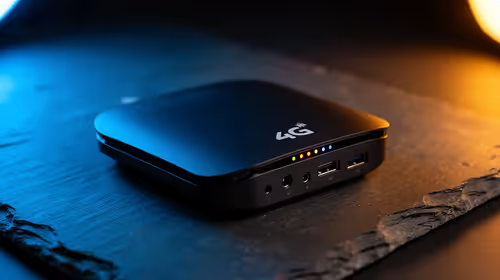
How to Use a Nano SIM 4G Router for Reliable Home Internet
Master using a Nano SIM 4G router as your primary internet solution. Get stable speeds and seamless connectivity for gaming and streaming at home! 🌐🚀
Read moreUSB-C compatibility explained: learn which cables, adapters and drive types work with laptops, tablets, and phones so you avoid errors and speed bottlenecks 🔌💾
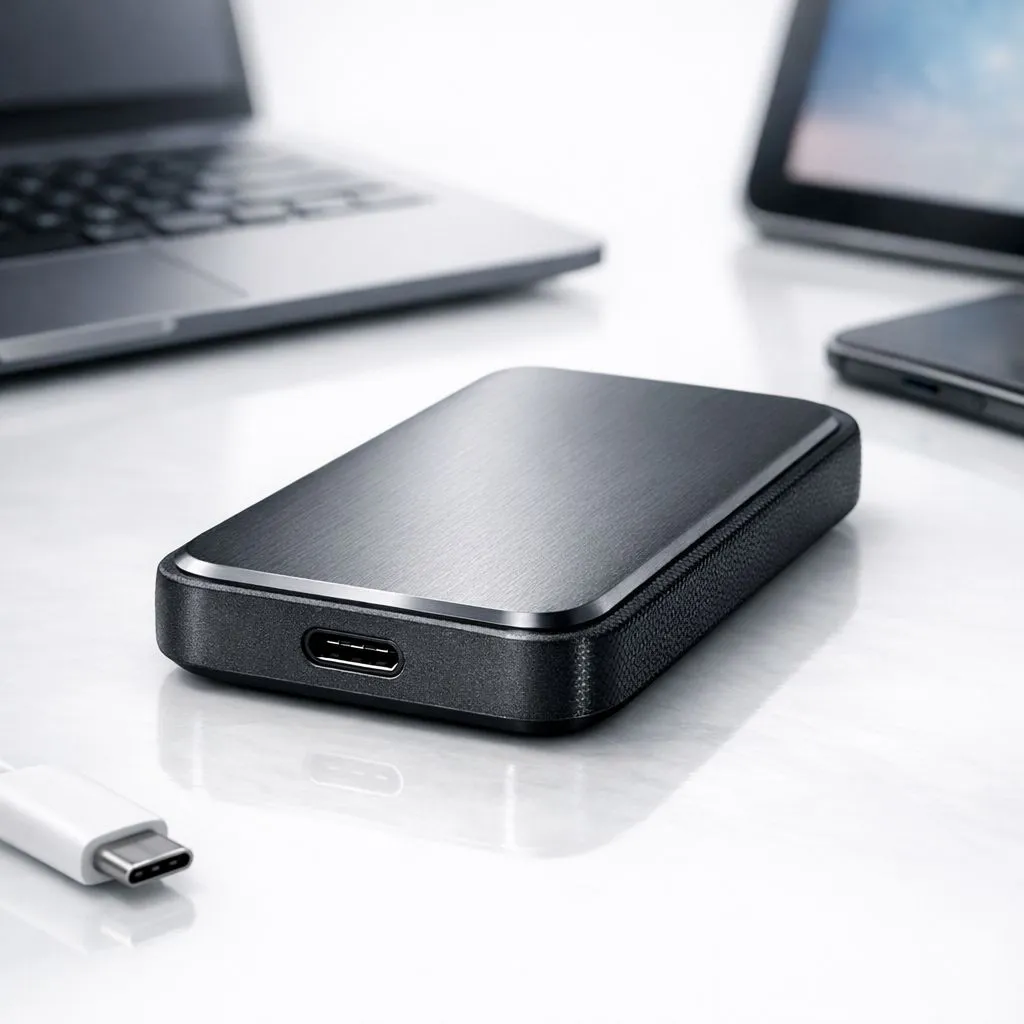
Ever tried plugging a drive into your phone only to see... nothing? We were promised one port for everything, but the reality is often a mess of cables. Mastering USB-C compatibility: Connecting storage to laptops, tablets and phones is essential for any South African tech enthusiast looking to avoid hardware headaches and wasted ZAR. Let us clear the confusion. ⚡
The beauty of USB-C lies in its reversible design, but the speed under the hood varies wildly. When you are looking to boost your device capacity, investing in a high-quality external SSD ensures your data moves at lightning speed rather than a snail's pace. While the physical port remains the same, the protocol could be anything from USB 3.2 to Thunderbolt 4.
For those building a powerhouse setup from the ground up, internal solid state drives are the backbone of any modern PC. However, for mobile users, the focus shifts to portability and plug-and-play ease.
Laptops generally offer the best USB-C compatibility: Connecting storage to laptops, tablets and phones usually requires checking if your port supports "Data Transfer" (most do). If you are a creative professional on the move, choosing an external form factor drive allows for maximum portability without sacrificing the massive storage space needed for 4K video or gaming libraries.
Modern tablets, especially the latest iPad Pro and Android flagship models, have embraced USB-C fully. This allows you to offload photos or watch movies directly from a drive. Brands like ADATA offer rugged options that can survive a trek through the Drakensberg while keeping your files safe.
Always check if your Android phone supports 'USB On-The-Go' (OTG) before buying a drive. Additionally, ensure your external drive is formatted to exFAT. This format is the sweet spot for compatibility between Windows, macOS, and mobile operating systems, allowing you to swap files between a PC and a phone without a hitch.
If you are a gamer or a data-heavy user, speed is non-negotiable. While Western Digital provides industry-leading reliability for long-term storage, the interface matters just as much as the brand. 🚀
For those chasing the absolute edge in desktop performance, Gen 5 NVMe drives deliver unparalleled throughput that makes older technology feel like a floppy disk. While these speeds are currently overkill for a standard smartphone, they represent the future of how we handle massive datasets across all our devices.
If your phone refuses to acknowledge your storage, it is usually a power or formatting issue. High-capacity mechanical drives often require more power than a phone can provide through its USB-C port. This is why SSDs are the preferred choice for mobile USB-C compatibility... they are efficient, fast, and lack moving parts. ✨
Ready to Find Your Perfect Match? USB-C compatibility can be tricky, but finding the right storage shouldn't be. For maximum speed, choice, and the best value in South Africa, we have you covered. Explore our massive range of storage specials and find the perfect drive to expand your digital world.
USB-C compatibility means the port, cable, and protocol (USB 3.x, UASP, or Thunderbolt) support the drive’s power and data needs for reliable connections.
No. Use certified high-speed USB-C or Thunderbolt-rated cables for NVMe enclosures; cheap cables can limit transfer speeds and reliability.
Check your phone specs for OTG or USB host support, or test with a formatted flash drive. Many Android phones list 'OTG' in settings or specs.
Yes. Some drives and enclosures need extra power; PD-capable ports or powered hubs prevent disconnects and ensure stable operation.
Thunderbolt drives may connect to USB-C ports but often run at reduced speed or not at all; full performance needs a Thunderbolt-capable port.
Use a quality USB-C to USB-A adapter or cable that supports USB 3.1/3.2 and UASP; passive adapters may limit speed and compatibility.
Use proper USB-C cables, PCIe NVMe enclosures, enable UASP, and plug into USB 3.1 Gen 2 or Thunderbolt ports for best throughput.
Master using a Nano SIM 4G router as your primary internet solution. Get stable speeds and seamless connectivity for gaming and streaming at home! 🌐🚀
Read more
Confused by Cat4 vs Cat6 LTE routers? 🌐 We break down the technical differences to help you choose the right router for faster gaming and streaming. Get the speed you deserve today! 🚀
Read more
Learn how to setup a VPN server on your 4G LTE router to secure your remote access. Protect your data and browse safely from anywhere with our easy guide! 🌐🔐
Read more
Choosing the best 4G LTE router for South Africa ensures reliable internet when fibre is unavailable. Discover top connectivity tips for rural and urban areas. 🌐📶
Read more
Discover what is passive PoE and how it streamlines outdoor router installations. Eliminate messy cabling and simplify your network setup with this efficient power delivery method. ⚡🌐
Read more
Need to extend internet coverage to outbuildings or farms? 📡 An outdoor 4G router is the ultimate solution for stable, high-speed connectivity in remote locations. Discover how to boost your range and stay connected anywhere on your property. 🌐
Read more
Wondering if a TKL wireless mechanical keyboard is worth it for everyday productivity? We break down latency, battery life, comfort, and workflow gains for real work. ⚡⌨️

Maximise battery life on a fanless 15-inch laptop using efficiency core architecture. Cut idle drain, tune power profiles, and improve thermals for longer runtime. 🔋⚙️

Learn how to reduce desk clutter with a TKL wireless keyboard using fewer cables, smart placement, and tidy essentials. Get a faster, calmer workspace with better ergonomics. ✅🧼

RGB keyboard lighting too distracting? Learn how to manage backlight modes, set brightness, and reduce distraction for focus and productivity 😌🖱️

Are themed gaming keyboards worth the extra cost? Compare build quality, switch options, features, and resale value to find the best fit for your setup 🎮⌨️

Full-Size vs Tenkeyless mechanical keyboards for gaming: find out if a smaller layout truly improves aim, speed, and comfort. We break down layout, desk space, latency-feel, and keybinds 🎮⌨️

Dedicated media rollers vs function key shortcuts: learn which setup gives you better workflow control, faster media access, and fewer mistakes. 🖱️🎧

Best Mechanical Switch Type for Gaming: Clicky vs Linear vs Tactile. Find your feel, speed, and noise balance with practical guidance for FPS, MOBA, and productivity 😄🎮

Direct mouse answer: Mouse not keeping up with your work? Everything that matters about dual-mode 2.4GHz + BT 5.0: DPI behaviour, channel switching, battery curves and per-app button mapping. Covers when 2.4GHz USB wins (low-latency desk) and when BT 5.0 wins (laptop, d

Plain wireless mouse guide: Mouse not keeping up with your work? Everything that matters about wireless productivity mouse: DPI behaviour, channel switching, battery curves and per-app button mapping. Includes DPI tuning tips, channel switch shortcuts, and ZAR-aware fea

Real productivity numbers: Set up your wireless mouse in this order: everything that matters about wireless productivity mouse: DPI behaviour, channel switching, battery curves and per-app button mapping. Includes DPI tuning tips, channel switch shortcuts, and ZAR-aware

Pen not feeling like paper? Stylus lag and skipping usually trace to old drivers, dirty nibs, or display refresh mismatches, not the pen itself. Covers pressure curve tuning, tilt thresholds, nib swap timing, and SA pricing brackets.