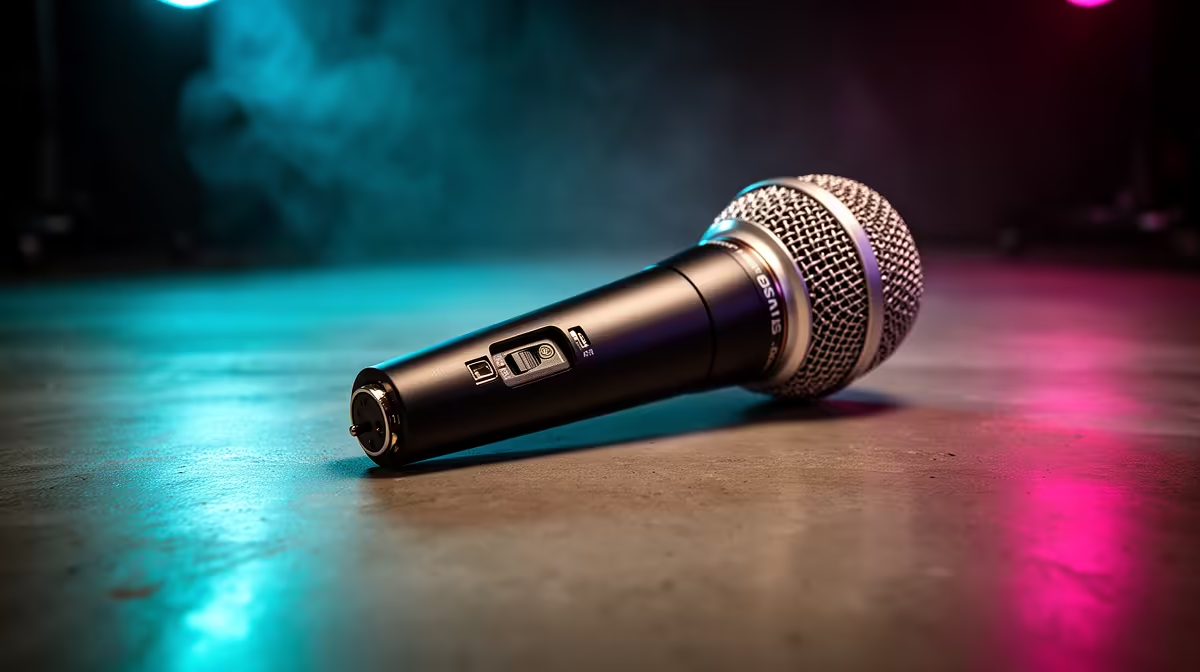
Dynamic microphones have a reputation as the workhorses of audio. They handle loud sources, reject background noise and last for years with minimal care. The debate over whether to connect one via USB or XLR connectivity is not just about the cable, it is about whether the electronics required to drive a dynamic capsule properly live inside the microphone or in a separate piece of hardware. Getting that decision right means understanding what each path actually delivers and where each one runs out of runway.
Quick Answer
USB dynamic mics work immediately with no extra hardware. XLR requires an interface but supplies the clean, high-gain preamp most dynamic capsules genuinely need. Start on USB for simplicity, then move to XLR once a second mic or better gain quality is the priority.
🔌 What USB Connectivity Builds Into the Mic
A USB dynamic microphone packs the analogue-to-digital converter and a preamp inside the body of the mic itself. Plug it into a laptop or desktop via USB and the operating system recognises it as an audio device within seconds. No drivers, no interface, no XLR cable.
That convenience is real and worth taking seriously. For a solo podcaster, streamer or remote worker who wants to start recording today, the USB path removes every barrier. The mic sits on the desk, the cable runs to the computer, and the recording software sees it immediately.
The built-in preamp is where USB dynamics face a genuine engineering challenge. A condenser capsule might only need 30dB to 40dB of gain, while a quiet dynamic capsule, particularly the large-diaphragm broadcast variety, often needs 55dB to 65dB of clean gain. Fitting that level of amplification inside a compact USB mic body requires design compromises. Some USB dynamic mics handle this exceptionally well; others introduce a slightly elevated noise floor audible on sensitive monitoring headphones.
The Headphone Monitoring Question
Most quality USB dynamic mics include a headphone output for zero-latency monitoring. This matters on a live stream or recording because hearing your voice in real time through the mic itself confirms levels before the session rather than after. The monitoring jack is powered by the USB connection, so no batteries or external power are needed.
⚡ What XLR Connectivity Unlocks
XLR is the balanced three-pin connector that professional audio has used for decades. It carries the signal as a balanced pair, which means interference picked up along the cable length cancels itself out, keeping the signal clean over long runs in ways unbalanced cables cannot match.
The amplification happens in the interface or mixer. A two-channel audio interface at R1,500 to R2,500 puts dedicated microphone preamps in the signal path, engineered specifically for the low-output levels dynamic capsules produce, with enough clean headroom to reach nominal recording levels without the noise floor climbing.
For a dynamic capsule that needs 60dB of gain, the XLR interface path is more appropriate than most USB implementations at a similar price point. The preamp in a dedicated interface is purpose-built for high-gain microphone work, with a lower noise floor and more headroom before clipping than a chipset soldered inside a microphone housing.
Pro Tip ⚡
Before buying a USB dynamic mic, look up its gain specification in decibels. A capsule needing more than 55dB to reach a nominal recording level will stress most USB implementations. If the spec is not published, record a test at maximum gain and listen for hiss on closed-back headphones. A clean recording confirms the built-in preamp is adequate; an audible hiss is your reason to consider an interface.
🔧 Gain, Noise, and the Real-World Difference
The noise floor of a recording is the constant low-level sound present even when no one is speaking. It is measured in dBFS, and for professional use it should sit below roughly minus 60dBFS when the mic is at gain and nothing is being said. A high-gain USB preamp under pressure can push that floor to minus 50dBFS or above, which is audible as a faint hiss on headphones or in a quiet room.
An interface preamp operating within its designed range keeps the noise floor further down. The signal-to-noise ratio of the recording improves, which means a quieter track before any noise reduction is applied and a cleaner final result.
This distinction matters most for content where the recording will be edited, processed or delivered at high quality. For a video call or a gaming stream where the codec compresses everything at the far end anyway, the USB noise floor is below the threshold the listener will notice. For a podcast episode, a voice-over or any content where the listener is on headphones paying close attention, the XLR path produces a noticeably cleaner result.
🧠 Choosing the Right Path at Each Stage
The decision is about the stage of the setup, not about which path is objectively better.
For a first dynamic microphone, the USB path is correct for most people. It is immediate, it requires no additional investment, and a well-engineered USB dynamic mic is genuinely excellent for solo use. The capsule is the same physical device regardless of which connector is at the bottom of the mic; the signal chain just handles the amplification at a different point.
The XLR path becomes the better choice when one of three things happens. A second microphone joins the setup, requiring an interface with multiple channels. The recording quality needs to improve beyond what the built-in preamp can deliver. Or phantom power is needed for a condenser mic elsewhere in the signal chain, since interfaces supply 48V phantom power along the XLR cable, which a USB connection does not.
A dual-output mic, one that carries both a USB socket and an XLR output, is worth considering as a first purchase if the XLR stage is somewhere on the roadmap. It means the capsule that served well on USB can continue into the interface phase without the mic needing to be replaced.
Frequently Asked Questions
Why do dynamic microphones often prefer XLR over USB?
Most dynamic capsules need 55dB to 65dB of clean gain, and a quality XLR interface preamp is specifically designed to supply that without introducing audible noise. USB dynamics must fit the preamp inside the mic housing, which is achievable but harder at the top end of the gain range. For quiet, low-output dynamic capsules, an XLR interface generally delivers a cleaner signal.
What does USB connectivity simplify for a dynamic mic?
It removes the need for any additional hardware. A USB dynamic mic connects directly to a PC with no driver installation, recognised as an audio device immediately. The converter and preamp are inside the mic body, making it the right starting point for anyone who wants to record or stream without assembling a multi-component signal chain.
Do USB dynamic microphones actually exist, or is USB mainly for condensers?
USB dynamic mics are a real product category. A dynamic capsule generates a mechanical-to-electrical signal the same way regardless of which connector follows it; the distinction is only in where the preamp and converter live. Verifying that the built-in gain is sufficient for the specific capsule sensitivity is worth doing before purchasing.
How much gain does a dynamic capsule typically need?
Anywhere from 50dB to 65dB depending on the capsule design. Broadcast-style large-diaphragm dynamics can push that to 65dB or above, which is exactly what a quality XLR interface preamp is built for. A USB implementation that meets this without raising the noise floor is well-engineered; one that does not will produce a faintly hissy recording at full gain.
How much does a good XLR interface add to the cost?
A two-channel audio interface with quality preamps runs roughly R1,500 to R2,500, on top of the XLR mic and a balanced cable. That is a meaningful additional cost compared to a USB mic that needs nothing else. The trade-off is better gain quality, phantom power for a condenser, and the ability to run a second mic on the same interface.
Ready to choose the right connection path for your dynamic mic?
Explore the microphone and audio interface range at Evetech to find the USB or XLR setup that fits where your studio is today and where it is heading.