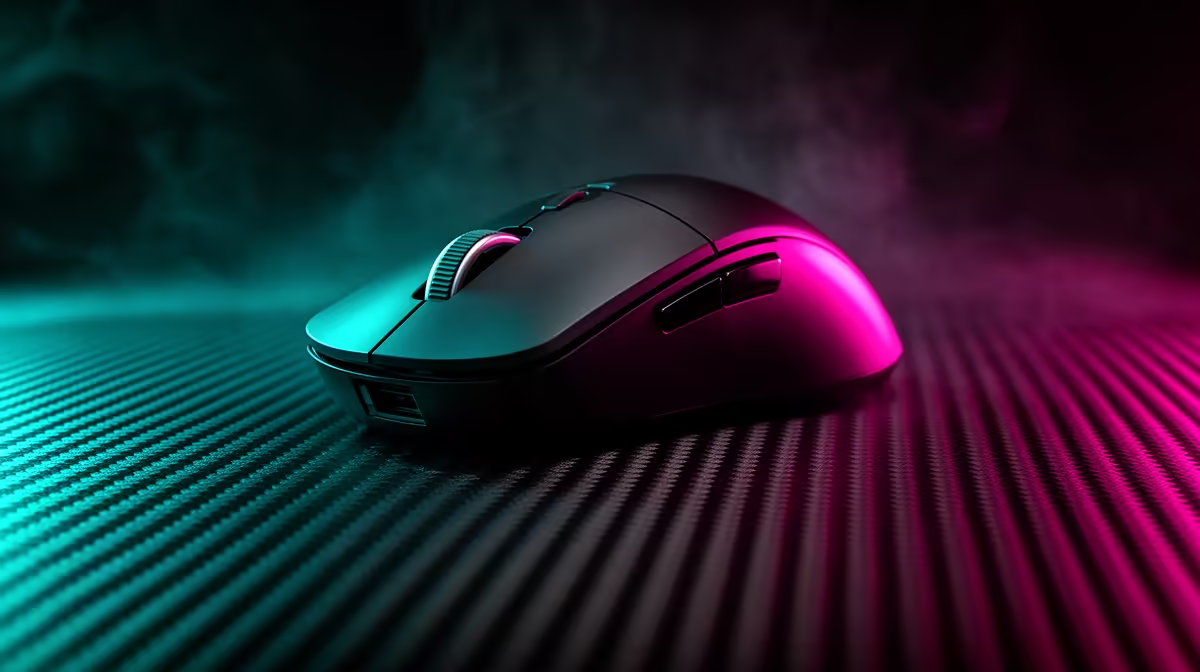
The Dragonfly R1 became a value talking point because its sensor and wireless package looked expensive for the overseas price. South African buyers need a wider view. The VXE Dragonfly R1 price in South Africa should include the exact revision, delivery route and support, with a local wireless mouse tested beside it.
Quick Answer
VXE Dragonfly R1 Rand pricing can move with model variant, seller and currency. A unit sourced outside South Africa may add transport, customs duty and a distant warranty path. Use Evetech's live peripheral best-sellers to build a shortlist of local wireless input gear before choosing.
🧾 Confirm which R1 is in the listing
Viral product names often cover several variants. Record the complete R1 model, sensor, weight, battery and receiver support. Do not merge specifications from the highest version into the cheapest listing.
Check shell dimensions and side profile. A budget recommendation from someone with another hand size says little about fit. Compare length, grip width and hump location with your current mouse.
Package contents change value. Confirm receiver, extension adapter, cable and skates. High-polling support may need separate hardware. If the receiver is not included, the advertised maximum mode is not part of the box.
Look for supported software for the precise revision. A configuration tool should recognise the model and save DPI, buttons and polling without unofficial firmware.
Keep the listing and product label. Similar names and packaging can complicate a support claim after the sales page changes.
Confirm the shape variant as carefully as the electronics. A higher hump can support claw grip, while a flatter rear may leave more finger movement. Compare side profiles and grip width with your current mouse.
Check whether the receiver is stored inside the shell or arrives loose. A tiny dongle is easy to lose, and a replacement may require exact pairing support rather than another generic 2.4GHz device.
🖐️ Test the shape beyond the value claim
Set your usual DPI and effective sensitivity. Run slow tracking, wide flicks and repeated stops. Notice whether the rear hump supports the palm or blocks finger adjustments.
Check button reach while holding the natural grip. Side buttons should not require the thumb to drag the whole mouse. Main clicks need consistent force across the areas your fingers use.
Weight distribution affects lifts. A low total can still feel rear-heavy or front-heavy. Lift and reset the mouse through a full training drill.
Use the existing pad and clean it first. Worn or dirty surfaces can make sensor and skate behaviour inconsistent. Avoid changing the pad during the same comparison.
Play long enough for hand temperature and coating to change. A shell that becomes slippery can make you squeeze and lose the comfort expected from its low weight.
📡 Prove the budget wireless path
Place the receiver close to the pad with a supported extension. Rear PC ports and dense metal can weaken the link. Test while the system is under normal game load.
Start at a known stable polling rate. Increase it only after tracking and frame times are clean. High polling uses more CPU and battery and is not a free performance switch.
Test sleep and wake. The mouse should reconnect without losing DPI or the first important click. A flaky wake routine creates daily frustration that a good sensor cannot offset.
Use the cable as a diagnostic where supported. If wired input is stable, investigate receiver placement and interference. If the fault remains, test another PC and pad before changing firmware.
Battery endurance depends on reporting, sleep and lighting. Measure normal sessions and charge on a routine.
After sleep, confirm the first movement restores the pointer and the first click reaches the game. Repeat with the receiver in its normal port. A wake problem can hide during continuous testing.
Save a wired fallback profile and known cable. If wireless becomes unstable, that route keeps the mouse usable while you isolate interference, receiver placement and firmware.
💵 Compare the complete budget locally
List the exact variant, receiver, cable, skates and warranty route. Where the R1 enters South Africa from abroad, price freight, customs treatment, handling fees and currency movement.
Evetech's gaming accessories give you a current local desk comparison. Choose a wireless mouse by similar shape, then include the pad or receiver placement needed for either setup.
Local support can preserve value when a receiver or switch fails. A mouse unavailable for weeks is expensive even when its first total was low.
For a second-hand R1, verify the label and receiver. Test each click, wheel input, sensor path and charging port. Measure battery decline through a normal play block and inspect skates for uneven wear.
Ask about repairs and firmware. Missing screws, damaged clips or an unknown battery replacement can weaken a light shell. Request the original purchase record.
Move the cable at the port and check for disconnects. Press the shell near side buttons with ordinary grip pressure. A budget unit should still remain rigid enough to avoid accidental clicks.
Run the sensor across another clean pad before diagnosing skips. Dust on the lens, a reflective surface or one congested receiver position can imitate a hardware fault.
Keep a local fallback mouse with similar dimensions. A shape you can replace quickly protects work and practice when the niche unit needs support.
Save its matching DPI and effective game sensitivity too.
Evetech's peripherals change over time. Recheck them when you are ready to pay. The Dragonfly should stay on the shortlist only when its exact shape and complete cost still win.
Frequently Asked Questions
Is the Dragonfly R1 permanently sold in South Africa?
Stock moves between sellers and variants. Confirm the complete model, purchase record and support route on the day you buy.
Why did the R1 become popular?
It drew attention by pairing competitive sensor and wireless specifications with a low overseas price. Exact variants still differ.
Can import costs remove the price advantage?
They can. Compare product, freight, customs treatment, carrier fees and Rand conversion with current local stock.
What connectivity does the R1 use?
Check the exact variant and receiver package. Do not assume every R1 listing supports the same wireless modes or report rates.
What is a locally stocked equivalent?
Evetech's live peripheral pages show current wireless input devices with Rand prices, specifications and a local route.
Ready to test the viral budget claim against a real local total?
Check Evetech's current peripherals, compare shape and receiver hardware, then cost the exact Dragonfly R1 from box to support.