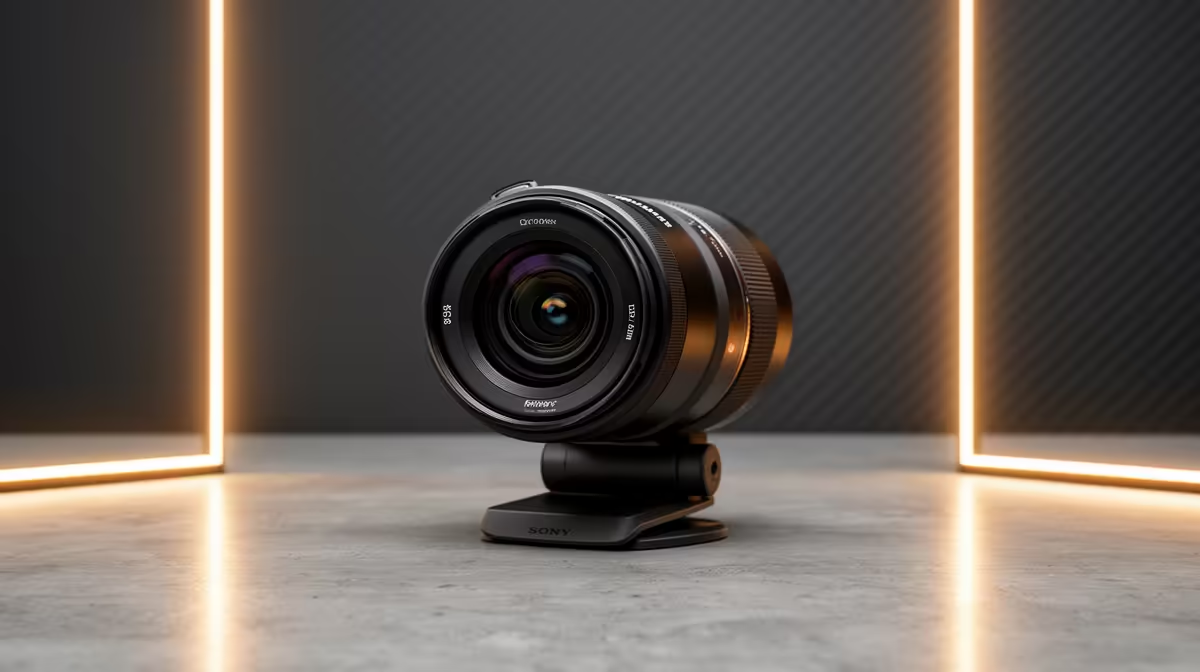
Streamers ask the most of a webcam, since the facecam is on screen for the whole broadcast and viewers notice every detail. The upgrade path here is about the specs that genuinely improve a stream, frame rate, sensor quality and lighting, while skipping the ones that add cost without showing up to the audience.
Quick Answer
For streamers, a 1080p/60fps webcam with a large sensor and fast autofocus around R2,000 to R4,000 is the sweet spot, since 60fps keeps the facecam smooth and the sensor handles room lighting. Pair it with a key light, which improves a stream more than any camera upgrade. A 4K camera helps only if you crop the facecam in your scene layout.
60fps keeps a facecam smooth
For a stream, a smooth facecam matters more than a high-resolution one, because viewers see motion constantly. A 1080p/60fps camera renders your reactions and movements fluidly, while a 30fps camera looks slightly choppy on a live facecam. This is the spec to prioritise for streaming, since the facecam is usually small in the scene where resolution matters little but smoothness is obvious. A quality 60fps camera around R2,000 to R4,000 is the practical sweet spot for most streamers.
Sensor and autofocus for a live face
A streamer's camera runs for hours in whatever room lighting they have, so a large sensor that handles light well and a fast, reliable autofocus keep the face clear and sharp throughout. A small-sensor camera turns noisy in dim conditions, and slow autofocus hunts distractingly when you move. Investing in sensor quality and autofocus pays off across every stream. These are the parts of a camera viewers actually perceive, so they deserve the budget more than a headline resolution number does.
Lighting is the biggest stream upgrade
The single change that most improves a stream's look is lighting, not the camera. A good key light, and ideally a fill or rim light, around R600 to R1,500 each, transforms how a facecam looks far more than upgrading the camera does. Even a mid-range webcam looks excellent with proper lighting, while a top camera looks flat without it. For a streamer planning a camera upgrade, budgeting for lighting alongside, or even first, delivers the most visible improvement to the broadcast.
FAQ
What webcam frame rate do streamers need?
60fps at 1080p, which keeps the facecam smooth as you react and move. A 30fps camera looks slightly choppy on a live facecam, and since the facecam is usually small, smoothness matters more than resolution.
Does a streamer need a 4K webcam?
Only if you crop or zoom the facecam in your scene layout, where extra resolution preserves detail. For a normal-sized facecam, a quality 1080p/60fps camera with a good sensor looks better for the money.
What improves a stream's look the most?
Lighting, not the camera. A key light around R600 to R1,500 transforms how a facecam looks more than a camera upgrade does. Even a mid-range webcam looks excellent with proper lighting in place.
For streaming, pair a 1080p/60fps large-sensor webcam with a proper key light from Evetech; the lighting plus smooth 60fps facecam does more for your broadcast than chasing a 4K camera.