Quick Answer
For campus residence rooms, plan a webcam upgrade from a 1080p starter near R700 to a serious 1080p or 4K model with low-light handling around R2,500. Res rooms are often dim, so low-light performance and a clear mic matter more than chasing the highest resolution.
Starter: A Solid 1080p Base
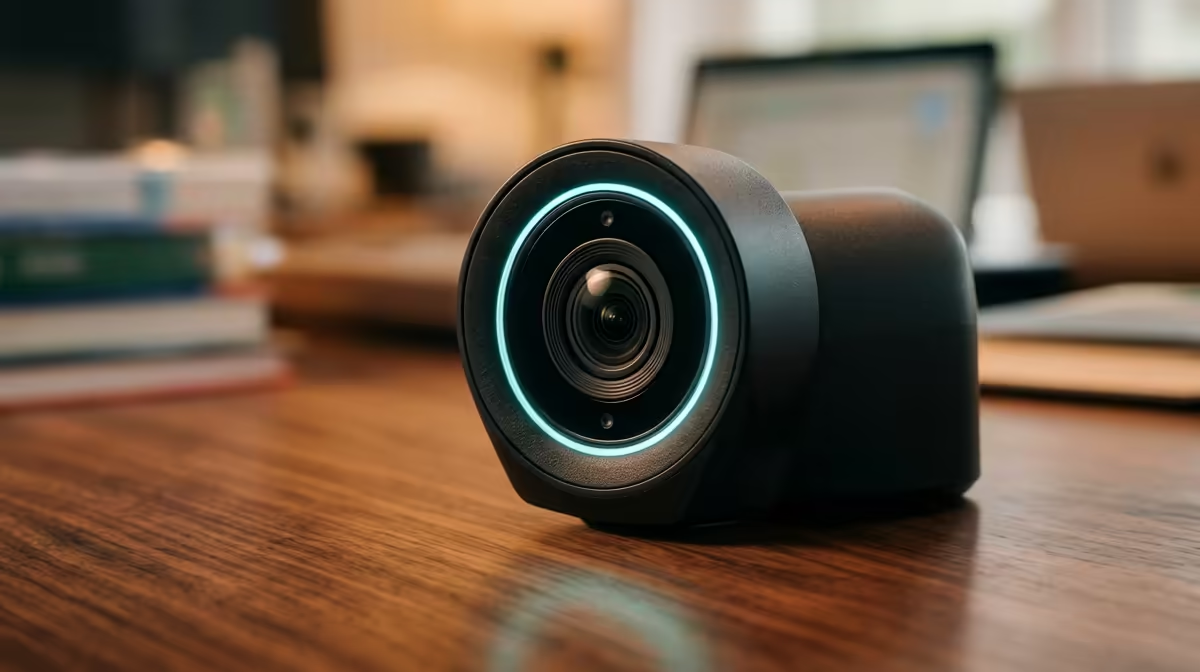
A reliable 1080p webcam at 30fps covers lectures, tutorials, and video calls clearly. For a res room on a budget, this is the practical entry point. Look for autofocus and a usable built-in mic so you can start without extra gear. Position it at eye level for the most natural framing.
Serious: Low-Light and Sharper Detail
Stepping up, a webcam with better low-light handling and 1080p 60fps or 4K gives a sharper, cleaner image in a dim res room, which is where cheap cameras look grainy. A model with a better sensor and a decent mic suits streaming, content, or frequent presentations. Good lighting still helps more than resolution alone.
Lighting Beats Megapixels
A small desk light or ring light improves any webcam's image far more than extra resolution. In a dim res room, lighting is the cheapest upgrade for looking sharp on calls.
FAQ
What webcam resolution do I need for res?
1080p at 30fps covers lectures and calls clearly. Step to 1080p 60fps or 4K with better low-light handling only if you stream or present often, since res rooms are usually dim.
Why does low-light performance matter in res?
Res rooms are often poorly lit, where cheap webcams look grainy and dark. A camera with a better sensor handles low light far better, and adding a desk light improves any webcam.
Do I need a separate mic with a webcam?
For casual calls, a good webcam mic is fine. For streaming or frequent presentations, a separate cardioid mic sounds clearer and rejects more room noise than a built-in webcam mic.
Start with a solid 1080p webcam, add a desk light for dim res rooms, and step to a low-light model only if you stream or present often.